

Dates with History Midweeker
The historical joyride for a curious mind


Dates with History Midweeker — Spend a few minutes with me exploring a handful of historical moments, figures and the occasional oddity connected to this week. Some you’ll know. Some you won’t—hopefully! 24th June 2026.

Happy Wednesday!
Here goes…
I’ll have a gazeta
Lorenzo Priuli had done well for himself. Born in 1489, he had risen to become the 82nd Doge of Venice, taking the throne in 1556 as the presiding authority of the most powerful trading republic in Europe. Venice ran on information. Shipping routes, commodity prices, foreign wars, political gossip, diplomatic manoeuvres, court scandals.
In 16th-century Venice, news wasn’t a luxury. It was currency. Priuli understood that better than most.
Under the Doge’s watch, Venice did something quietly revolutionary. The government began publishing the Notizie Scritte—’Written Notices‘—a monthly handwritten digest of political, military and economic news. For the price of a coin, anyone could buy it.
That small copper coin was called a ‘gazeta‘.
Readers would ask for ‘a gazeta‘—a coin’s worth of news. Over time, nobody was quite sure whether they meant the coin or the news sheet. It hardly mattered. Venetian gazeta became Italian gazzetta, then crossed into French and English as gazette—a word we still use today.
By 1665, the British government had launched The Oxford Gazette*—shortly after renamed The London Gazette—today regarded as the oldest surviving English newspaper.
Priuli died in 1559, but the habit his Venice helped crystallise—a state that packages its intelligence and sells it as news—has outlived him by five centuries.
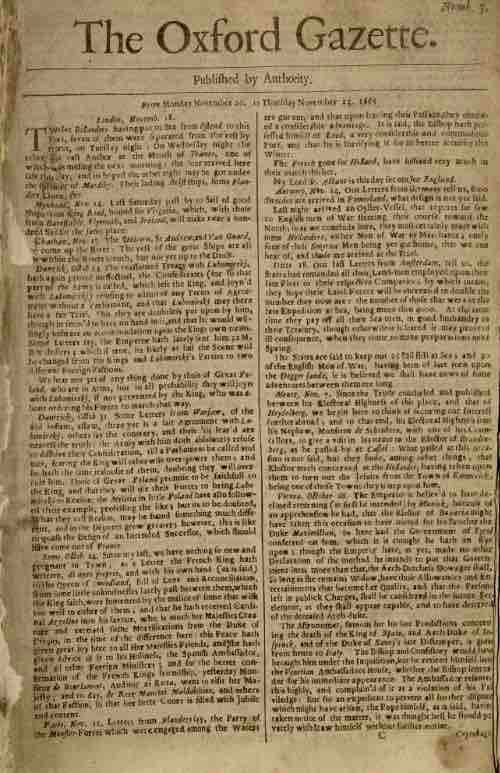
*The British government had temporarily moved to Oxford to escape the Great Plague, hence ‘Oxford Gazette’.
The Gin Craze
In 1688, when the Dutch Prince-turned-King William of Orange sailed into England, he brought with him firm Protestant principles and a Dutch fondness for gin.
The new regime taxed French wine and brandy to the point of abstinence and, keen to punish the French and please the landowners in a single stroke, opened the distilling trade to all comers. What could possibly go wrong?
Everything.
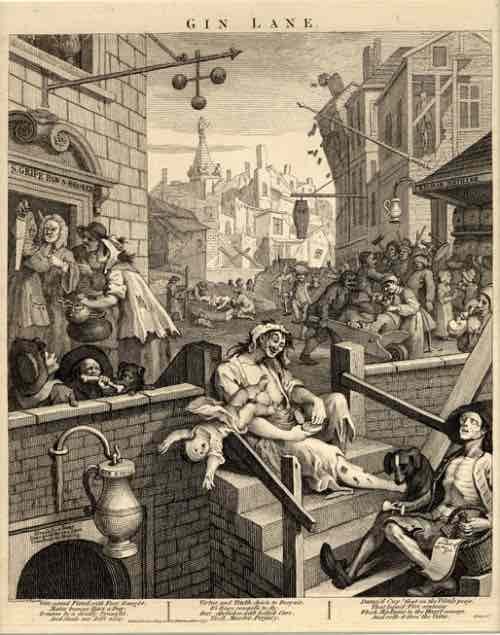
By 1730, London was producing 10 million gallons of gin a year, distributed through seven thousand dram shops and assorted premises. The Gin Craze was in full flow. The average Londoner was getting through 14 gallons annually—enough to float a barge, if not quite to fill the Thames.
Back-street distillers filled the gap left by the legitimate trade with their own concoctions, marketed under cheerful names and cut with ingredients that had no business being inside a human body.
Parliament repeatedly tried to stop it. Between 1729 and 1751, it passed five Gin Acts—raising duties, tinkering with licences, and pulling whatever levers were available. The trade dodged each one.
So what ended the craze?
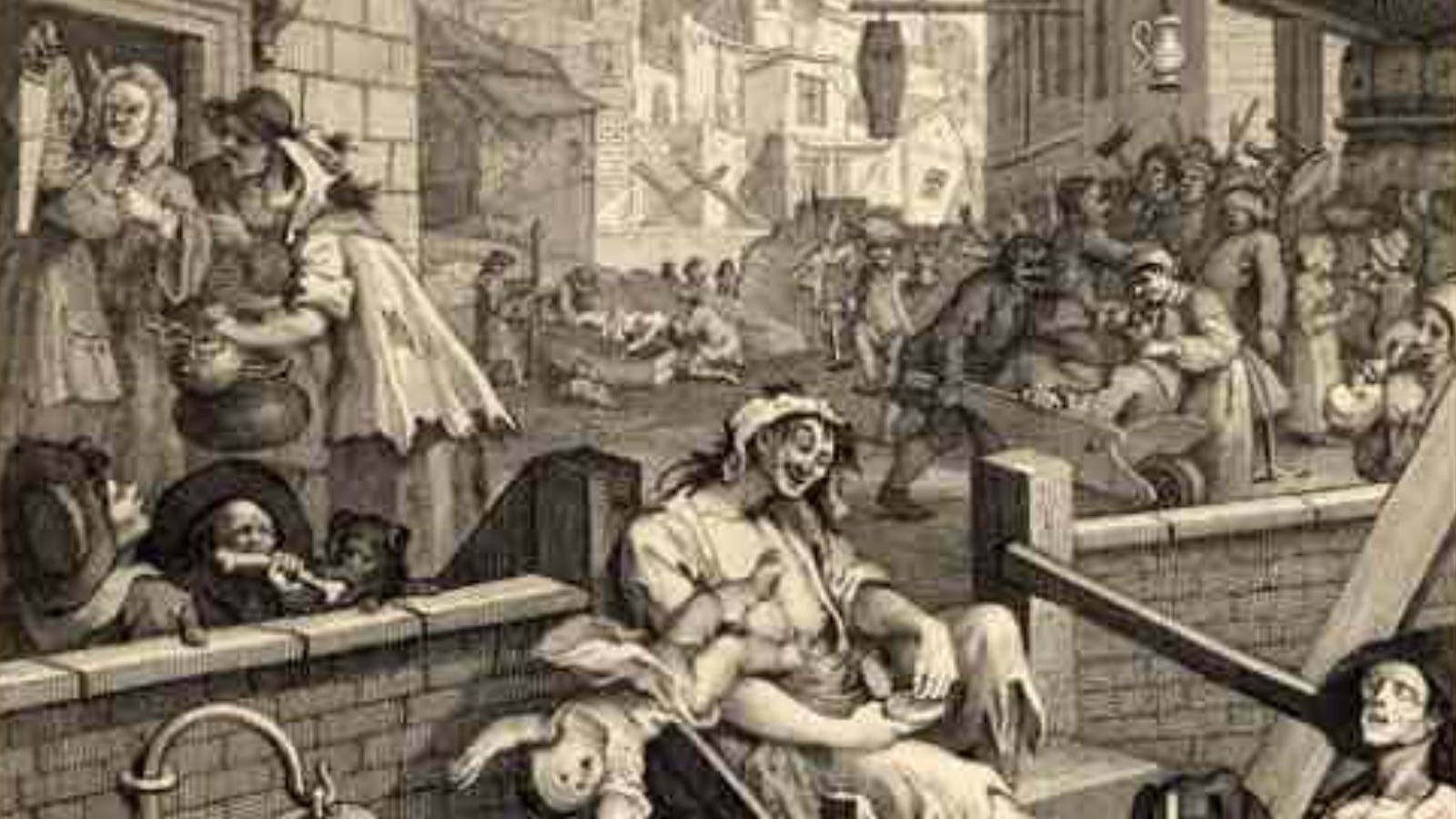
The Gin Act to end all Gin Acts was passed 275 years ago tomorrow, 25 June 1751, to suppress the retail market. Nature did the rest. Poor harvests pushed up grain and food prices while wages fell. The poorest Londoners hadn’t miraculously lost the urge to drink themselves senseless; they simply couldn’t afford to any more.
If you want to find out a little more about the Gin Craze how tariffs played their part in creating it, check out The Madness of the English Gin Craze and the Mercifully Sobering Gin Act 1751.
Question of the Week
Below are the words—translated—of which country’s national anthem?
“Arise, children of the Fatherland,
The day of glory has arrived!
Against us, tyranny’s
Bloody standard is raised! (repeat)
Do you hear, in the countryside,
The roar of those ferocious soldiers?
They’re coming right into our arms
To cut the throats of your sons, your women!”
Chorus
“To arms, citizens!
Form your battalions!
Let’s march, let’s march!
May impure blood
Water our fields!”
And Finally…
Flora MacDonald was born in 1722 on the windswept Hebridean island of South Uist.
Her father, Ranald MacDonald of Milton, was a tacksman under the Clanranald chiefs, and died when Flora turned two years old. She was educated in Edinburgh, returned to the islands, and was, by all accounts, managing perfectly well.
Then Bonnie Prince Charlie came along and changed everything.
The Battle of Culloden had been a catastrophe, and Charles Edward Stuart was now a wanted man. Since April 1746, he had been moving through glens and island hovels with a £30,000 price on his head—government troops behind every ridge, options narrowing by the week.
By June, Charles had arrived on Benbecula, an island connected to South Uist by a causeway. He was wet, exhausted and out of ideas. Flora’s stepfather, Captain Hugh MacDonald, helped obtain travel passes for Flora and her party, including one for an Irish maid named Betty Burke. Betty Burke would be, in reality, six feet of hunted Stuart pretender in a dress that had clearly been made for someone else.
Two hundred and eighty years ago this Saturday, on the evening of 27 June 1746, Flora and Bonnie Prince Charlie—a.k.a. Betty Burke—set off in a small open boat and crossed the Minch ‘over the sea to Skye‘, while Hanoverian troops scoured the hills behind them.
“Speed, bonnie boat, like a bird on the wing.
Onward, the sailors cry!
Carry the lad that’s born to be King
Over the sea to Skye.”
THE SKYE BOAT SONG
They came ashore near what is now Rudha Phrionnsa, Prince’s Point, north of Uig, and made their way to Portree. There, Flora and Charles said their goodbyes.
Bonnie Prince Charlie would eventually make his way back to safety—and anonymity—in France.
Flora was arrested within weeks and taken south to London, where she spent the better part of a year as a state prisoner, including a stint in the Tower of London. The Act of Indemnity freed her in 1747.
By the time she was released, Flora had become a cause célèbre—the lady who had smuggled a prince in a petticoat across to the Isle of Skye.
Flora’s motivations for rescuing the most wanted man in Britain have never really been established. She was no fire-breathing Jacobite supporter, so perhaps we should believe Flora herself, who said she acted purely out of charity.
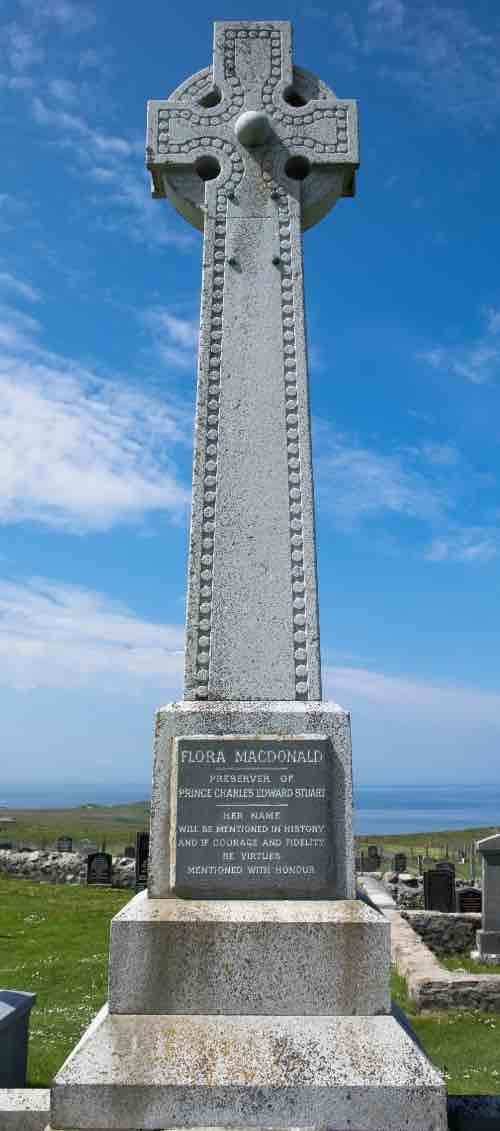
The English writer Samuel Johnson stayed with Flora and her husband, Allan MacDonald, on Skye in 1773, and left impressed by her calmness and courtesy. Nearly ninety years after Flora’s death in 1790, a tall Celtic cross was raised over her grave at Kilmuir, bearing an inscription in words attributed to Johnson:
“Her name will be mentioned in history; and, if courage and fidelity be virtues, mentioned with honour.”
SAMUEL JOHNSON (attrib.)
Question of the week… answer
France.
Most national anthems were carefully commissioned—grand gestures from grand committees. France’s was written overnight by a man whose entire legacy fits onto the back of a postcard.
Claude Joseph Rouget de Lisle was born in 1760 in Lons-le-Saunier, forty miles northwest of Geneva as the crow flies. He spent his career as an army captain with an occasional sideline in composing and writing verse, none of which set the world alight.
It was April 1792. France had declared war on Austria—the first shot fired in what would become the French Revolutionary Wars—and the mood in Strasbourg was, to put it mildly, charged.
The Mayor of Strasbourg—who also ran the local Masonic lodge—asked his guest Rouget de Lisle to write something rousing for the troops.
Claude went back to his quarters and, in a single night of patriotic fever, produced one of the most stirring pieces of music ever written. He called it the War Song for the Army of the Rhine. He had created his legacy in one remarkable evening’s work.
With France at war and the Revolution under threat, the Legislative Assembly called for volunteers. In Marseille, five hundred young volunteers formed a battalion and set off for Paris—a march that took nearly four weeks.
The battalion, les fédérés, sang Rouget de Lisle’s song the entire way to Paris. Parisians, hearing it for the first time, associated it with the men who’d brought it—and over time, the War Song for the Army of the Rhine became known as ‘La Marseillaise‘.
Rouget de Lisle died in 1836, in his mid-seventies, poor and largely forgotten, in a small house at Choisy-le-Roi.
Death, at least, brought some recognition. Rouget de Lisle now rests in Les Invalides on the same military complex as Napoleon.
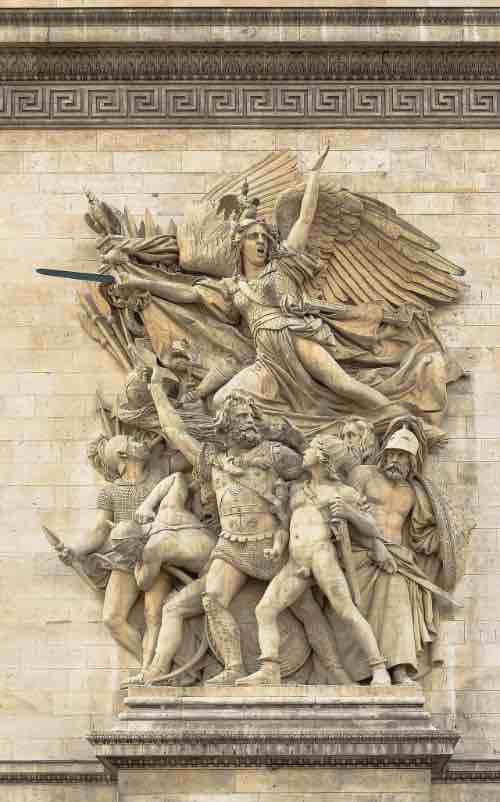
“Allons enfants de la Patrie,
Le jour de gloire est arrivé !
Contre nous de la tyrannie
L’étendard sanglant est levé ! (Repeat)
Entendez-vous dans les campagnes
Mugir ces féroces soldats ?
Ils viennent jusque dans vos bras
Égorger vos fils, vos compagnes !
Chorus
Aux armes, citoyens !
Formez vos bataillons !
Marchons, marchons !
Qu’un sang impur
Abreuve nos sillons !”
CLAUDE JOSEPH ROUGET DE LISLE

Thank you for joining me. Enjoy the rest of the week!
Steve
CHIEF STORY HUNTER & WRITER
Attributions
The Oxford Gazette: John Overholt, CC BY-SA 2.0, Houghton Library, Harvard University.
Gin Lane by William Hogarth, 1751: British Museum, Public domain, via Wikimedia Commons.
Flora MacDonald monument: DeFacto, CC BY-SA 4.0, via Wikimedia Commons.
“The Departure of the volunteers of 1792”: Jebulon, CC0, via Wikimedia Commons.
.jpg)

_par_Rude,_Arc_de_Triomphe_Etoile_Paris.jpg)
CC0: https://creativecommons.org/public-domain/cc0/
CC BY-SA 2.0: https://creativecommons.org/licenses/by-sa/2.0
CC BY-SA 4.0: https://creativecommons.org/licenses/by-sa/4.0/deed.en
I also have an archive of one-to-one interviews with some extraordinary folk with a story to tell. You can listen to the Batting the Breeze Original Stories podcast FREE on Apple Podcasts, Spotify, Overcast,Pocket Casts, Amazon Music or almost any podcast player of your choice. Check out the Batting the Breeze website.
Registered address: 115 Burley Road, Christchurch, Dorset, UK BH23 8AY
Copyright © 2026 Logical Business Ltd. All rights reserved.
Dates with History and Batting the Breeze are properties of Logical Business Ltd.