



25th June 1751
(read time: 6 mins.)
By 1697, the Nine Years’ War was over, but the English had developed a taste for gin; they couldn’t stop. Roll forward to 1720; gin was now the drink of choice for men, women and even some children. The cheap access to ‘Mother’s Ruin’ temporarily relieved the poor from their miserable existence. The English Gin Craze had arrived.
Yesterday I heard that the word tariff has been Googled this week 16 times more than normal. I can’t imagine why. Anyway, time to take a look back I thought.
Tariffs have been around since Greek and Roman times as a method of regulating the flow of goods and topping up the governing body’s coffers.
Every British student has learned about the Corn Laws (1815), which were officially enacted by Royal Assent on 23 March 1815. Tariffs were imposed on imported grain after the Napoleonic Wars to protect British landowners and domestic agriculture.
By 1846, Prime Minister Sir Robert Peel was forced to repeal these Corn Laws. The working-class population couldn’t afford to eat.
As pertinently, the Irish Potato Famine had been running rampant across Ireland for just over 12 months. It was untenable for Peel to proactively maintain high grain prices as the Irish starved.
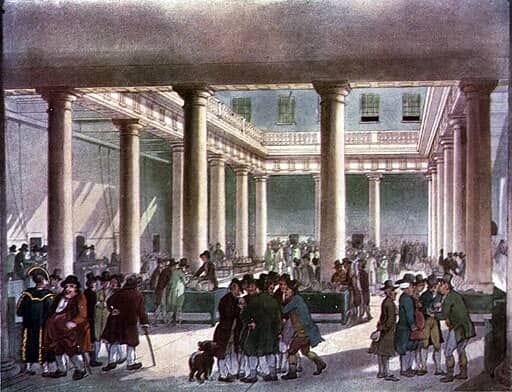
In the newly founded United States, one of Congress’s first actions was to introduce the Tariff Act of 1789, which imposed taxes on imported goods to protect emerging American industries such as textiles, flour milling, shipbuilding, cotton and agriculture.
Tariffs also served to pay off debts from the War of Independence (Revolutionary War).
Australia, federated in 1901, also introduced early tariffs. The Customs Tariff Act of 1902 protected Australian industry against cheap imports but also ensured no tariffs existed between individual states.
As long as international trade has existed, so have tariffs.
The Glorious Revolution
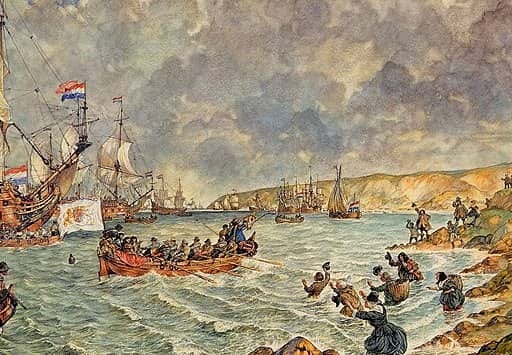
In 1688, the English curiously invited the head of the Dutch Republic, William of Orange, to take over the English crown as James II was proving to be a little too Catholic. This was the Glorious Revolution.
King William III of England would rule with his wife, Mary II, who was also the daughter of the aforementioned James II.
James II left for France with hardly a whimper, but his presence over the Channel tipped the balance, and the Nine Years’ War broke out. England, the Dutch Republic, Spain, Austria and some German states teamed up to curb French expansionist tendencies.
William’s first decisive action of the war was to impose heavy tariffs on French wine and, in particular, brandy. Kick the French where it really hurts.
The tariffs had the desired effect of reducing the flow of brandy across the channel. British Naval blockades of ports at Rochefort and La Rochelle applied the sledgehammer, in case tariffs weren’t sufficiently effective.
William was smart enough to realise that the English wouldn’t stop drinking just because French brandy was expensive and in low supply.
The Distilling Act of 1690…
…was introduced by the king to promote the production of spirits, gin in particular, across the nation.
A licence was no longer needed to distil gin. Everyone could have a go. The King was encouraging his citizens to be patriotic; produce gin, buy gin and drink gin. The English rarely need encouragement in this respect, and 1690 proved no different. They carried out their duty impeccably.
As it turns out, you can distil gin in a much smaller area than brew beer. Better still, gin didn’t need maturation time, so it could be drunk immediately. And the English did.
By 1697, the Nine Years’ War might have been over, but the English had developed a taste for gin, they couldn’t stop.
The Gin Craze
Roll forward to 1720; gin was now the drink of choice for men, women and even some children. The cheap access to ‘Mother’s Ruin’ temporarily relieved the poor from their miserable existence.
London was expanding too fast, and migrants were greeted with nothing but slums, lack of sanitation and poverty. Gin was the antidote.
The Gin Craze had arrived.
It was cheaper to drink a pint of gin than a pint of strong beer. In London, consumption was out of control, though other cities were also affected.
Thousands of gin shops, cellars and front rooms had opened for business. Gin was drunk morning, noon and night.
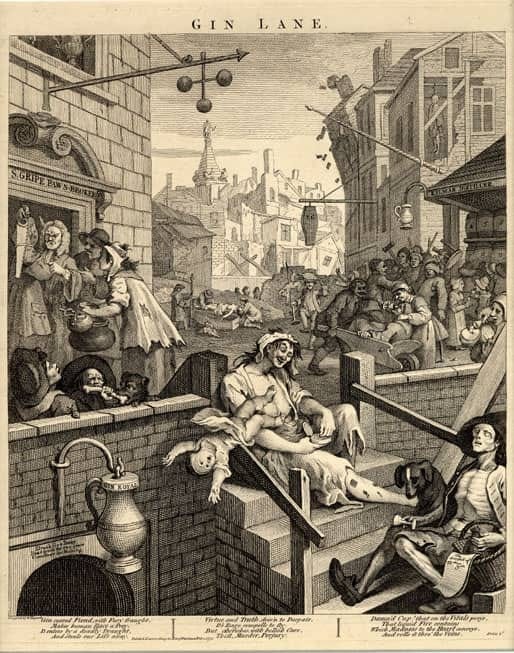
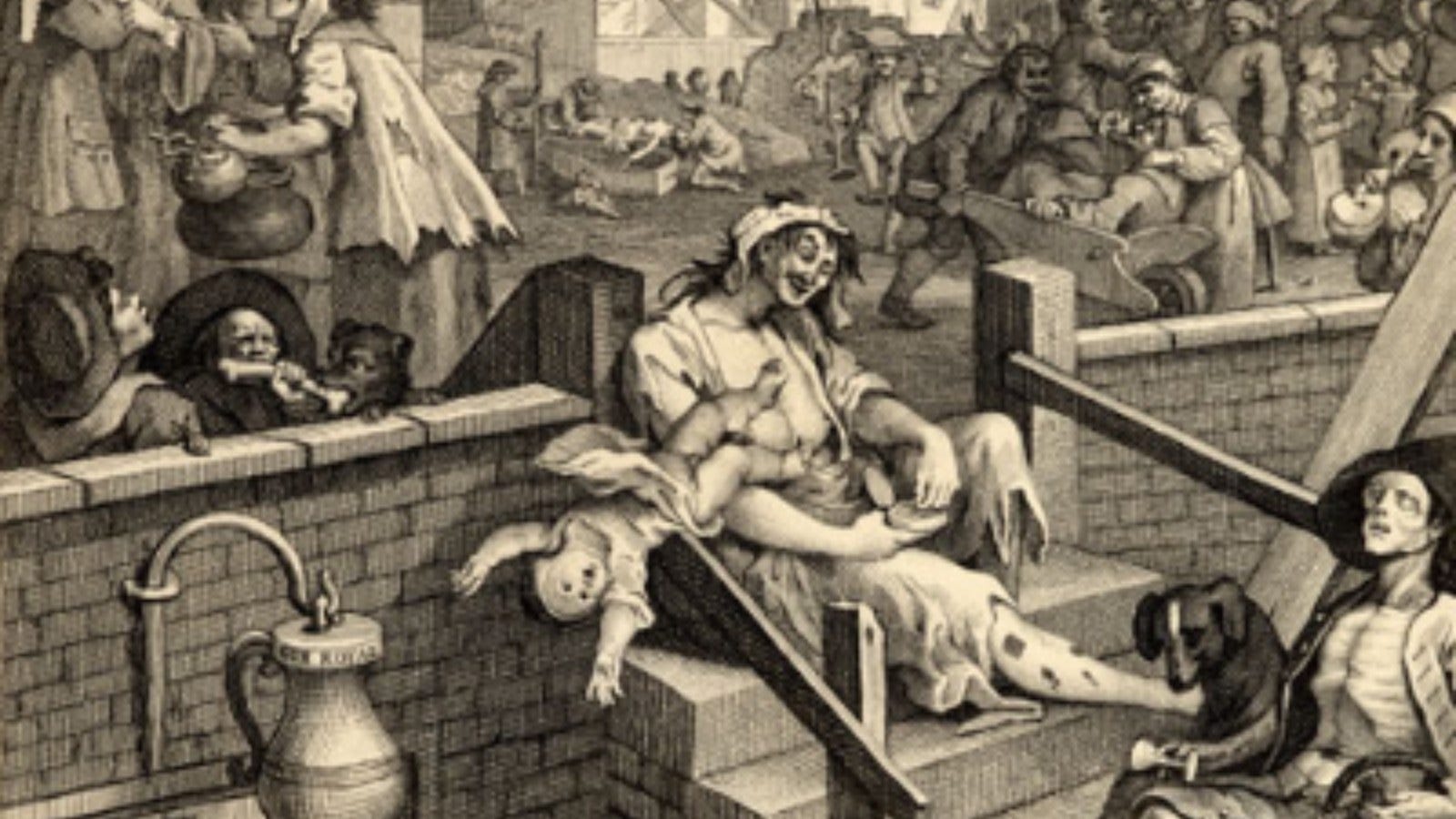
Crime rates soared, prostitution was rife, children were neglected and London’s health deteriorated sharply.
Mass public nudity was reported, along with sightings of spontaneous human combustion, though probably through the bottom of empty gin tumblers.
The Gin Acts
Nonetheless, it was a time of complete madness in London. Action was needed. Between 1729 and 1751, the Government passed a series of Gin Acts to curb the vast quantities of gin consumption.
These early Gin Acts backfired. The restriction of legal gin supply only sent retail alternatives underground. London citizens may have been pickled, but they could still be enterprising.
Take Captain Dudley Bradstreet, for instance...
Bradstreet identified a flaw in the early Gin Acts. They hadn’t given police the right to enter homes to search for evidence of nefarious gin sales. Their reliance on informers to discreetly gather evidence was of limited value.
So, the cunning Captain rented a house in London and carved out a cat on the face of a piece of wood. During the day and evening, Puss sat patiently on the window ledge of Bradstreet’s front room.
Puss was no ordinary wooden cat. He had special powers. A client would walk up to the cat and whisper in his ear, “Puss, have you got any gin?”
When the pussy cat mewed (i.e. Captain Dudley Bradstreet), the client would place some coins into his mouth. The coins rolled down the cat’s throat, through the open window of the front room and into the grasp of a grateful Bradstreet.
Moments later, a measure of gin would squirt out of a small pipe protruding from the cat’s paw, dispensed directly into the buyer’s expectant vessel… or mouth.
