



9th October 1665
7th October 1920
(read time: 6 mins.)
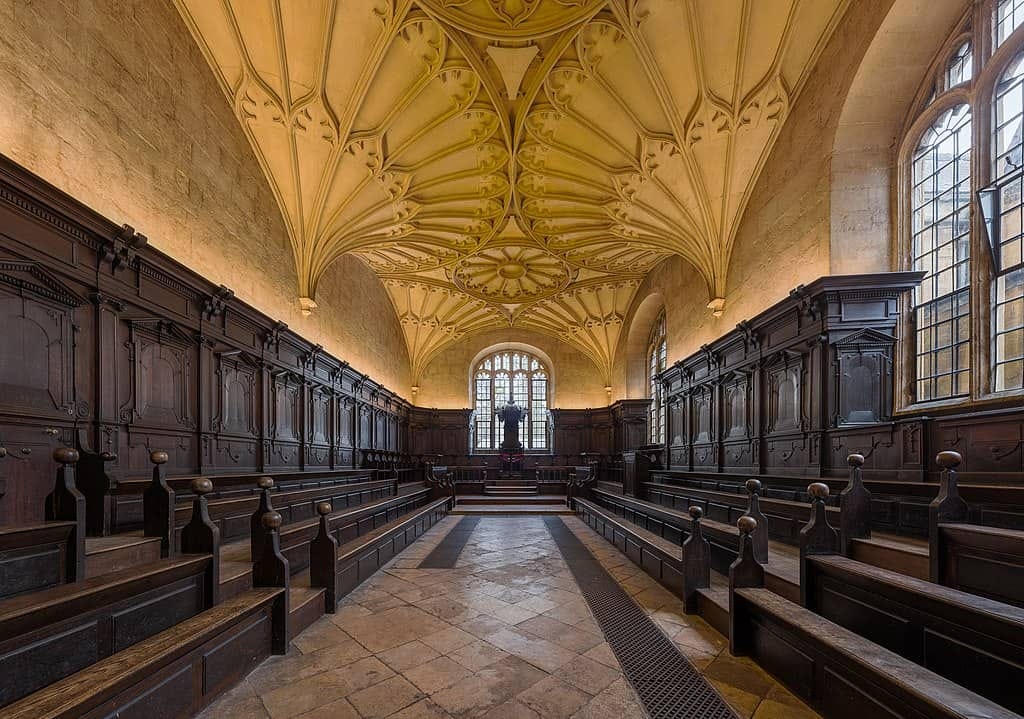
Charles II had a problem. The British were at war with the Dutch. Wars cost money, and that meant higher taxes. He couldn’t raise taxes without Parliament’s approval. But Westminster was at the heart of the 1665–1666 Great Plague. Parliament had to be moved.. to Oxford as it turned out.
Just before my annual three-day trip along the Grand Union Canal last week, I had time for another great day in London, crowned by a pie and a pint with an old school friend at St Stephen’s Tavern, Westminster, under the shadow of Big Ben.
I was reminded how magnificent the tower looks having emerged from her six-year facelift in 2022.
Dammit, I’ve just committed architectural fraud. Just as the name of Mary Shelley’s Frankenstein is often applied to the monster rather than its creator, so the tower at the northern end of the Houses of Parliament is commonly referred to as ‘Big Ben’.
Big Ben is actually the name of the bell inside the tower.
The correctly named Elizabeth Tower, renamed in 2012 to mark the Queen’s Diamond Jubilee, was originally known as the Clock Tower.
The 13.5-ton bell behind the clock which dutifully chimes every 15 minutes was installed in 1859 under the watchful eye of the rather portly Sir Benjamin Hall, hence ‘Big Ben’.
Anyway, since autumn is closing in, the spotlights on the tower were already illuminated as we reached the pub.
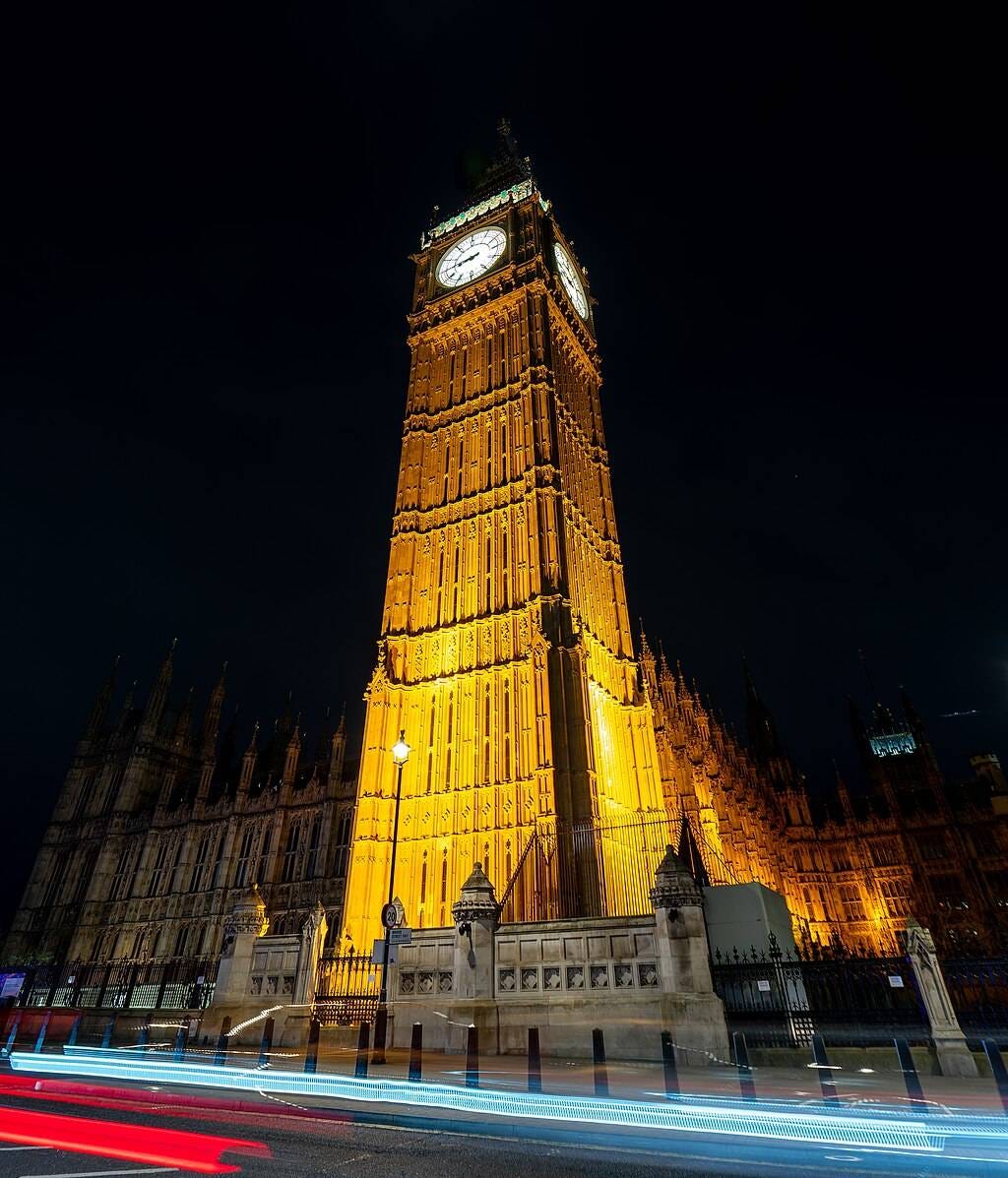
These spotlights highlight the sparkling gold leaf which now adorns the clock surface and the sheer complexity of the tower’s ornate stonework. The definition of every crevice is so crisp that it might be made from LEGO, or perhaps a fancy foil-wrapped chocolate bar. You could break off a piece and eat it.
The rest of the Houses of Parliament are similarly lit, all sharp edges and impossible cleanliness, as if they’ve just been unwrapped.
But the external gloss belies a different story inside. The Palace of Westminster is falling apart the British way - slowly and quietly. Stonework is crumbling, the roof leaks in a hundred places, electrical wiring is outdated and the plumbing is on life support.
In short, the home of British-English politics for 730 years - since Edward I convened the Model Parliament in 1295 - is falling down.
But, here’s the problem.
A refurbishment would require MPs to vote themselves out of the building for several years. For many one-termers, they would never return.
It’s the parliamentary equivalent of turkeys voting for Christmas. In this case, Christmas might involve decanting to a village of Portakabins somewhere near York while the Palace is gutted and restored.
Voting to leave the building would require levels of self-sacrifice rarely seen in Westminster, so I am not betting on it happening any day soon.
The Great Plague of 1665-1666
Westminster has been abandoned by Parliament a few times over the years, but these have usually been partial relocations.
But, there is one memorable occasion when the entire machinery of British government deserted Westminster, Charles II and all.
In September 1665, London was dying. Not metaphorically but physically. Bodies were piling up in the streets faster than carts could take them away.
The Great Plague of 1665-1666 would be the last outbreak of bubonic plague in England. Since the Black Death (1348-1349) had found its way to England via fleas on black rats from merchant ships on trading routes from Asia, an estimated 45-50% of England’s population of five million had died from plague.
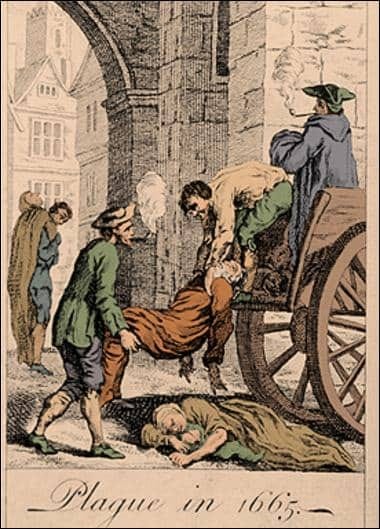
In London, half a million people were crammed into the narrow streets. Personal hygiene was optional. Medicine optimistically relied on the Theory of the Four Humours.
…
Out of Curiosity
The Four Humours was the binding theory of world medicine for 2,000 years up to the 18th century.
According to this theory, the human body contains four essential bodily fluids:
Sanguine: Blood (hot and wet) - related to air
Phlegmatic: Phlegm (cold and wet) - related to water
Choleric: Yellow bile (hot and dry) - related to fire
Melancholic: Black bile (cold and dry) - related to earth
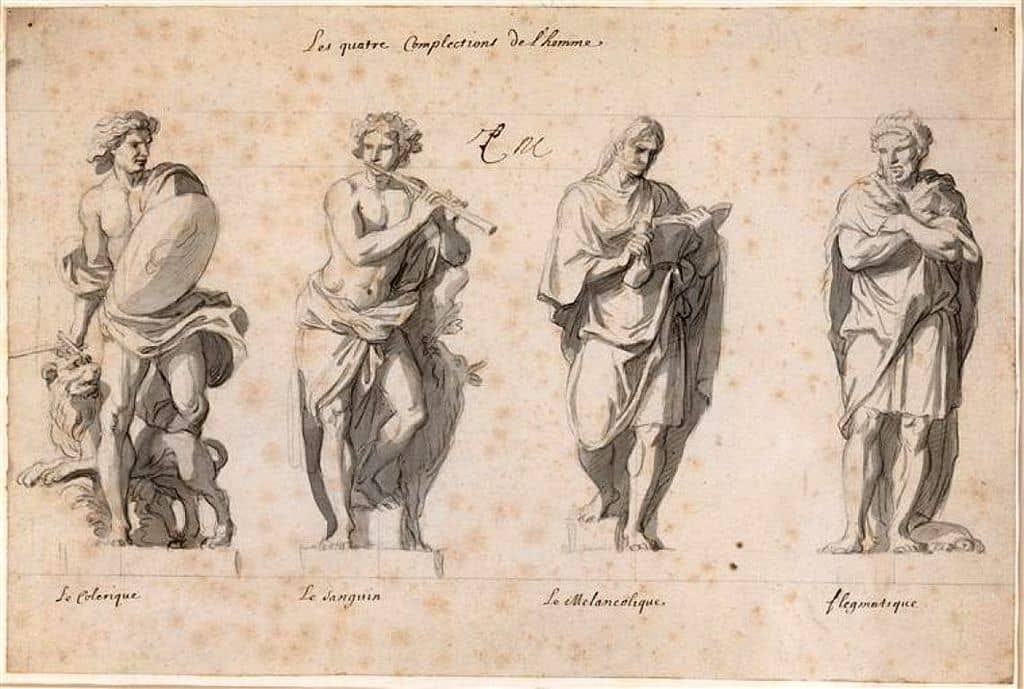
The body needed all four humours to be in balance for perfect health. An imbalance of one of the humours would lead to disease.
Treatments would look to restore this balance through bloodletting, purging, dietary changes etc.
In the case of The Great Plague, The Four Humours turned out to be three humours short - 100,000 Londoners (20% of the city’s population) perished.
Charles II needs money
Amidst the death and disease, Parliament was due to meet in October 1665. But Westminster was at the heart of the plague. Tucked up safely in their country houses, very few MPs had the desire to risk their lives over herring quotas or wool tariffs.
Nonetheless, Parliament couldn’t be postponed - there were more important matters than fish or sheep to debate. The British were at war with the Dutch. Wars cost money, and that meant higher taxes.
Charles II couldn’t raise taxes without Parliament’s approval - a lesson his father, Charles I, had learned the hard way, losing his head in the process.
If the king wanted money, he had to ask nicely.
The Parliament of Oxford
The solution was to reconvene Parliament outside London. The city of Oxford was the perfect choice. It was far enough outside London to dodge the intense effects of the plague and boasted plenty of suitable buildings fit for parliamentary gatherings.
What’s more, Oxford was believed by many to be England’s intellectual brain centre, home to one of Europe’s great universities since the 12th century.
Oxford University had been used by the government under Charles I for an earlier, less significant, plague in 1625. The ‘Useless Parliament’ achieved little other than to stoke up further tension between crown and Parliament.