


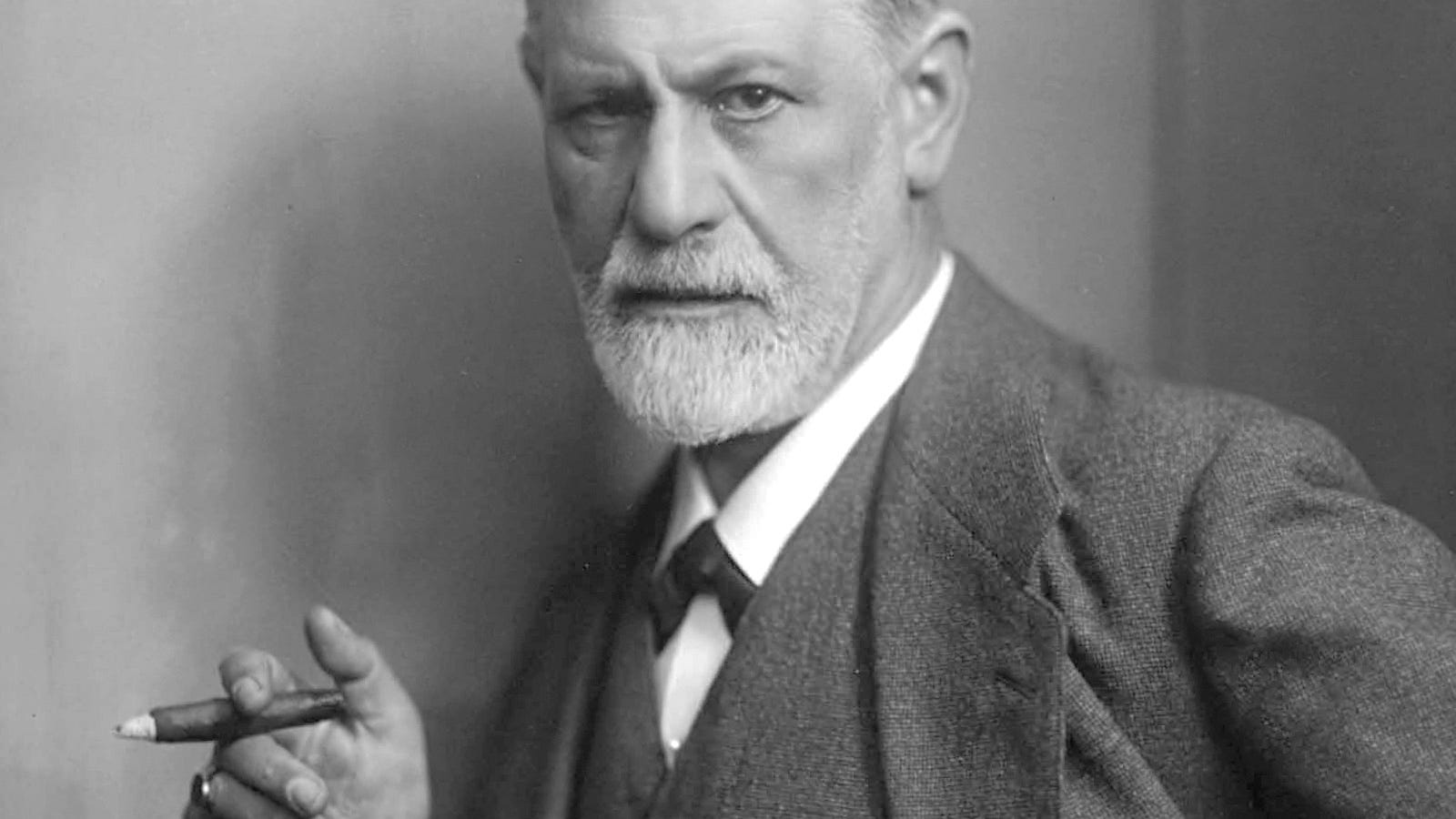

4th November 1899
(read time: 11 mins.)
But for Sigmund Freud, one pathway into the mind stood out—the most direct and most revealing of all… dreams. The net result was Die Traumdeutung—The Interpretation of Dreams—published on 4 November 1899. It wasn’t a book solely about dreams, but a technical blueprint for his emerging psychoanalytic method.
At some point in your life, somebody must have asked what you dreamed about the night before. It is one of those questions that sounds perfectly innocent until you actually try to answer it.
You perform a rapid editorial review of the previous eight hours, discard ninety per cent of the material on grounds of dignity, and offer your companion a heavily redacted summary that bears only a passing resemblance to what actually occurred behind your eyelids.
“Just a bit of work stuff,” you say. “Nothing interesting.”
The actual answer is considerably more complicated and involves a sequence of events that would take several hours to describe and make no narrative sense whatsoever.
It features at least three people you haven’t thought about since 1992, takes place in a building with too many staircases and not enough exits, involves you being either completely naked or catastrophically late—possibly both—and ends, just as things are getting interesting, with your alarm going off.
You don’t share this. Nobody shares this. We have tacitly agreed, as a species, that whatever happens between approximately 11 pm and 7 am stays strictly between us and the bed sheets.
Nonetheless, throughout human history, dreams have been a serious business. The ancient Egyptians regarded them as prophetic visions or messages from the gods. Medieval Europeans tended toward demons or their own disordered bodies.
Then along came the Enlightenment when dreams were filed under ‘natural causes’, just neurological noise, and everyone breathed a quiet sigh of relief.
That is, until a certain Viennese doctor called Sigmund Freud came along and said, “Not so fast”. At the turn of the twentieth century, he published a book that proposed something rather different: that dreams were messages, but not from gods or demons.
From yourself.
Sigmund Freud…
…was born on 6 May 1856, in Freiberg, Moravia—a small market town now part of the Czech Republic. He was the first child of Jakob Freud, a wool merchant, and his wife, Amalie, who was twenty years Jakob’s junior and thought the world of her eldest boy, her ‘golden Sigi’.
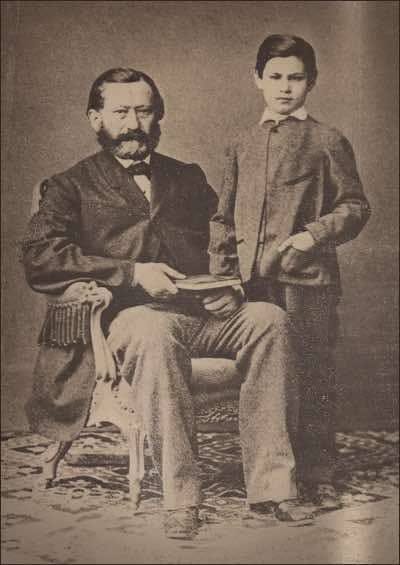
Moravia in the 1850s was part of the vast, creaking Habsburg monarchy. Napoleon had come and gone; the continent was recalibrating and the Industrial Revolution was gathering momentum across Europe. Jewish families like the Freuds occupied an uneasy social position—technically emancipated after the revolutions of 1848, the Springtime of Nations, but still threading their way through thick layers of ingrained prejudice.
When Sigmund was four, the family moved to Vienna. He would spend almost his entire life there.
An early signal of Freud’s life’s work came when, at about seven years old, he was caught urinating on the floor of his parents’ bedroom. His father was furious and is said to have snapped, “Nothing will ever come of this boy”.
The effect of these words on Sigmund was profound. His father’s verdict, delivered over a puddle, haunted him for decades. He would later treat the experience as ‘formative humiliation’.
Freud the student
Sigmund was an exceptional student, usually first in his class throughout his schooling. He devoured Shakespeare in the original English and collected languages with the obsession most boys reserved for sport.
In 1873, he enrolled in the medical faculty of the University of Vienna. His first love was research and he spent years dissecting crayfish and eels in the laboratory of the distinguished physiologist Ernst Brücke.
Brücke, one of Freud’s early mentors, took him aside one day to explain that there was little money in pure research and that he ought to consider clinical medicine instead.
Freud took the advice.
But it would be a collaboration in the 1880s with Josef Breuer, a well-regarded Viennese physician, that would shift the course of Freud’s life. He would become obsessed with the emerging science of the mind, particularly the mystery of the unconscious.
Before we go there, let’s rewind a little…
Two thousand years of psychology
For roughly two thousand years, the dominant medical explanation in Europe for mental disturbance was the theory of the four humours—blood (sanguine), phlegm (phlegmatic), yellow bile (choleric) and black bile (melancholic), inherited from ancient Greek medicine and stubbornly refusing to retire until well into the 18th century.
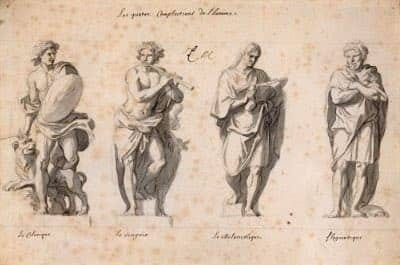
Treatment usually involved purges, bloodletting and dietary adjustments. If the humours were out of balance, you ‘corrected’ them. That patients often failed to improve—or got worse—did little to disturb the theory; the fault was in the patient, not the model.
By the 15th century, Europe had begun to experiment with the first asylums and madhouses—small, scattered institutions where the mentally ill could be shut away.
Out of Curiosity
London’s Bethlem Royal Hospital was founded in 1247 as the Priory of St Mary of Bethlehem, a religious house offering general charitable care.
By the early 15th century, it was admitting people deemed insane and became associated with the care and confinement of the mentally ill. Following the Dissolution of the Monasteries under Henry VIII in the 16th century, church-administered charitable care was replaced by something a little more bureaucratic and indifferent.
In the centuries that followed, patients might be chained to the walls of their cells or to their beds and put on public view; crowds of Sunday visitors wandered the wards—a penny a ticket for the privilege of gawping.
The institution that became shorthand for human misery, chaos and neglect gave English its word for pandemonium—Bedlam.
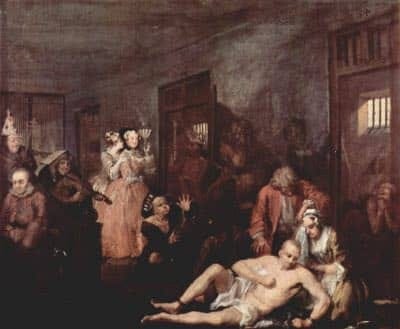
“And pat! he comes like the catastrophe of the old comedy: my cue is villainous melancholy, with a sigh like Tom o’ Bedlam.”
William Shakespeare – King Lear 1605, when Edgar enters and adopts the persona of Tom o’ Bedlam, a wandering beggar who had been discharged from Bethlem Royal Hospital.
By the 18th century, the theory of the four humours was beginning to fray, though the new wisdom still fell well short of Enlightenment.
Across the late 18th and 19th centuries, the medical mainstream dabbled in all sorts of remedies for the ‘mad’: moral therapy, where patients were treated with kindness; hydrotherapy in its various chilly forms and—bizarrely—spinning-chair treatments, in which patients were strapped into a chair and whirled at speed until they vomited, fainted or finally ‘settled.’
Phrenology, meanwhile, offered to interpret mental conditions from the bumps on your skull, a 19th–century ‘science of the mind’ that briefly enjoyed serious attention in polite society.
Increasingly, the respectable way to study the mind became to study the brain—neurology. If you couldn’t find a lesion, a tumour, a measurable anatomical cause, then you didn’t have a diagnosis, just a mystery.
Out of Curiosity
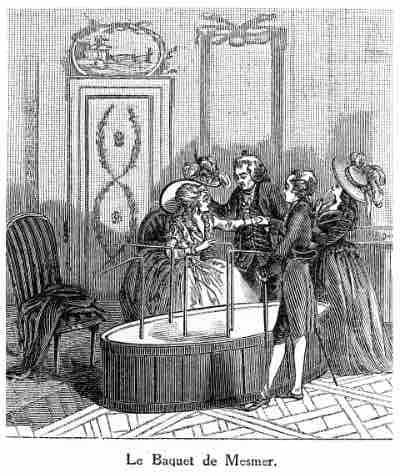
In the 1770s, Franz Anton Mesmer, a Viennese-trained physician, proposed that an invisible magnetic fluid flowed through all living things and that illness—including mental illness—resulted from blockages in this flow.
Treatment involved patients sitting around a wooden tub—the baquet—filled with magnetised water and iron filings, gripping iron rods protruding from the lid, while Mesmer swept about the room—resplendent in a lilac silk robe—gesticulating with his hands, less like a physician and more like a magician who had misplaced his wand.
Patients convulsed, wept, fainted and frequently... reported feeling better. They were, in short, mesmerised.
Although the magnetism theory was later debunked, it became evident that these positive results were less a reaction to invisible forces and more the product of the patients’ own minds.
Over the following hundred years, the Industrial Revolution transformed the physical world beyond recognition. The science of the mind—however—didn’t get the memo. Treatments remained largely a matter of guesswork, good intentions and the occasional bucket of cold water.
This all changed in 1879, when Wilhelm Wundt opened what is generally considered the first experimental psychology laboratory, in Leipzig. Wundt set about measuring mental processes with scientific precision—reaction times, sensory perception, attention—a determined attempt to quantify the mind. It was exciting, methodical, and focused on conscious experience. The unconscious wasn’t on Wundt’s agenda.
Psychology was crossing the floor from philosophy to science.
… now, back to that collaboration in the 1880s with Josef Breuer
Josef Breuer had been treating a young woman referred to in the literature only as ‘Anna O.’—a patient diagnosed with what was then called ‘hysteria’.
For centuries, doctors had treated hysteria as a woman’s complaint rooted in the womb—the word derives from ‘hystera’, the Greek for uterus—in which the uterus could become displaced or overheat (really!) to produce symptoms of anxiety, depression, paralysis, convulsions and fits.
The medicine of the day had very little to offer her.
What Breuer had stumbled upon, almost by accident, was that when Anna O. talked—really talked—about her memories, her fears, her past—her symptoms sometimes eased or vanished. She jokingly called it ‘the talking cure’. It was a throwaway line that lodged in Freud’s mind.
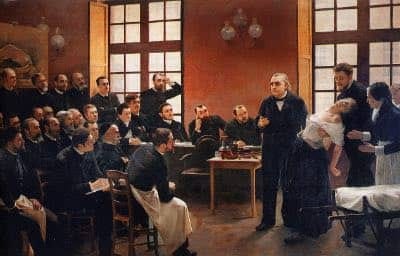
His journey into the unconscious deepened when he attended the lectures of Jean-Martin Charcot at the Salpêtrière hospital in Paris in 1885–86.
In front of packed audiences, Charcot used hypnosis to summon and then relieve the symptoms of hysteria. It was part legitimate medical demonstration, part parlour trick—scandalous and enthralling in equal measure.
Charcot argued that hysteria was a disorder of the nervous system, not of the uterus, and that it could appear in men as well as women. He demonstrated that mental states could produce physical symptoms without any detectable neurological cause.
The power of suggestion.
The young Sigmund Freud later recalled that he was ‘electrified’ by Charcot’s work.
Freud’s predecessors had established, often clumsily, that the unconscious mind lay just below the surface of human awareness. But they lacked a single, coherent clinical method for exploring that hidden territory. This was Freud’s opportunity.
Dreams
To create a clinical methodology for the unconscious mind—psychoanalysis—Freud first had to work out how to reach it. After all, it operated beneath the surface, hidden from view. The patient sitting on the couch didn’t know what was down there—if they did, they wouldn’t need the couch.
He developed a toolkit. One element was free association: saying whatever came to mind without censorship or editing. Another was the analysis of slips of the tongue—the small betrayals we now call Freudian slips. A third was to treat neurotic symptoms as coded messages from the unconscious waiting to be deciphered.
But for Freud, one pathway into the mind stood out—the most direct and most revealing of all. Dreams.
He reasoned that in waking life, the conscious mind acts as a gatekeeper—suppressing those desires, fears and memories that the unconscious is straining to express. Without that inner censor, we would be overwhelmed, socially unfiltered and unable to function.
During sleep, the inner gatekeeper relaxes and loosens its grip, allowing more unconscious material to surface.
For Freud, dreams were therefore “the royal road to the unconscious”. Not a detour, not a curiosity, but the most direct route.
The Dreamers
The Greeks, Babylonians, Assyrians, ancient Chinese, Indians and Egyptians—and cultures across Africa and the Americas—all interpreted their dreams. From the Epic of Gilgamesh to Jacob’s Ladder, from Aristotle to Joseph—he of the technicolour coat—the message across three thousand years and every inhabited continent was the same: pay attention to your dreams, or pay the consequences.
In what we now call the Chester Beatty Dream Book, the ancient Egyptians had fastidiously recorded hundreds of dreams and their outcomes: dreaming of a large cat—good harvest; seeing their bed catching fire—bad news.
On the face of it, Freud was only echoing what the Egyptians had claimed three thousand years earlier—dreams meant something, and there was a way to read them.
But here’s the difference: Freud’s system was psychological rather than prophetic. When he asked about a patient’s dreams, it was personal. The dream’s surface story was merely the starting point for excavation. By encouraging the patient to recall a dream and then ‘free associate’—to say whatever came to mind—buried memories, some reaching back to childhood, could be resurfaced. It was analytical gold.
Freud’s dream analysis went much further. Drawing on his own dreams and those of his patients, he came to see them as the unconscious mind caught in the act. They weren’t messages from gods or demons. Neither were they signals of wandering wombs or stomach vapours.
They were the disguised fulfilment of desires the waking mind had deemed too dangerous, too embarrassing or too unacceptable to acknowledge in daylight.
Freud’s dreams were his laboratory. Without the dreams, there was no psychoanalysis. He had secularised thousands of years of dream theology. Out with the priest. In with the analyst.

The Interpretation of Dreams
Through the 1890s, Freud collected cases, tested theories and dissected his own dreams with the rigour of the research scientist he had once been. He kept meticulous notes of everything he studied, read, discussed and theorised.
The net result was Die Traumdeutung—The Interpretation of Dreams—which appeared in November 1899. It wasn’t a book solely about dreams, but a technical blueprint for his emerging psychoanalytic method—with dreams as its central exhibit. It is considered Freud’s most important work—though not his most readable.
It turned out that Freud’s tour de force was an immediate flop—piles of unsold copies sat on the publisher’s shelves for years. The critics ranged from baffled to dismissive. Some simply ignored it.
Freud was neither shocked nor surprised. He had expected as much.
The tide turns
However, by the 1920s, Freud’s ideas had landed and were gaining real momentum. Psychoanalysis had crossed the Atlantic. Notions of the unconscious mind, of ego and id and of childhood experience shaping adult life were gaining traction in clinics, universities and popular culture.
