



19th September 1940
13th May 1901, 1st September 1939, 19th September 1940, 26th April 1943, 25th May 1948
(read time: 6 mins.)
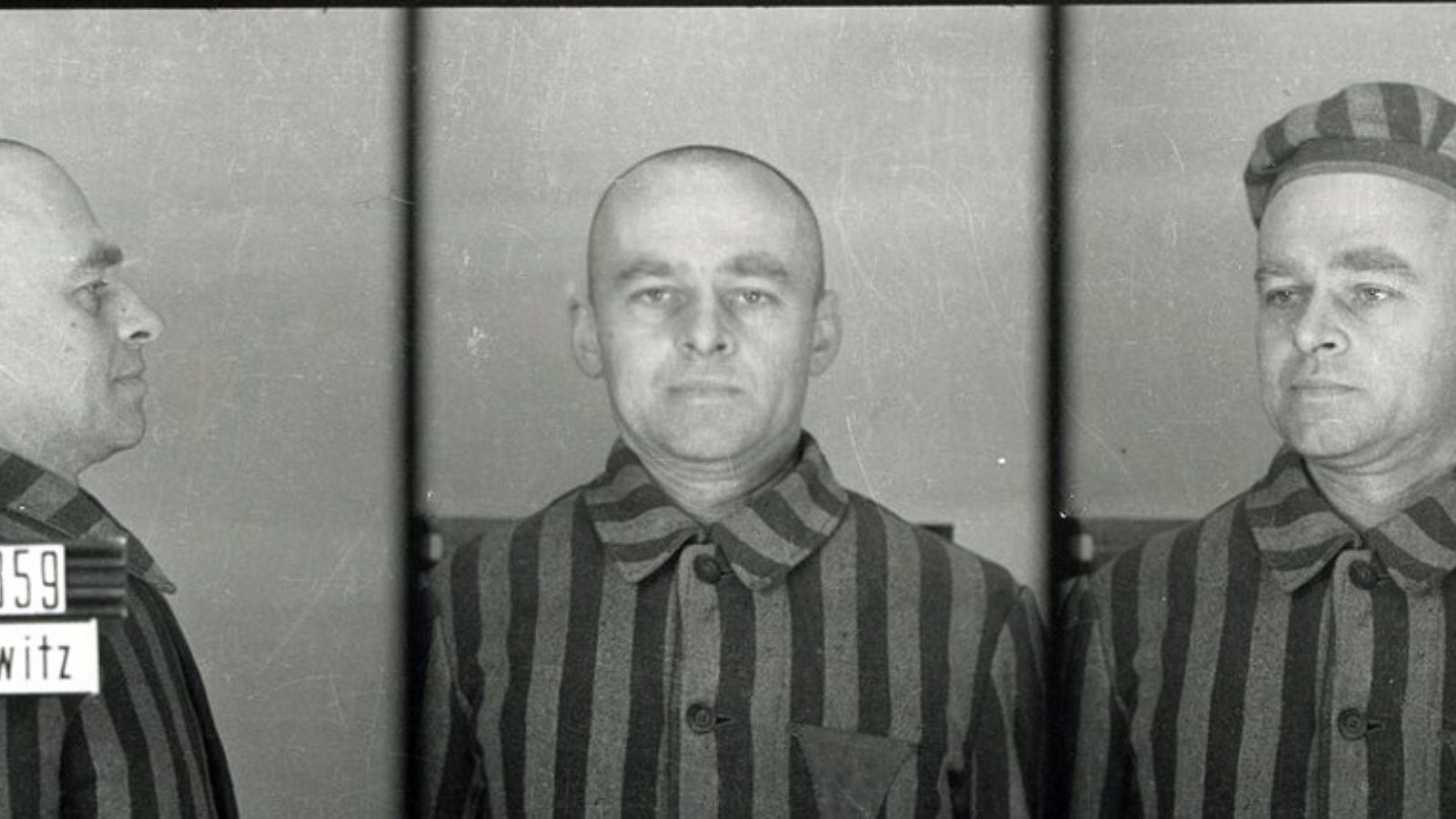
Witold Pilecki walked into a street roundup in Warsaw, presenting himself to German authorities as Tomasz Serafiński. Three days later, Prisoner 4859 arrived at Auschwitz. This would be a trip to Hell.
I need to share the story of a man so brave that the hairs on the back of your neck will bristle. There are heroes, superheroes… and then there is Witold Pilecki.
History is littered with tales of prisoners trying to break out of Auschwitz. But have you ever heard of someone deliberately trying to get in?
Witold Pilecki…
…was born on 13 May 1901 in Olonets, a small spiritually Polish town, but geographically part of the Russian Empire.
The early 1900s were hardly a tranquil time to grow up in Poland. The country had been carved up in 1795, shared between Russia, Prussia and Austria-Hungary. This left Polish families like the Pileckis to navigate the peculiar challenge of remaining patriotically Polish while holding Russian citizenship.
Pilecki’s childhood was dominated by the effects of the Russo-Japanese War of 1904-05, the 1905 Revolution that set the scene for the later downfall of Tsar Nicholas II, and World War I.
Witold’s coming of age involved a brief stint in the Polish-Soviet War of 1919-21, defending Poland’s independence from the Soviet Union.
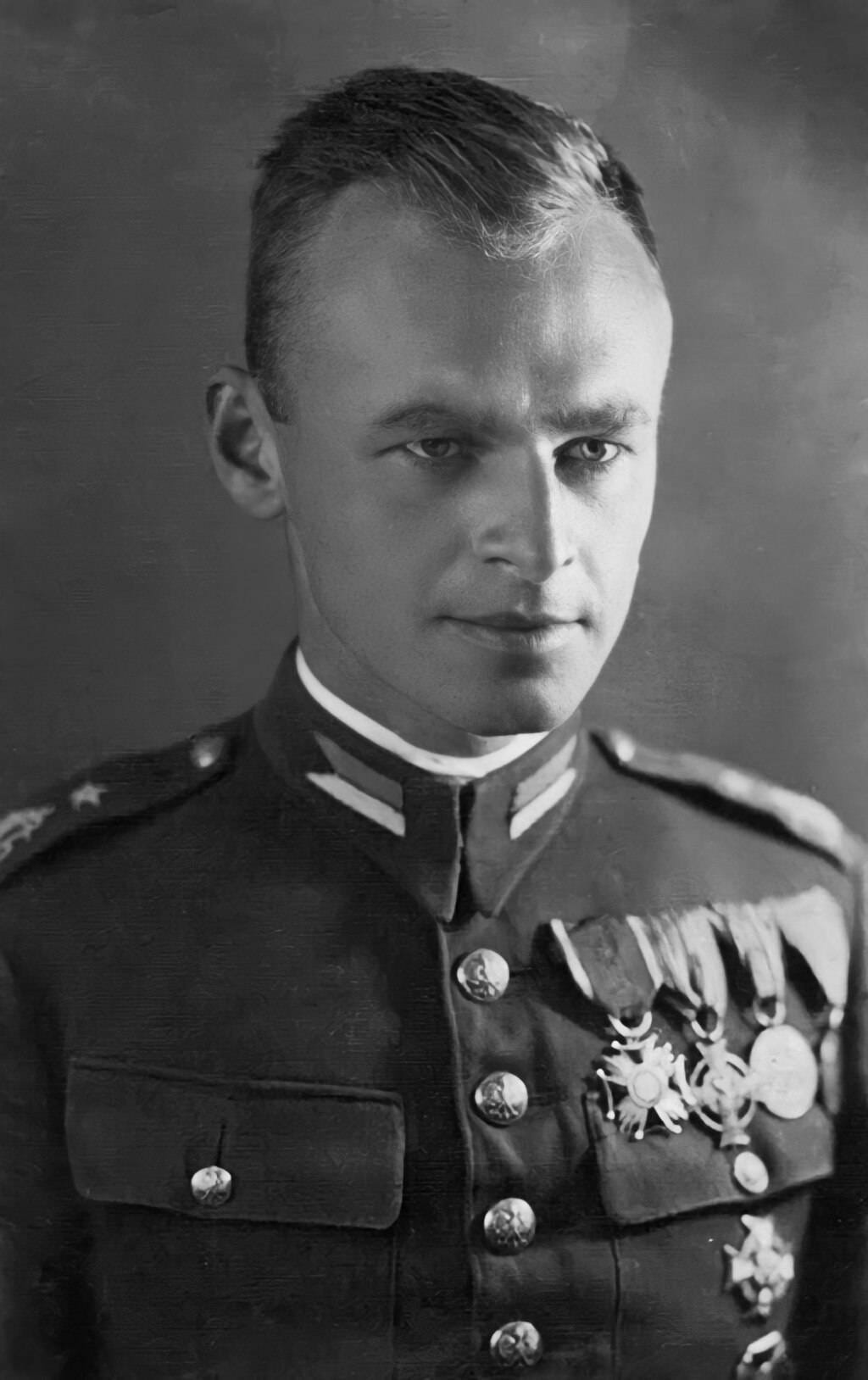
A period of normality followed; Pilecki managed his family estate, raised two children with his wife Maria Ostrowska and involved himself in general community activities in Sukurcze, near Lida, in present-day Belarus.
1939—The Nazis invade Poland
However, it was not too long before the storm clouds gathered and World War II loomed on the horizon.
The Nazis stormed Poland on 1 September 1939 and proceeded to decimate Polish society. At the top of their list was the elimination of Polish intellectuals and military leadership. This was ‘Intelligenzaktion’.
As a Polish cavalry reservist with a reputation for fierce nationalism, Pilecki was a marked man.
The capital city, Warsaw, fell later in the month. The Polish government fled the country and Pilecki helped to establish the Secret Polish Army, the national underground resistance movement.
As early as 1940, dark stories began emerging from the town of Oświęcim, 170 miles southwest of Warsaw. The Germans had converted a Polish army barracks into something far more sinister. This was Hell. They called it ‘Auschwitz’.
Nobody was quite sure what was happening inside Auschwitz. Information trickled out, but the Allies dismissed most reports as too extreme to be credible.
The Poles were not convinced either. They needed reliable intelligence. They needed someone on the inside.
Witold Pilecki volunteers for a trip to Hell.
But how to get in? Pilecki had a solution. It was elegantly simple and utterly deranged: get himself arrested in Warsaw to be dispatched to Auschwitz, then set up an internal resistance movement, collect intelligence, escape and report back.
By September 1940, the Nazis were completing a ten-foot-high wall around Warsaw city centre. Existing buildings and cemetery walls supplemented the eleven-mile wall. Ethnic Poles were forced out of the centre while the Jewish community from the suburbs was being herded in.
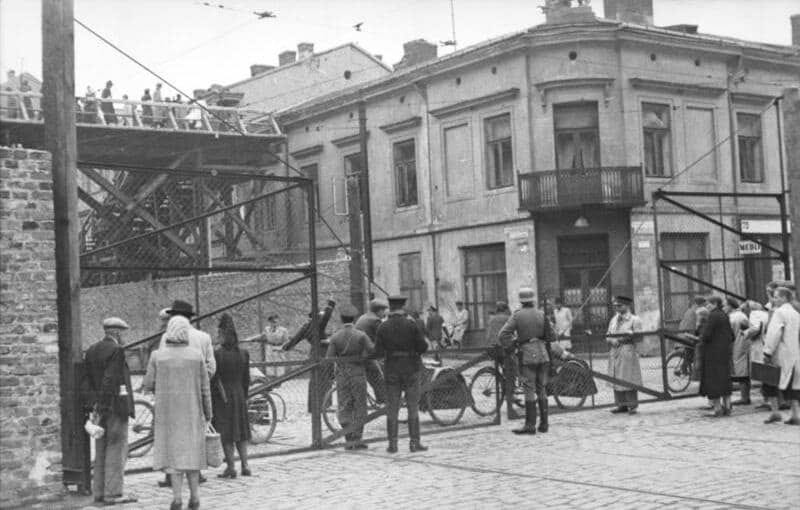
On 19 September 1940, Witold Pilecki walked into a street roundup in Warsaw, presenting himself to German authorities as Tomasz Serafiński.
Three days later, Prisoner 4859 arrived at Auschwitz. Any naive expectations of an easy ride had been erased during the dehumanising 38-mile trip in a crammed cattle car.
The SS designated each carriage to hold up to 50 people. In reality, they packed in more than 100 deportees on each journey.
The descent into the underworld had only just begun. The gas chambers were not yet operational, but prisoners were brutally beaten and starved. Disease was endemic and the smell of death permeated the atmosphere.
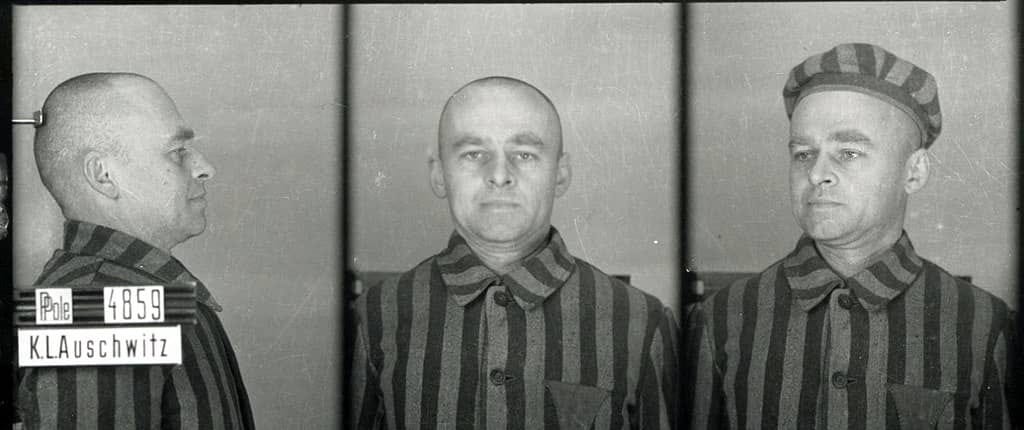
Pilecki was immersed in human tragedy. The SS guards had perfected human suffering as an art form. Prisoners were dying from Typhus, summary execution, or if they were fortunate, quietly from exhaustion.
Putting aside thoughts of the infernal world he was now in, Pilecki set to work. He established a resistance network throughout the camp, gathering and smuggling out what intelligence he could.
This information provided the world with its first proof of the true nature of Auschwitz. Pilecki’s intelligence highlighted the starvation, appalling working conditions, human medical experiments and an industrial-scale extermination program.
The new intelligence network within Auschwitz lifted spirits among the prisoners, even if it didn’t immediately stir the Allies to action.
Pilecki brought hope, however fragile.
Witold plans his escape
As well as maintaining contact with the Polish underground, the rudimentary network managed to stockpile weapons and identify potential escape routes.
By April 1943, after two and a half years in hell, Pilecki decided his usefulness lay beyond the barbed wire. He also believed he was about to be transferred to who-knows-where.
Auschwitz was now a death factory, with 4,400 poor souls ‘processed’ through the gas chambers and crematoria each day. In addition, the Nazis were methodically picking off Pilecki’s underground organisation in Warsaw.
Pilecki’s plan to get out was almost as simple as his plan had been to get in. He engineered a transfer to the camp bakery with two other co-conspirators, Edward Ciesielski and Jan Redzej. The bakery sat two miles outside the main camp.
