


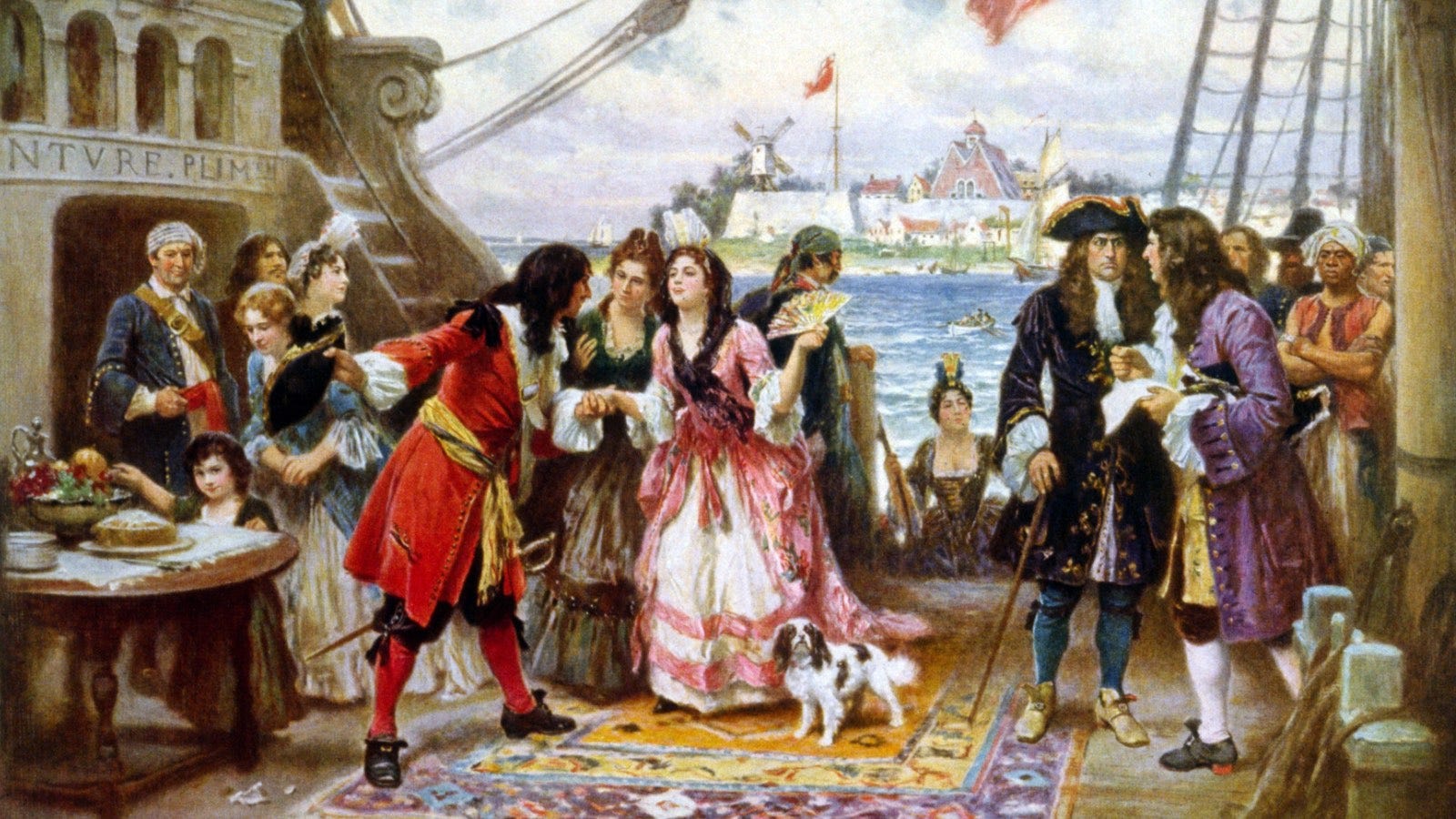

23rd May 1701
(read time: 13 mins.)
On the afternoon of 23 May 1701, at five o’clock, low tide, they reached Execution Dock at Wapping. The pirate William Kidd was led to the scaffold, a noose placed around his neck. The cart was drawn away. Kidd dropped… Every buried chest, every desert island, every X-marks-the-spot in every pirate story you have ever encountered owes something to William Kidd and that moment.
Picture the least likely man in the world you’d cast as a pirate legend.
No slow-burning fuses braided into his beard. No swaggering, rum-soaked buccaneer haunting the Caribbean. No skull and crossbones, no wooden leg, no parrot with strong opinions.
Picture instead a respectable Scottish sea captain in his fifties. A churchgoer and property owner. A man with a fine townhouse, a wealthy wife, two daughters and a thoroughly solid reputation.
That man was William Kidd. A surprising amount of what you think you know about pirates—the buried treasure, the map, the desperate hunt, the legend—traces back to him. Not because he was a great pirate. Not even because he was much of a pirate at all.
But I’m getting ahead of myself...
William Kidd…
…was born around 1654, most likely in Dundee, Scotland—though Greenock on the River Clyde has its advocates, and—the history record being what it is—we may never know for certain.
History is not the past—it is the method we have evolved of organising our ignorance of the past. It’s what’s left in the sieve when the centuries have run through it—a few stones, scraps of writing, scraps of cloth.”
HILARY MANTEL
William’s father was a seaman—a working man of the North Sea and North Atlantic. What Kidd got up to until his first appearance in history books, some thirty-five years later, nobody quite knows. We can assume he went to sea. The details, apparently, not worth recording.
What we do know is that Kidd was no choirboy.
By 1689, William was sailing the Caribbean as part of a French pirate crew under one Captain Jean Fantin. Sailing under a French flag didn’t sit comfortably with him—and Kidd being Kidd, he solved the problem in the most direct way possible. While Fantin was ashore, he led a mutiny, seized the ship and sailed her to the English colony of Nevis. There, he renamed her the Blessed William—presumably in honour of the new Dutch king on the English throne, William of Orange.
The governor of Nevis, Christopher Codrington, promptly recruited Kidd and the Blessed William into a small squadron tasked with preying on French shipping in the West Indies. The payment terms were straightforward enough—the crew would be reimbursed, so to speak, by the French.
Whether by chance or design, this was Kidd’s moment to step out of the murky world of French buccaneers and clean up his act; to become—in the lingo of the age—a privateer.
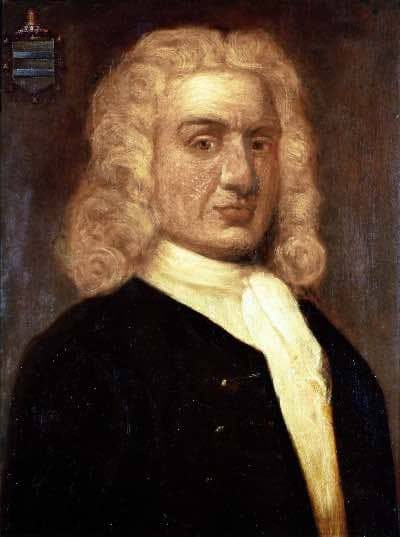
Pirates
Piracy is almost as old as seafaring itself. The ancient Greeks complained about it. The Romans, too—though Julius Caesar took a characteristically Roman view of the inconvenience. Captured by Cilician pirates in 75 BCE and held for ransom, he promised on his release to return and crucify them all. Then did exactly that. A man of his word, at least.
The golden age produced a remarkable cast, each more improbable than the last. Henry Every pulled off the largest pirate heist in history—seizing the Mughal treasure ship Ganj-i-Sawai in 1695, stripping her of gold, silver and jewels—then disappeared from the face of the earth. Never caught, never found. Then there was Calico Jack Rackham, distinguished chiefly by two members of his crew: Anne Bonny and Mary Read, both of whom were far more frightening than he was.
Edward Low achieved a grimmer sort of fame—a man of such extravagant cruelty to his captives that even his fellow pirates found him a bit much. And let’s not forget a character occupying a category of his own. Stede Bonnet—wealthy middle-aged Barbadian landowner, pillar of respectable society—bought himself a ship in 1717, the Revenge, and turned pirate. Apparently, to escape his marriage.
Privateers
By the Middle Ages, piracy in European waters had become almost institutional. Governments, unable to stamp it out, did the next best thing: they licensed it.
In 1243, King Henry III of England began issuing what became known as privateering commissions—licences granted to specific individuals to seize enemy ships at sea and share the plunder with the Crown.
The difference between a pirate and a privateer was, essentially, a piece of paper. One was a criminal. The other was a criminal with a letter from the King. A pirate robbed ships. A privateer robbed ships on behalf of the Crown, took a smaller cut and was considerably better dressed at the trial.
The merchant whose ship had just been boarded and relieved of its cargo wouldn’t have found the distinction particularly consoling.
Merchants aside, it was a neat arrangement—profitable for the Crown, attractive to investors and convenient for men who were going to rob ships anyway. It stayed that way for over six centuries, until the Declaration of Paris in 1856 abolished privateering altogether.
The word itself, ‘privateer’, had only entered common usage in the 1660s, clipped from the idea of a ‘private man of war’. By the time William Kidd set sail in 1696, piracy and privateering were in full flourish, and the line between them was as thin as the piece of paper on which a commission was written.
In Kidd’s case, that line would prove to be the difference between life and death.
A respectable life in New York
In February 1690, Kidd found himself hoisted by his own petard. Having directed one mutiny, he was toppled by another—his crew turned, stole the Blessed William, and sailed off without him. Having brushed down his pride, he was reassigned a further ship, the Antigua, and headed for New York.
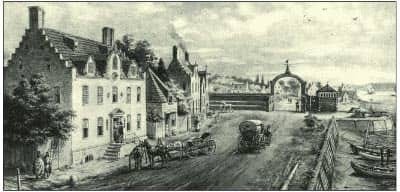
New York in the 1690s was a most accommodating port for pirates in the English colonies—a bustling harbour, cosmopolitan city and relaxed enough for someone like Kidd to operate without too much harassment. He settled, married the wealthy widow Sarah Bradley Cox Oort, raised two daughters and built a respectable life as a merchant captain.
William Kidd was prosperous, middle-aged, and trusted by people in high places. Life was good.
Out of Curiosity
To be hoisted by your own petard means to be undone by the very trap you set for someone else.
The phrase comes from Shakespeare’s Hamlet:
“For ‘tis the sport to have the engineer
Hoist with his own petard.”
A petard was a small explosive device used to blow open gates or walls. If it went off prematurely, it would launch the engineer who planted it skyward. Hoisted, quite literally, by his own petard.
The proposal
Around 1695, while visiting London, Kidd met a fellow New Yorker Robert Livingston. Livingston had the ear of Richard Coote, the 1st Earl of Bellomont, who had the ear of the Crown. And he had a proposition for Kidd: build a private warship, hunt down pirates and French vessels in the Indian Ocean, and split the proceeds.
The other backers funding the venture were not shadowy underworld figures, but leading members of the Whig government: Henry Sidney, Earl of Romney, was Master General of Ordnance and a close confidant of King William III. Sir John Somers held the offices of Solicitor General and Lord Keeper of the Great Seal. Admiral Sir Edward Russell was First Lord of the Admiralty and Treasurer of the Navy.
These gravity-defying titles entered a room before their owners did. Together, they represented about as much of the English establishment as it was possible to squeeze into one place.
In short, they were quietly looking to invest their own money in a privateering voyage—blurring the line somewhat between law enforcement and grand larceny.
Captain Kidd takes the bait
In theory, Kidd didn’t need the hassle. He was respected, comfortable, and doing perfectly well out of the booming Atlantic trade. But the sums of money on offer were difficult to ignore.
So was the flattery. For a colonial captain with solid connections but no official naval rank, being hand-picked by some of the most powerful men in England and handed a royal commission was not the sort of thing you turned down. The risks, on paper at least, seemed manageable.
“Our trusty and well-beloved Captain Kidd…” began the King’s commission, authorising him to seize pirates and—as an agreeable side hustle—attack and loot French shipping wherever he found it.
A new ship was built at Deptford for the purpose: the Adventure Galley, a 280–ton galley-frigate with some 34 guns, rigged for both sail and oar. One hundred and fifty men signed on under the classic “no prey, no pay” arrangement.
In 1696, King’s commission stowed and his new ship beneath him, Kidd sailed from England. He had no idea what was coming.
The commission turns sour
The Indian Ocean proved uncooperative. Disease claimed some of the crew, others deserted. Months passed with little gained. The Adventure Galley rotted beneath their feet and the mood was heading the same way.
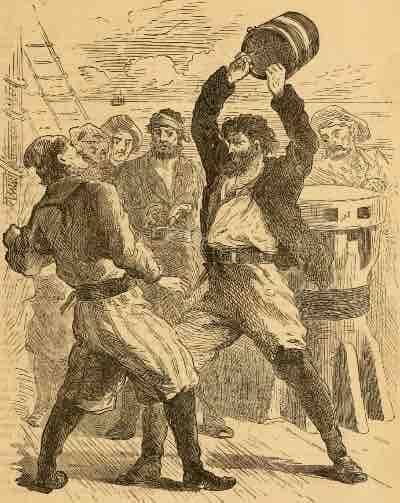
In October 1697, tempers boiled over. Kidd’s gunner, William Moore, was on deck sharpening a chisel when a Dutch vessel appeared on the horizon. Moore pressed Kidd to attack her—pure piracy, and a direct affront to their Dutch-born king. Kidd refused.
Kidd ended the heated argument by hurling an iron bucket at the gunner. It fractured his skull. Moore was dead by the following morning.
The iron-bucket incident would turn out to be a miscalculation with consequences.
Temporary relief arrived on 30 January 1698. Kidd raised French colours and took his greatest prize: the 400-ton Quedagh Merchant—an Indian vessel hired by Armenian merchants and laden with satins, muslins, silks, gold and silver. Her captain was an Englishman, but he carried papers—or ‘passes‘—from the French East India Company, placing him under the protection of the French Crown.
Under the terms of Kidd’s commission, a ship sailing under French protection was a legitimate target. He watched over those passes with great care. They were, he believed, his insurance policy.
He was wrong about that, too.
A series of unfortunate events
While Kidd and his crew were toasting their French haul, news of the Quedagh Merchant had reached England. Celebration would soon turn into something else entirely.
The Nine Years’ War between England and France had ended in September 1697—just months before Kidd took his prize. His commission authorising him to attack French shipping had been drawn up in wartime. In peacetime, the legalities were considerably shakier.
In addition, much of the Quedagh Merchant’s cargo belonged to Muklis Khan, a nobleman with close connections to the Mughal Emperor Aurangzeb—who responded by embargoing all East India Company trade. A Scottish privateer’s escapade was bringing one of the world’s most powerful trading enterprises to its knees.
This was a diplomatic and commercial crisis of the first order. Someone was going to have to answer for it.
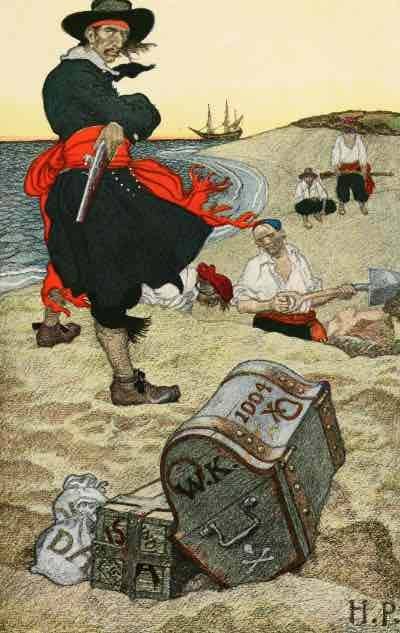
Buried treasure
Kidd remained blissfully unaware of the storm he had caused until he put in at Anguilla in April 1699, more than a year later. What he learned there stopped him cold. He had been declared a pirate by the Crown. Every colonial governor in the Americas had orders to arrest him on sight.
He soon discovered how quickly doors could slam. Danish-controlled Saint Thomas refused him entry. He sold off much of the cargo, exchanged the Quedagh Merchant for a smaller, less recognisable sloop—the Antonio—and did what any sensible man in his position would do. He ran.
Although his leading financial backer, Lord Bellomont, had offered clemency, Kidd needed a backup insurance policy. Slipping quietly into Oyster Bay to reconnect with his wife and daughters, he arranged to offload and bury his treasure with the Gardiner family on their island off the eastern tip of Long Island. It was a substantial haul—1,111 ounces of gold, together with silver, rubies, diamonds, candlesticks and Spanish currency.
Then Kidd sailed for Boston, Massachusetts.
The arrest
Kidd’s instincts had been sound. After Bellomont lured him to Boston in July 1699, he was promptly arrested. He offered up the Gardiner’s Island location as a sweetener, and even proposed fetching another fifty thousand pounds’ worth of buried treasure from the Caribbean, if only they’d let him do it himself. No chance.
Kidd was shipped to London in 1700 and thrown into Newgate Prison, where he spent the better part of a year languishing. In Westminster, a new Tory-dominated Parliament saw an opportunity—Kidd could help to embarrass the Whig grandees who had bankrolled the whole venture. However, he refused to implicate his backers, confident they would intercede on his behalf. They didn’t.
Politically useless, Captain William Kidd was sent to trial in May 1701.
The trial
The proceedings at the Old Bailey were a sham.
Kidd was forced to represent himself against experienced prosecutors. The French passes taken from the Quedagh Merchant were never produced in court. Without them, his claim to have acted within the law collapsed.
The fatal blow came from two of his former mutineers, who took the stand and, by all accounts, perjured themselves—testifying that the attack on William Moore had been premeditated, elevating the charge from manslaughter to murder.
For Kidd, being ‘hung out to dry’ was not so much an idiom as a forecast.
Exhausted and abandoned, he eventually stopped defending himself altogether. “I will not trouble this court any more,” he said, “for it is folly.”
Guilty on all charges. Murder. Five counts of piracy.
The execution
Kidd spent his last days in Newgate. He heard his final sermon from the prison chaplain. He wrote to Robert Harley, the powerful Tory Speaker of the House of Commons, offering to reveal the location of further hidden plunder worth £100,000 in exchange for his life. Harley declined.
On the afternoon of 23 May 1701, Kidd and Darby Mullins—the one member of his condemned crew not to receive a reprieve—were loaded onto horse-drawn carts and paraded through London. Street peddlers worked the edges of the crowd that lined the route. So did the pickpockets.
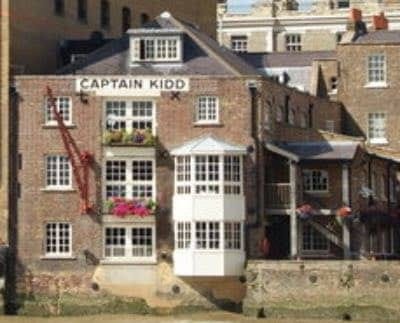
At five o’clock, low tide, they reached Execution Dock at Wapping. Kidd was led to the scaffold, the noose placed around his neck. The cart was drawn away. Kidd dropped…
…the rope broke, pitching the condemned man—by some accounts mercifully dulled by drink—into the Thames mud alive and shaken. He was hauled to his feet, manhandled back up to the scaffold, and strung up a second time. Some in the crowd shouted for his release—the broken rope was a sign from God, they cried.
Nobody in authority was listening. Neither was God. Kidd was hanged again. This time, the rope held.
The aftermath
After the customary three high tides had passed, Kidd’s body was cut down and coated in tar to slow its decay. He was then unceremoniously stuffed into a gibbet—a made-to-measure iron cage—and suspended at Tilbury Point on the lower Thames, where he would be visible to every ship entering or leaving the port.
There he remained for over two years. Gruesome, certainly, though Oliver Cromwell’s head was displayed above the Houses of Parliament for twenty-five.
The respectable New York merchant-captain ended his days as a tarred and rotting warning on the Thames estuary.
His powerful Whig backers, every one of them, died in their beds.
Kidd’s legacy
The repeated references to buried treasure turned William Kidd into a myth that caught fire and refused to be extinguished.
A ballad—Captain Kidd’s Farewell to the Seas, or The Famous Pirate’s Lament—was printed shortly after his execution. The story was largely fanciful but, in effect, fixed Kidd in the public mind as a notorious pirate. Fake news with a catchy tune.
The folklore mutated further over the following century, and tales of buried treasure surfaced. Washington Irving’s 1824 collection Tales of a Traveller included The Devil and Tom Walker, built around rumours of Kidd’s treasure buried in a New England swamp. Edgar Allan Poe used the legend in The Gold-Bug in 1843, centring his plot on a cache buried by Captain Kidd. Even Robert Louis Stevenson admitted that Treasure Island was influenced by Irving’s portrait of Kidd.
