



6th April 1906
(Read time: 10 min)
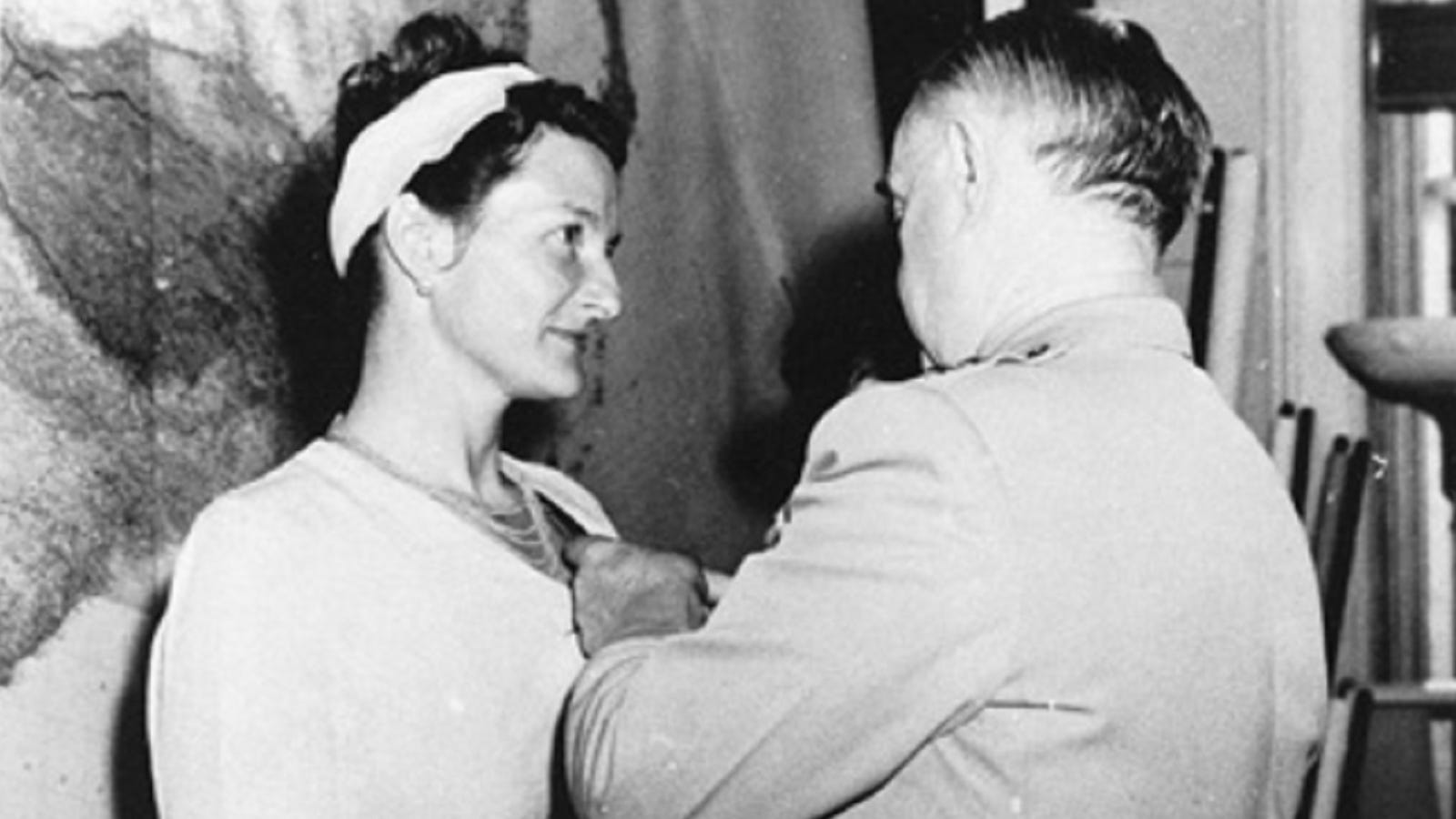
Virginia Hall was born on 6th April 1906. Years later, she would find herself in Vichy France, under cover as a reporter for the New York Post—the first active female field agent in France for Churchill’s controversial Special Operations Executive (SOE).
When it comes to entertainment, few thrills compare to watching the world’s great illusionists—David Copperfield, Penn & Teller, Derren Brown, Siegfried & Roy. On the face of it, each act is unique. But look closer, and they share one defining quality: sheer, unapologetic audacity.
The misdirection that pulls your eye just far enough in the wrong direction. The now-you-see-it, now-you-don’t sleight of hand. And then the final reveal—hiding in plain sight the whole time, if only you’d known where to look. Each of those elements requires nerves of steel and absolute self-belief.
Recent history has produced at least one performer who had these skills in abundance. But she was no illusionist. Her theatre wasn’t a Vegas stage or a West End show. It was Nazi-occupied France during the Second World War—and her audience was the Gestapo. The price of a bad performance wasn’t a slow handclap. It was arrest, torture and almost certain death.
Virginia Hall
In 1906, Maryland was a state caught between two worlds. Baltimore was a prosperous, confident city—Johns Hopkins University was a model of American scientific education, while the harbour bustled with trade.
However, for most women, the social rules were rigid, the expectations clear. Women in the United States could not yet vote—that would come fourteen years later. As for careers, anything beyond the domestic was considered eccentric at best, and at worst, mildly scandalous.
Virginia Hall was born 6 April 1906, into a family that divided its time between an elegant city home and a 110-acre retreat in the countryside near Parkton.
She attended the elite Roland Park School and grew up with every comfort; the sort of upbringing that seemed to point in only one direction—marry well, manage a household and leave the larger world to the men.
Virginia had other ideas.
She was cantankerous, headstrong and far more interested in horses, hunting and foreign horizons than in the society marriage her mother had mapped out for her.
In her twenties, Virginia roamed and studied across Europe. She picked up French, German and Italian along the way, before landing a post as a consular clerk for the US State Department—firstly in Warsaw, then Smyrna in Turkey, and finally Venice.
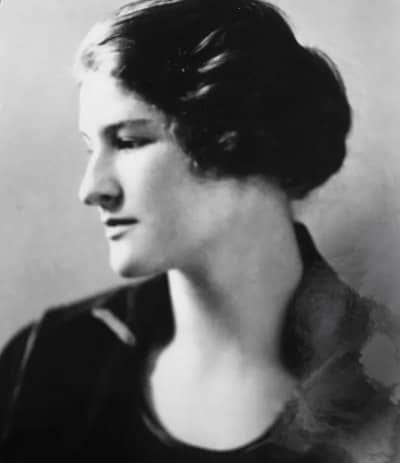
The consular work brought Virginia into the embassies, but only through the back door—typing and filing while others carried the titles and made the decisions. What she wanted was a commission as a Foreign Service Officer, one of the real diplomats who actually spoke for the United States.
There was a catch. Of the several hundred Foreign Service Officers on the State Department’s books, exactly six were women.
Virginia’s application was repeatedly rejected. Each time she would pick herself up, dust herself down and try again—which, as it turned out, was rather good training for what was coming.
The accident
In December 1933 while stationed in Smyrna, the energetic Baltimorean joined friends on a snipe shoot along the marshes of the Gediz peninsula. Climbing a fence, Virginia stumbled and simultaneously discharged her shotgun into her left foot. Bleeding heavily, she was rushed to hospital.
Out of Curiosity
A snipe is a small, long-billed wading bird that haunts the bogs and marshes of Europe, Asia and North America. Flush one out, and it erupts from the reeds in a burst of darting, zigzagging flight so fast and erratic that it has been defeating hunters for generations.
In British usage, a man who could bring down a snipe was considered accurate enough to pick off a single target at distance. He was a ‘sniper‘.
The military first commandeered the term by 1824, possibly in India, and by 1914, it needed no introduction.
Despite the surgeons’ best efforts, Virginia’s leg was amputated below the knee. Back home in Maryland, she was fitted with a seven-pound wooden prosthetic—aluminium foot, leather straps and all the elegance of a fence post. Rudimentary by today’s standards, but considerably better than the alternative.
Hall named her new companion Cuthbert. As soon as she learned to walk again, she returned to work. As for future applications, the State Department now had two reasons to turn her down.
World War II—1940
War broke over Europe in 1939 while Virginia was stationed in Tallinn, Estonia. After one final rebuff from the State Department, she resigned, went to Paris, and signed on as an ambulance driver in France—swapping diplomatic back rooms for the chaos of retreating armies.
When France fell in June 1940, Virginia trekked over the Pyrenees into Spain. On one occasion at Irun railway station, she struck up a conversation with British agent George Bellows. That meeting would change her life.
Within months, Hall found herself in Vichy France, under cover as a reporter for the New York Post—the first active female field agent in France for Churchill’s controversial Special Operations Executive (SOE).
Out of Curiosity
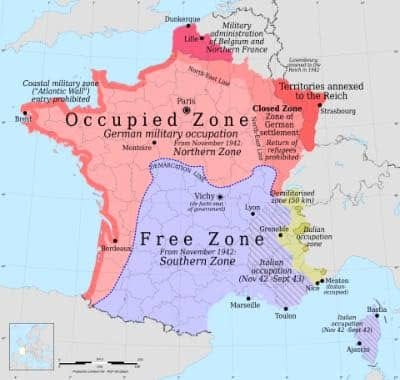
When France fell in June 1940, the armistice carved the country into two: German-occupied north and west, and a so-called Free Zone in the south.
Under pressure from the Nazis, a compliant French government installed itself in the southern spa town of Vichy, under the elderly Marshal Philippe Pétain.
Pétain and his ministers dutifully carried out Hitler’s bidding, while maintaining the polite fiction of French independence.
This collaborationist regime would later be referred to as Vichy France.
Privately, Virginia’s supervisors in London gave her a few days before the Gestapo would catch up with her. They were spectacularly wrong.
In Lyon, she built a clandestine network—codenamed ‘HECKLER’—from scratch. She recruited volunteers from every background, organised safe houses, coordinated arms drops and threaded escape routes through occupied territory for downed Allied airmen.
Among Virginia’s most valuable recruits was Germaine Guérin, the owner of Lyon’s most prominent brothel. German officers, it turned out, were more talkative with their trousers off—and the pillow talk of the master race proved remarkably useful.
The First Act—misdirection
In October 1941, twelve SOE-linked agents gathered for a meeting in Marseille. Virginia instinctively chose not to go. Vichy police raided the meeting and the twelve men were sent to the Mauzac internment camp near Bergerac.
Virginia resolved to get them out.
Too well known to go anywhere near the prison herself, she recruited Gaby Bloch—wife of one of the prisoners—to make regular visits to Mauzac with food parcels. What the guards didn’t know was what the tins and packages contained.
One of the captured agents used the hidden tools from the food parcels to fashion a key to the barracks door. Meanwhile, Virginia located the safe houses, arranged vehicles and prepared disguises for the escapees.
Virginia’s masterstroke was in the detail. When twelve agents walked calmly out of the barracks door to freedom on 15 July 1942, she immediately seeded disinformation that RAF aircraft had already whisked them back to England.
By the time the Vichy authorities worked out that the escapees were still in France, Virginia had already moved them by truck and train to Lyon, across Spain and, eventually, back to England.
The Germans were incandescent. They poured hundreds of Gestapo and Abwehr agents into the areas around Lyon.
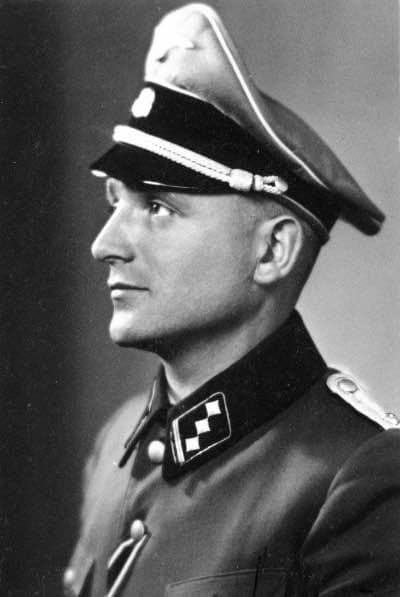
Local Gestapo chief Klaus Barbie—later to earn the title of ‘the Butcher of Lyon’—made Hall his prime target, vowing to get his hands on “that limping bitch”.
Through 1942, Hall’s networks were repeatedly betrayed, most notoriously by Abbé Robert Alesch, a Catholic priest who was secretly working for German intelligence. Her colleagues were arrested one by one.
In September, Virginia radioed London: “My time is about up”.
The Second Act—Now you see her, now you don’t
On 7 November 1942, the American consulate warned Virginia that Germany planned to occupy the Free Zone the following day. Klaus Barbie’s Gestapo would have a free hand. The most wanted woman in occupied France had only hours.
Hall burned her papers, told nobody she was leaving—not her doctor, not her brothel owner, not a single soul in her network—and boarded a train south to Perpignan.
From there, she hired a guide—a reluctant one, who had serious doubts about a woman with a prosthetic leg tackling a 7,500-foot mountain pass in the depths of winter. Virginia went anyway.
The route rose through heavy snow for fifty miles over two days, the temperature dropping savagely with every hour of altitude gained. With each step, Cuthbert ground her stump to a raw and bloody mess.
At a safe house partway across the mountains, Virginia paused to radio London: “Cuthbert is being tiresome, but I can cope.”
London replied: “If Cuthbert is troublesome, have him eliminated.”
She smiled, kept walking, and crossed into Spain—where she was arrested for illegal border crossing. American diplomatic pressure finally secured Hall’s release.
The deception was simple and devastating. One day Virginia Hall was the most wanted woman in France. The next, she had ceased to exist. No farewell, no trace, no trail. Klaus Barbie and his five hundred agents were left grasping at shadows.
The Third Act—Hidden in plain sight
Once back in Britain, Virginia demanded to return to France.
The SOE said absolutely not. Too well known. Too compromised. Too dangerous. So Virginia quit the SOE and joined the American Office of Strategic Services (OSS), who had no hesitation sending her straight back to France.
In March 1944, she arrived in darkness by boat on the Brittany coast.
This time she went back as an elderly French peasant woman—shuffling, stooped, entirely unremarkable. Virginia had dyed her hair grey, filed her own teeth down to age herself, padded her clothes to kill her figure and buried Cuthbert’s telltale limp inside the slow, arthritic hobble of old age.
Nobody gave the old woman a second glance.
The most wanted Allied spy in France was hiding in plain sight—selling cheese to German soldiers while transmitting intelligence from barns and organising, arming and training three full battalions of Maquis fighters ahead of D-Day.
Klaus Barbie’s wanted posters were everywhere. His agents were searching frantically. And all this time, the limping lady was right under their noses, shuffling past them in the village square.
