



30th May 1896
(read time: 12 mins.)
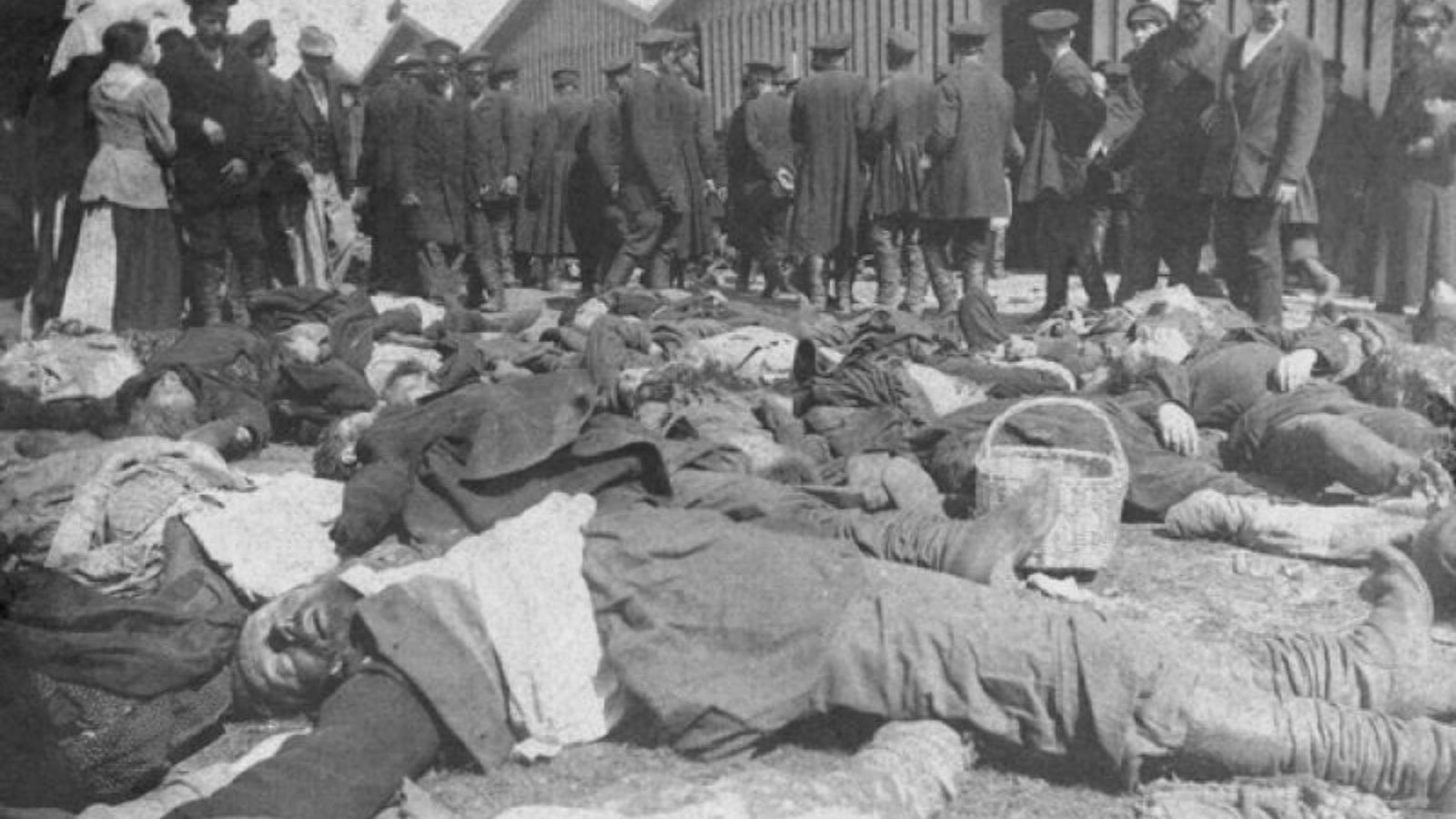
On 30 May 1896, just a few days after his coronation, Tsar Nicholas II had a decision to make. Over a thousand of his subjects lay dead at Khodynka Field. Should he go to the French ambassador’s ball or mourn publicly with his people?
There is a particular kind of political suicide that doesn’t involve a scandal, a war or even a bad decision. It involves a party.
Take revolutionary France in October 1789. With Paris already in open revolt and bread shortages driving women into the streets, the King’s Guards at Versailles staged a lavish banquet in the opera house to welcome the newly arrived Regiment of Flanders. Louis XVI and Marie Antoinette made the mistake of showing up.
The press duly reported the ‘orgiastic excess‘ of the evening as yet another symbol of aristocratic indifference to the starving masses—and drew its own conclusions. Four days later, so did thousands of the women of Paris, who marched on Versailles armed with pitchforks and whatever else came to hand.
The party, in every sense, was over. The royal family left that afternoon and never went back.
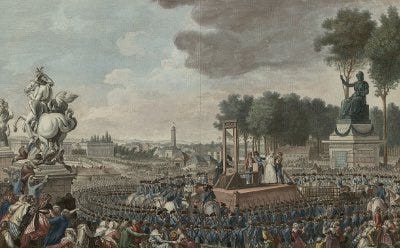
Four years later, Louis XVI was beheaded in the square which is now Place de la Concorde. Marie Antoinette followed him to the guillotine nine months later.
Or how about Iran in October 1971? In a country where rapid modernisation sat alongside deep poverty—where whole villages still had no piped water—Shah Mohammad Reza Pahlavi decided the moment called for a party. Not just any party. A 2,500th-anniversary celebration of the Persian Empire, staged among the ruins of Persepolis.
French chefs were flown in. Tons of imported delicacies followed. A small city of air-conditioned silk tents rose from the desert floor. Dozens of kings, presidents and princes dined on caviar and some of the most expensive wines on earth.
Outside that glittering bubble, most Iranians got on with the business of being poor.
Ayatollah Khomeini, watching from exile, could hardly believe his luck. The whole spectacle had handed him a ready-made script for revolution, and he put it to good use. Just over seven years later, the Shah was gone.
More recently, in the summer of 2020, while the United Kingdom was living under the tight restrictions of Covid-19—families barred from visiting dying relatives in hospital, funerals reduced to a handful of distanced mourners—the staff of 10 Downing Street were doing what any responsible government would do in a national emergency. They were having a party.
Several parties, as it turned out. In the garden, in the offices, in the corridors—wherever there was a flat surface and a bottle of bubbly. Prime Minister Boris Johnson attended a birthday gathering held in his honour in the Cabinet Room in June, for which he was later fined by the Metropolitan Police, becoming the first sitting British prime minister in history to have been found guilty of breaking the law.
It was a distinction he accepted with characteristic good grace, which is to say he denied everything. No guillotine was erected on Whitehall. No pitchforks were raised. But something in the public’s mind snapped, and no amount of optimism or blond hair-ruffling ever quite fixed it.
Three parties. Three catastrophic misreadings of the room. None of them brought the roof down immediately—but neither were they forgotten either. And yet, for sheer obliviousness, none could touch Tsar Nicholas II of Russia, who managed the trick right at the start of his reign.
Nicholas Aleksandrovich Romanov...
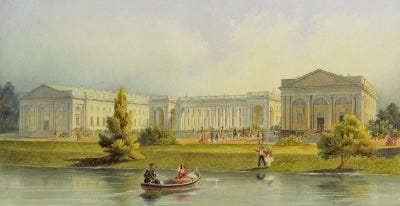
... was born on 18 May 1868 at Tsarskoye Selo, a fantasy of baroque palaces and manicured parkland, of frozen lakes and gilded spires.
The ‘Tsar’s Village‘ was 17 miles from St Petersburg and considerably further from reality. This was where the Russian imperial family lived at a careful distance from the world they ruled. For Nicholas, it was simply home... which left him uniquely unqualified for everything that came next.
His father, Alexander III, was a man of almost mythological physical stature: tall, barrel-chested and built for the express purpose of intimidating everyone in the room. He bent iron pokers for amusement and ruled the largest empire on earth with the serene confidence of a man for whom failure was not an option.
This was unfortunate for Nicholas, because it meant Alexander never got around to preparing his son for the job.
The young Nicolas was, by most accounts, a conscientious student of more-than-average ability. He was also slight, introverted and softly spoken—not the obvious characteristics of a fearsome autocrat.
In his less charitable moments, Alexander dismissed Nicholas as ‘girlish‘. Disconcertingly, the tsarevich was inclined to agree. And yet the throne awaited, and somebody had to sit on it.
Out of Curiosity
By 1598, Russia’s Rurikid dynasty had run out of heirs, plunging the country into a catastrophic period of civil war, foreign invasion and famine known as the Time of Troubles.
When a national assembly finally convened in 1613 to settle the succession, it came down to a compromise: a sixteen-year-old boy, Mikhail Romanov. His candidacy owed much to his family’s standing and to their connections with the old Rurikid tsars through his great-aunt Anastasia Romanovna, Ivan the Terrible’s first wife.
It was a fragile foundation on which to rebuild an empire. But it held.
Over the next two centuries, the Romanovs transformed Russia from a sprawling medieval tsardom into a continental superpower.
The early heavy lifting fell to Peter the Great, hauling Russia into the modern world in the 1700s, founding St Petersburg out of a swamp and conjuring a navy from almost nothing. Given that Russia’s existing coastline was largely Arctic and frozen solid for half the year, this was quite an achievement.
From 1762, Catherine the Great drove the frontiers south and west, swallowing Crimea, the Black Sea and much of Poland at a rate that made the rest of Europe quietly nervous.
But the cracks were deepening. The gap between the tiny, fabulously wealthy ruling class and the vast, desperately poor peasant population was enormous. Alexander II—Nicholas’s grandfather—had tried to address this by emancipating the serfs in 1861—long overdue and widely celebrated.
The peasants were freed, then handed small, heavily indebted plots of land with few real economic prospects. It was like releasing someone from prison and handing them a bill for their cell.
To put it another way, they were released from one cage and shown into a slightly larger one.
In 1881, Alexander II was assassinated by revolutionaries, mortally wounded by a bomb beside his carriage on a St Petersburg street. His son, Alexander III, concluded that reform was dangerous, liberalisation was weakness, and the whole experiment was over. No more concessions to constitutional talk.
The Tsar would rule; Russia would obey. It was a simple enough philosophy, and Alexander III was the man to enforce it.
Tsar Nicholas II
When Alexander III died unexpectedly of kidney disease in November 1894—at forty-nine—his court and his family were shocked. Nicholas wept. He was twenty-six. He became Tsar of all the Russias. He had no choice.
“I am not prepared to be a Tsar. I never wanted to become one. I know nothing of the business of ruling. I even have no idea how to talk to the ministers.”
TSAR NICHOLAS II to a cousin, 1894
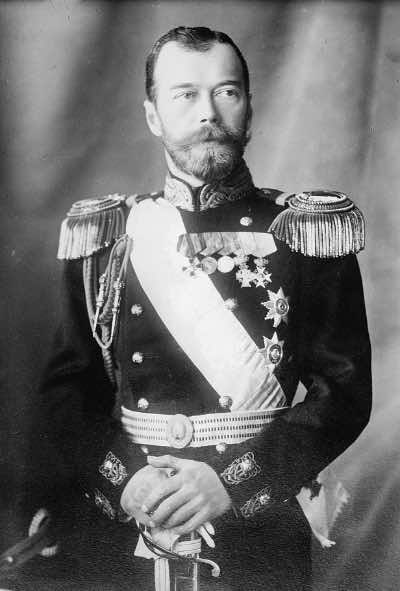
Nicholas was, by nature, a man of extraordinary self-restraint—shading into shyness—with a genuine love of military life and an unshakeable belief in the divine right of tsars to do exactly as they pleased. He had absorbed his father’s politics completely, even if he hadn’t inherited his father’s spine. Russia would be ruled by the tsar alone; the tsar answered to God, and nobody else needed to be consulted. It was an agreeable arrangement, provided you were the tsar.
Nicholas married Princess Alix of Hesse-Darmstadt—a granddaughter of Queen Victoria—barely three weeks after his father’s death, the court still deep in formal mourning. The wedding party must have been a riot.
He would not be crowned for another eighteen months. There was a great deal to arrange.
The coronation
Russian Imperial coronations were not merely ceremonies—they were choreographed statements of divine authority. Peter the Great had shifted the capital to St Petersburg in 1712, but emperors still made the journey back to Moscow to be crowned in the Dormition Cathedral inside the Kremlin. The old sacred heart of Russia was where God’s representative on earth got his paperwork signed.
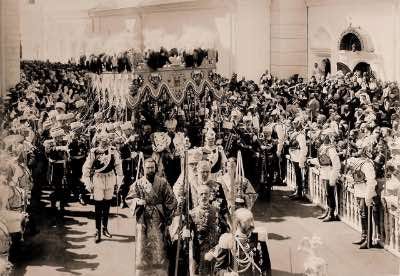
The coronation of Emperor Nicholas II and Empress Alexandra Feodorovna took place on 26 May 1896, in the Dormition Cathedral of the Moscow Kremlin. It was everything it was supposed to be—solemn, magnificent, charged with ceremony. The Kremlin blazed with electric light, a novelty for many of those looking on.
Nicholas received the Imperial Crown of Russia, Alexandra stood at his side, and the metropolitan anointed them both with holy oil. For one golden moment, it looked like the beginning of something glorious.
The fateful party
The people’s party came four days later, 30 May 1896, at Khodynka Field, on the north-western edge of Moscow. Here, away from the cathedral incense and the gilded robes, the new Tsar would make his gesture to the masses. Not through ceremony and silk, but through... sausages and a commemorative mug.
The gifts were modest, to put it kindly: a Vyazma gingerbread, a piece of sausage, a small bag of sweets and nuts, a bread roll from the celebrated Moscow baker Filippov and a brightly painted enamel mug bearing the new tsar’s monogram—the whole lot tied up in a gaudy cotton headscarf. It was the kind of stuff you might find at a village fête, had village fêtes been organised for emperors.
Khodynka was not actually a park. It was a military training ground, criss-crossed with ditches, gullies and trenches dug for exercises, all hidden beneath a thin skin of grass. Officials had chosen it for its size and proximity to central Moscow. Warnings that the ground should be levelled, or the worst hollows properly filled, were brushed aside.
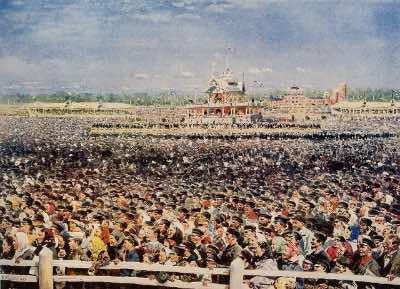
The night before, the crowds began to arrive. Rumours had swept through Moscow that there were not enough gifts to go around. By dawn, more than half a million people had poured onto Khodynka Field.
The Khodynka Field disaster
People near the front began stumbling into the trenches. Those behind couldn’t see why; they kept pushing. The field started swallowing people. Eighteen hundred police and Cossack patrols couldn’t hold the line. The surge became a stampede. When it was over, 1,389 people were dead and 1,300 more injured.
For a mug and a bread roll.
The mug would forever be referred to as the Cup of Sorrows.
The mistake
And here is where Nicholas II made his mistake. That evening, he was due at the French ambassador’s ball. On the city’s edge, over a thousand of his subjects lay dead on Khodynka Field. The choice was not a complicated one. Cancel the ball. Go to the wounded. Mourn publicly, visibly—act like a tsar.
Nicholas went to the ball.
