



15th September 1940
(read time: 4 mins.)
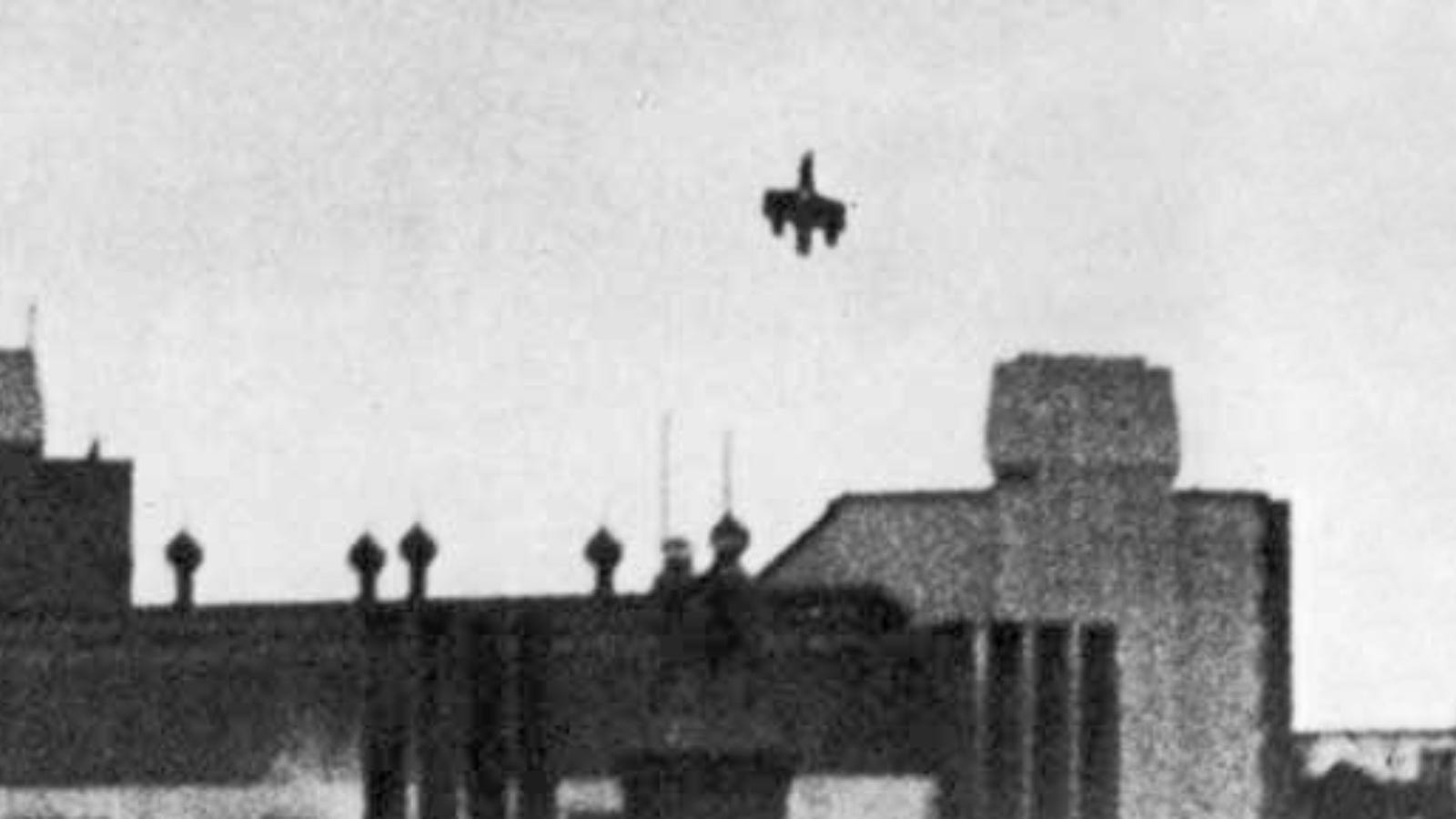
In a few moments, the German Dornier D17 would drop its payload on Buckingham Palace. Sergeant Raymond Holmes had seconds to collect his thoughts. No time to radio for help, no time to seek support from his squadron. He would fly his Hurricane directly into the tail fin of the Dornier. Moments later, Holmes rammed the bomber.
The Battle of Britain…
… was the 1940 air campaign in which the Royal Air Force successfully defended the United Kingdom against sustained Luftwaffe attacks, thwarting Nazi Germany's planned invasion. The Battle of Britain lasted 113 days, but 68 days into the conflict, this day was decisive.
By September, the Luftwaffe had been pounding English cities for over nine weeks. Hitler’s failure to secure air superiority had driven him to launch increasingly desperate bombing campaigns. Without command of British skies, Operation Sea Lion - his planned invasion of Britain - remained impossible.
The Royal Air Force remained defiant.
Winter was approaching fast, and with it, the end of any realistic invasion window. Hitler needed a breakthrough now. This was perhaps his final roll of the dice.
Fifteen hundred Heinkel, Junkers and Dornier bombers darkened the skies above Southern England like a biblical plague of locusts.
The assault continued in waves through to the afternoon. Nearly every remaining RAF fighter plane was in the sky. Spitfires and Hurricanes danced around the German bombers with the commitment of angry wasps at a summer picnic.
Angry wasps over London
One of those angry wasps that day was being flown by RAF Hurricane fighter pilot Sergeant Raymond Thomas Holmes. He was 26 years old at a time when a fighter pilot measured their life expectancy in terms of weeks, not years.
On 15 September 1940—now known as Battle of Britain Day—Holmes was flying with 504 Squadron out of RAF Hendon. He was picking off targets over the centre of London, the very heart of the British establishment.
Out of Curiosity
Two days before Battle of Britain Day, the first bomb of World War II had landed on Buckingham Palace. The Royal chapel was destroyed.
King George VI and Queen Elizabeth were in residence at the time and refused to move out.
The Palace would be bombed a further eight times during the war.
Holmes spotted a formation of three Dornier D17 bombers below him at an altitude of approximately 16,000 feet.
He aligned himself with the first Dornier…
I made my attack on this bomber and he spurted out a lot of oil, just a great stream over my aeroplane. blotting out my windscreen. I couldn’t see a damn thing. Then, as the windscreen cleared, I suddenly found myself going straight into his tail. So I stuck my stick forward and went under him, practically grazing my head on his belly.
RAYMOND HOLMES
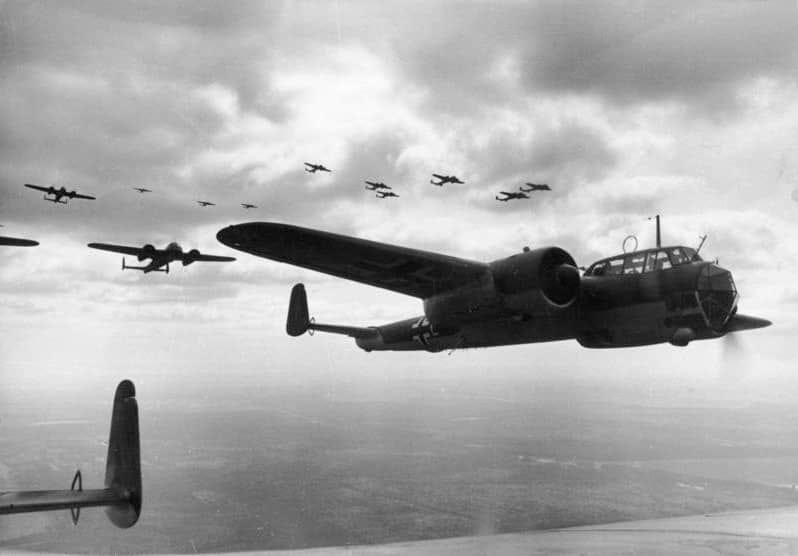
Sergeant Raymond Holmes’ charges the Dornier D17
After another close call with the second Dornier, Holmes’ attention was drawn to the third, which appeared to be heading for Buckingham Palace.
