



22nd September 1735
(read time: 9 mins.)
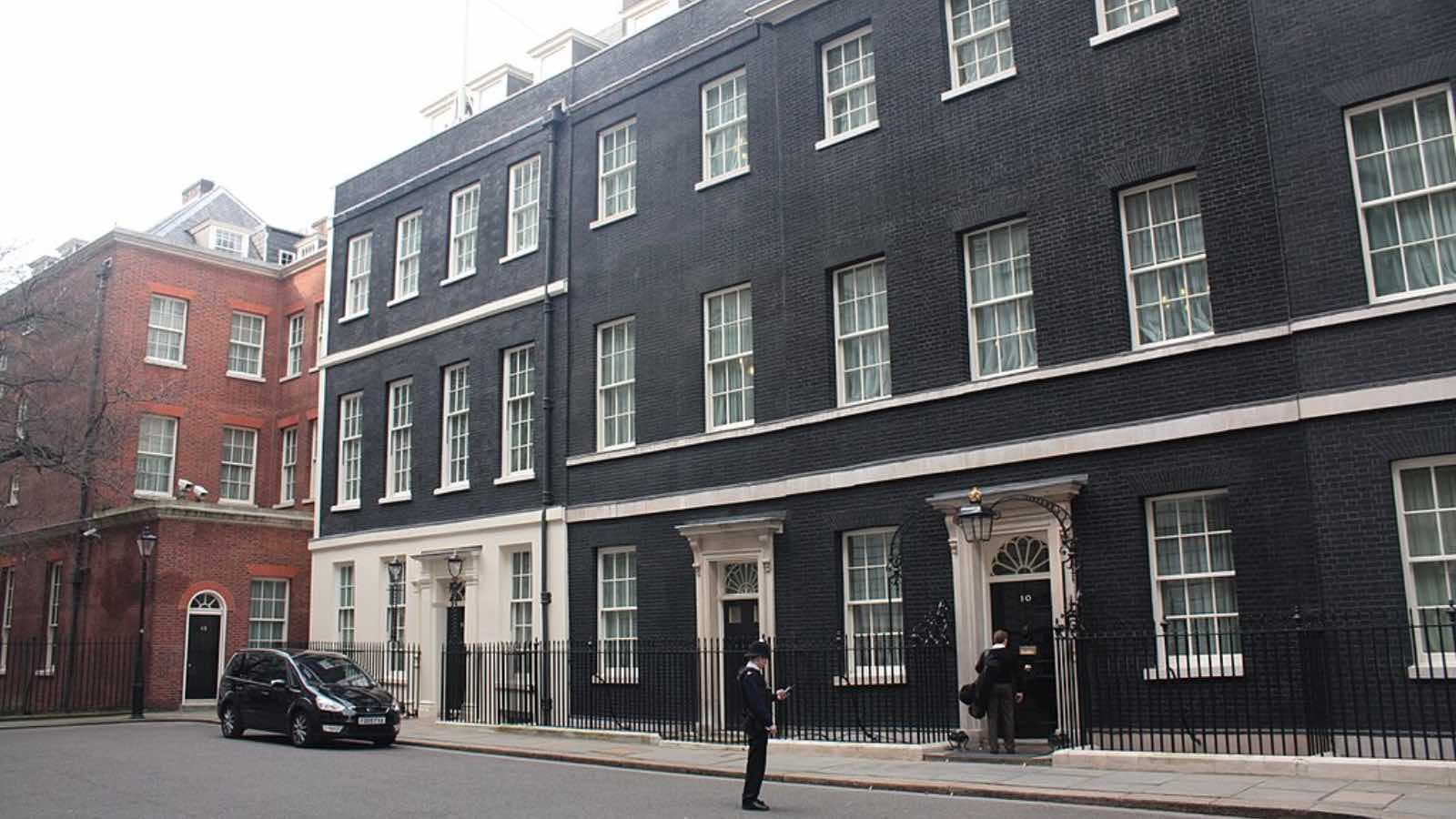
The King owned a bijou townhouse, and he asked Robert Walpole to accept it as a gift: No. 10 Downing Street, Whitehall, London. Ever the politician, Walpole politely declined.
Every self-respecting world power eventually feels the need to house its authority somewhere suitably imposing. The Americans built the White House—a bright neoclassical mansion that manages to look both welcoming and presidential. The Russians went considerably further, settling on the Kremlin, a fortress so sprawling it has its own cathedrals.
The Chinese govern from Zhongnanhai, a walled compound of lakes, halls and courtyards pressed against the old Forbidden City, from which Party leaders could, in theory, never need to emerge.
The French, characteristically, went for style—the Élysée Palace, an 18th-century townhouse dripping with gilded mirrors and ornate panelling that feels unapologetically monarchical. The Germans, perhaps mindful of history, went relentlessly modern—the Bundeskanzleramt, a hulking glass-and-concrete structure so lacking in charm that Berliners call it the ‘washing machine’.
Britain, meanwhile, runs the country from a terraced house. Number 10 Downing Street has the look of a Harley Street consulting room, or perhaps somewhere a well-connected widow of impeccable breeding might give piano lessons to children of minor aristocracy—not, at first glance, the nerve centre of a G7 nation.
If you’ve ever visited Westminster, you will have found the Houses of Parliament, Whitehall and Downing Street clustered together within a few minutes’ walk of each other. You may have wondered how the rapidly expanding British Empire ended up with its command post tucked away down a side road off Whitehall.
To understand that, let’s rewind a little to consider Britain’s first recognised Prime Minister, Robert Walpole.
Out of Curiosity
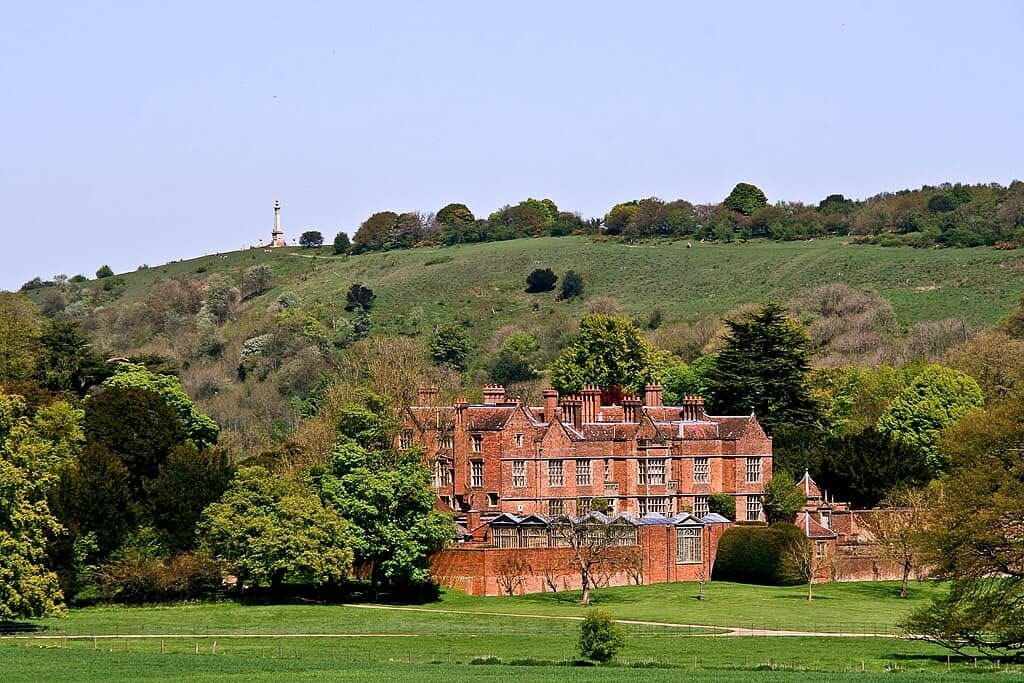
Another home for the British Prime Minister is Chequers, a rather glorious Tudor mansion that serves as a grace-and-favour residence in the Chiltern Hills.
Arthur Lee, the British soldier, diplomat, politician and philanthropist, married the wealthy American, Ruth Moore, in 1899. Lee subsequently purchased the 1500-acre Chequers estate in 1912, complete with Tudor mansion, with a little help from his wife.
However, he discovered that owning a property built in 1565—during the reign of Queen Elizabeth I—required a similar budget to running a small city.
With the political astuteness that had distinguished him as an MP, Lee recognised that if you can’t afford to maintain a British stately home, you should convince someone else that they desperately need one.
This he did. In 1917, Lee gifted Chequers to the British nation to allow Prime Ministers to entertain foreign dignitaries in a manner befitting a head of state.
Robert Walpole…
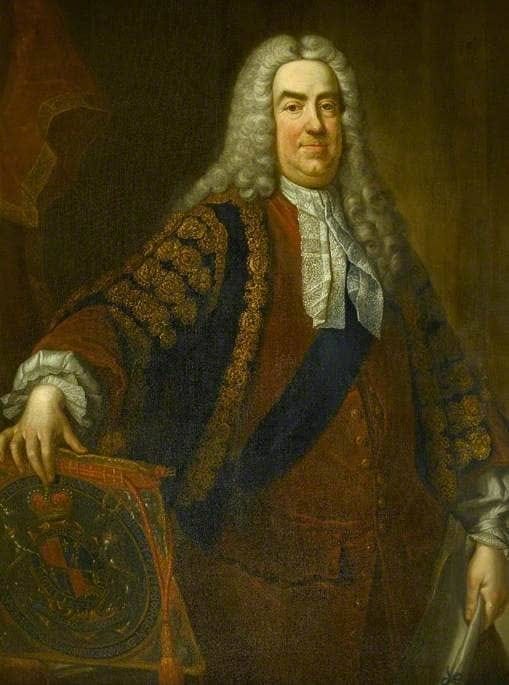
…was born in 1676 in the unspoilt countryside of Houghton, Norfolk, the fifth of 19 children (yes, nineteen). Walpole’s parents were prosperous landowners, so the daily talk was of sheep, wool and crop yields, a far cry from the chatter of Westminster politics.
This was the restoration period in England when religious and constitutional matters permeated every pore of society. King Charles II still wasn’t sure if the English preferred their monarchs with or without their heads.
Robert was educated at Eton College and King’s College, Cambridge, although his studies were cut short when his father died in 1700 and, as heir apparent (his two elder brothers had already died), he inherited the family estate in 1700.
The draw of politics would soon follow. Walpole entered politics at the age of 25 in 1701 for the constituency of Castle Rising in Norfolk.
English political life had remained mired in issues of royal succession, religious affiliation and the ongoing struggle for power between monarch and parliament.
James II had fled to France in 1688 due to his overly Catholic tendencies, while William III had been invited from the Netherlands to rule England alongside his wife, Mary II.
Less than a year after Walpole became a Member of Parliament, Queen Anne would succeed to the throne following William’s death in 1702.
Anne was the first monarch to inherit the constitutional framework of the Act of Settlement of 1701, which established Protestant succession and excluded Catholics from the throne.
Walpole’s opportunity—the South Sea Bubble
Over the next two decades, Walpole established a reputation for financial expertise and prudence. It was said he preferred ‘counting money than counting principles’.
He learned that politics was essentially accounting with more shouting—and he was good at both. The Whigs and the Tories fought tooth and nail over anything and everything. Walpole revelled in it.
He rose through the ranks, becoming Treasurer of the Navy and Secretary of War. But Walpole’s opportunity for power presented itself in 1720 with the bursting of the South Sea Bubble.
The South Sea Company had been set up in 1711 with a refreshingly honest objective: to make the stakeholders rich beyond their wildest dreams.
The business plan was elegant and simple; the company would take over Britain’s national debt in exchange for a monopoly on trade with South America.
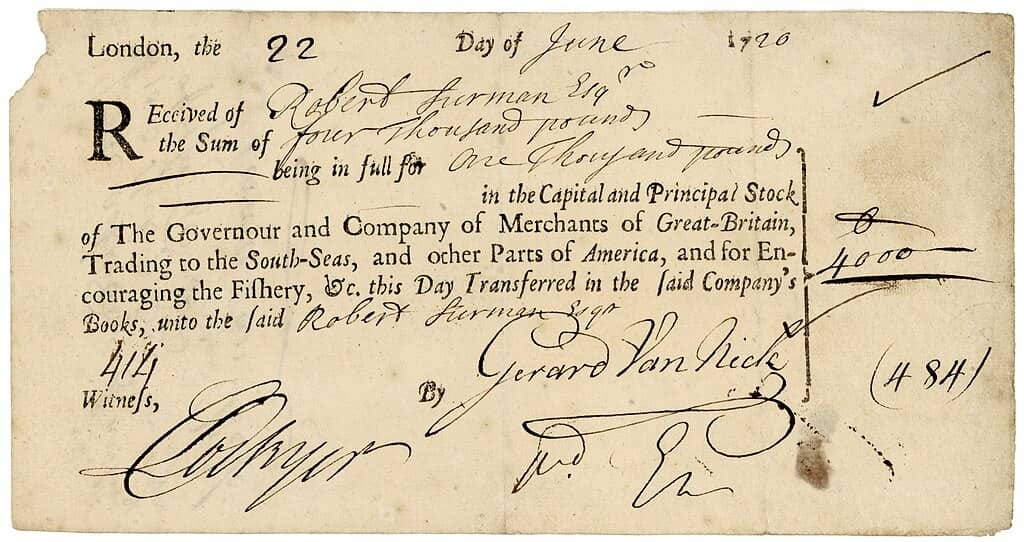
Investors queued up to participate and the share price soared. For one glorious moment, all involved congratulated themselves on a financial masterstroke.
However, a small detail had been overlooked. The Spanish controlled much of South America at the time, and they had no interest in British trade.
It was rather like planning an elaborate garden party in your neighbour’s backyard while the said neighbour was not only home, but had already told you to bugger off.
After all, Britain and Spain were still engaged in the mutual annihilation of the War of Spanish Succession.
Predictably enough, the South Sea Bubble burst in 1720, taking investors’ shareholdings and the life savings of associated worthies to the seabed with it.
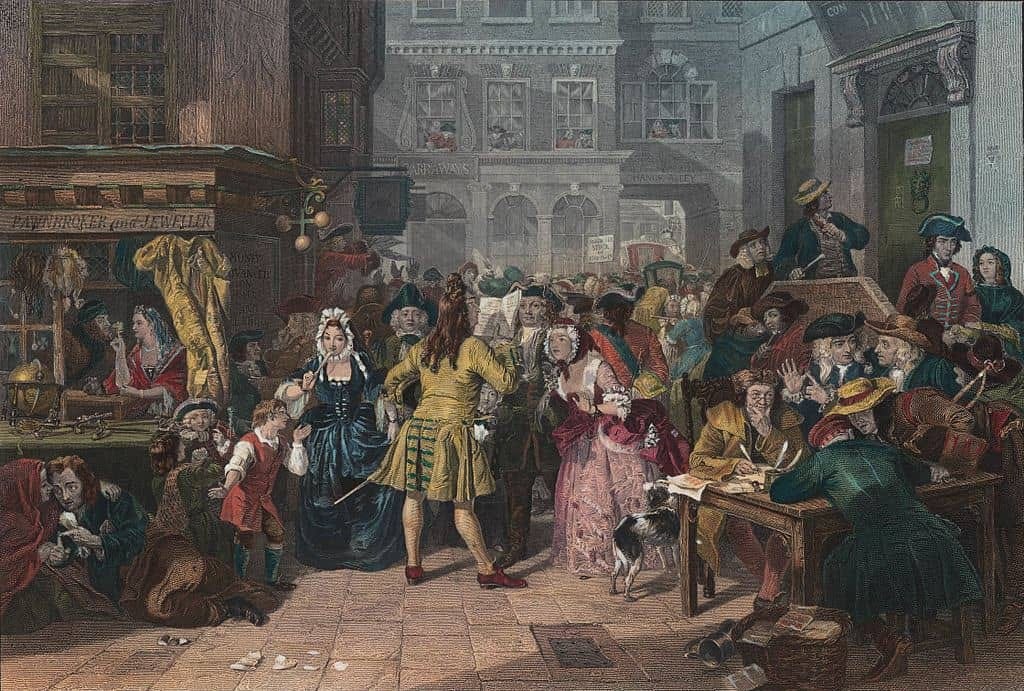
The nation was bankrupt, investors lay in ruins and politicians ran for cover. King George I (the first Hanoverian incumbent after Queen Anne died in 1714) needed help in the form of a pragmatic and financially literate Robert Walpole.
George, the king of England who couldn’t speak English, was more than happy to leave Walpole to run the country.
This was the equivalent of taking charge of the Titanic after Captain Edward Smith had driven it into an iceberg, but Walpole rose to the challenge.
Utilising common sense and a thorough understanding of double-entry bookkeeping, Walpole restructured the national debt, ensured carefully selected victims were compensated and even more carefully selected culprits were hung out to dry.
Remarkably, Walpole had steadied the ship within a year.
Robert Walpole, First Lord of the Treasury
In gratitude, George I appointed Walpole as First Lord of the Treasury, the head of finance for the nation. Walpole was now the most important minister in parliament, the ‘prime minister'.
Walpole’s opponents referred to him as ‘prime minister’ in reference to his dominating authority over Parliament. It was delivered in derogatory fashion, but as often happens, the term stuck.
However, it took nearly two centuries for ‘Prime Minister’ to become the formally recognised official title for the head of government.
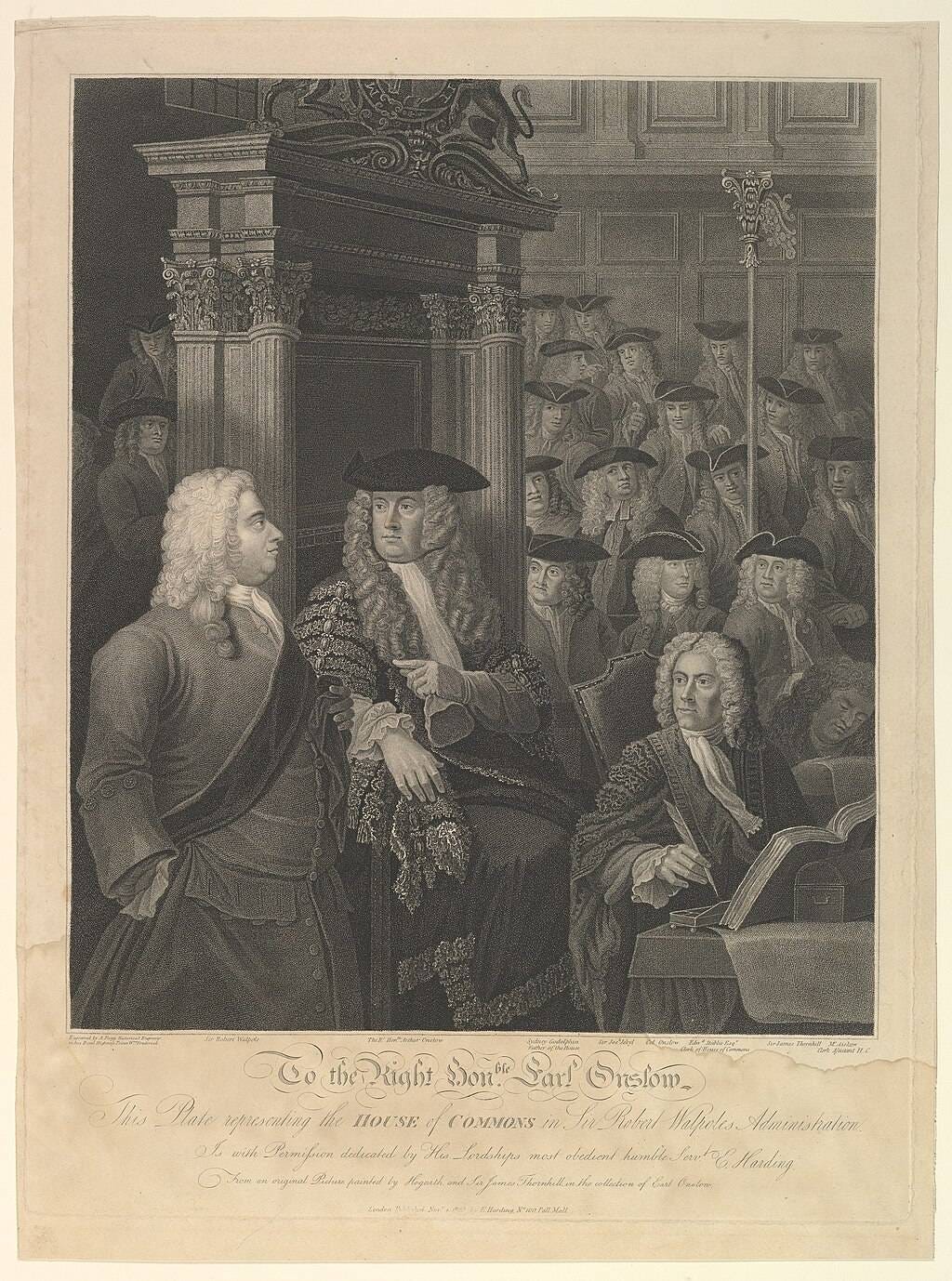
Robert Walpole was a hard-drinking, fun-loving country squire. His style was slow and steady, nurturing the oil tanker to change course, not forcing it. His political style was ‘if it ain’t broke, don’t fix it‘.
Meetings were often incorporated into breakfasts, enormous ones. Colleagues found themselves caught up in marathon eating sessions - a new spin on chewing over the nation’s problems.
He was once criticised by a pretentious political opponent in a stream of Latin phrases, to which Walpole wittily replied…
“Spare me your Cicero, sir. I never learned Latin, and I thank God for it - it has saved me from many a foolish quotation.'“
Number 10 Downing Street
When George I died in 1727, the new king, George II, marginally more fluent in English than his late father, was equally keen to lean on Walpole.
In fact, he was so grateful that in 1732 he made a proposal to the First Lord of the Treasury.
The King owned a bijou townhouse off Whitehall, and he would like Walpole to accept it as a gift: No. 10 Downing Street, Whitehall, London.
Ever the politician, Walpole politely declined the offer but suggested that the house be designated as the official residence for him and all future holders of his office. Royal patronage was helpful, but to maintain power, Walpole needed the majority support of Parliament and the Treasury.
Walpole moved into No. 10 on 22 September 1735.
Out of Curiosity
Downing Street was originally owned by Sir George Downing who, in the 1680s, asked Sir Christopher Wren to design a terrace intended for ‘persons of good quality to inhabit’, with coach houses and views over St James's Park.
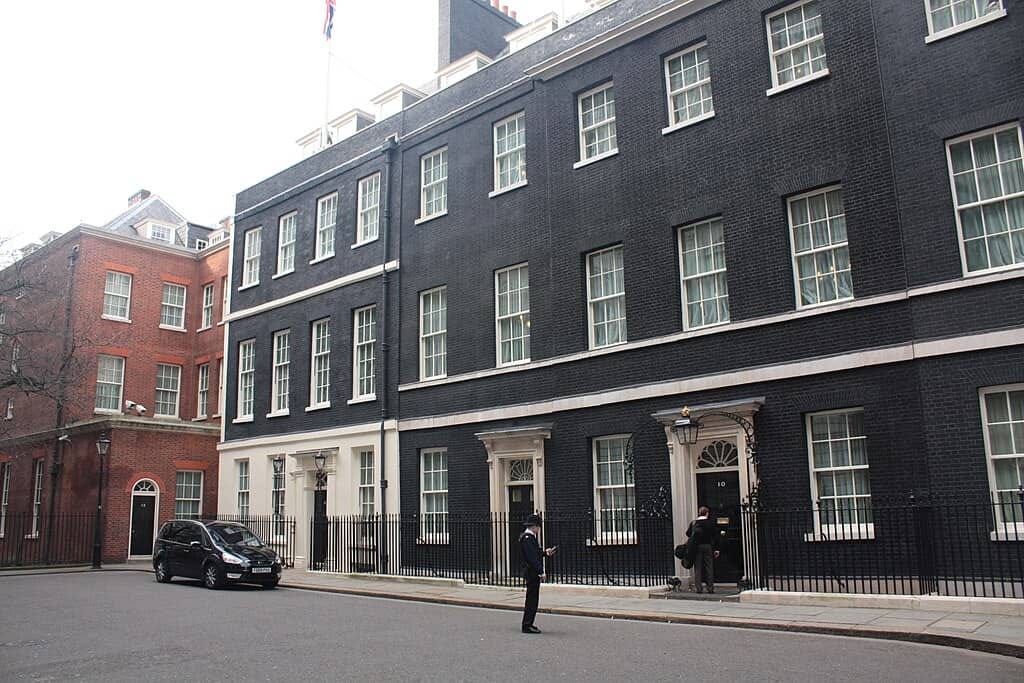
Over the years, No. 10 has become rather like Doctor Who’s Tardis. Foreign dignitaries entering through that famous black front door discover far more than the modest Georgian terrace suggests from the street.
Behind the front door lies a warren of corridors; 100 rooms, including living quarters, reception rooms, state rooms, meeting rooms and numerous offices. The building achieved this size through progressive expansion into the neighbouring terrace properties.
When Walpole resigned in 1742, he had set a very high bar for longevity. In an era when ministers lasted months, not years, his control of power had lasted 21 years; six years more than Lord Liverpool (1812-1827) and nearly double that of Margaret Thatcher (1979-1990).
Walpole is often only remembered as the first incumbent of No. 10 Downing Street. After all, he had established a home for the machinery of Government, a true working headquarters.
He is sometimes remembered as the reason today’s head of Government in the UK is known as ‘Prime Minister and First Lord of the Treasury’.
But Walpole had proved that a constitutional monarchy could work. You could maintain a system where the monarch reigned but ministers governed, where Parliament controlled finances but the executive controlled policy.
Above all, Sir Robert Walpole demonstrated that competent administration was more valuable than brilliant oratory and that a boring government was usually a good government.
Perhaps there’s hope for our modern statesmen yet?

Thank you for joining me.
Steve
CHIEF STORY HUNTER & WRITER
ATTRIBUTIONS
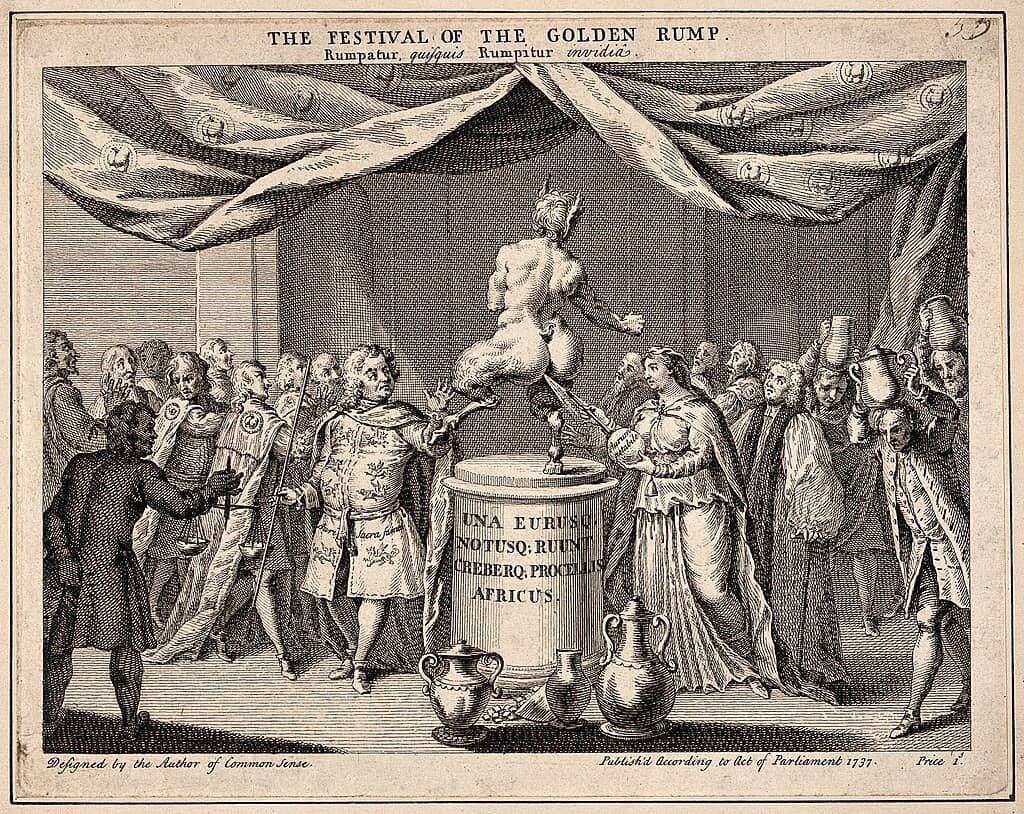
The Festival of the Golden Rump: Unknown author., CC BY 4.0, via Wikimedia Commons.
Sir Robert Walpole chatting to the Speaker of the House of Commons. Edward Harding, CC0, via Wikimedia Commons.
Portrait of Sir Robert Walpole: Jean-Baptiste van Loo, Public domain, via Wikimedia Commons.
The delightful Chequers: Cnbrb, CC0, via Wikimedia Commons.
After the South Sea Bubble: Edward Matthew Ward, Public domain, via Wikimedia Commons.
No. 10, Downing Street, Whitehall: [2], CC BY 2.0, via Wikimedia Commons.
Stock certificate of the South Sea Company: Julie Ceccaldi, CC0, via Wikimedia Commons.


_-_Sir_Robert_Walpole_(1676%E2%80%931745)_-_643_-_Chequers.jpg)


![Whitehall: [2]](https://commons.wikimedia.org/wiki/File:10_Downing_Street_2010.jpg)

CC0: https://creativecommons.org/public-domain/cc0/
CC BY 2.0: https://creativecommons.org/licenses/by/2.0/deed.en
CC BY 4.0: https://creativecommons.org/licenses/by/4.0