


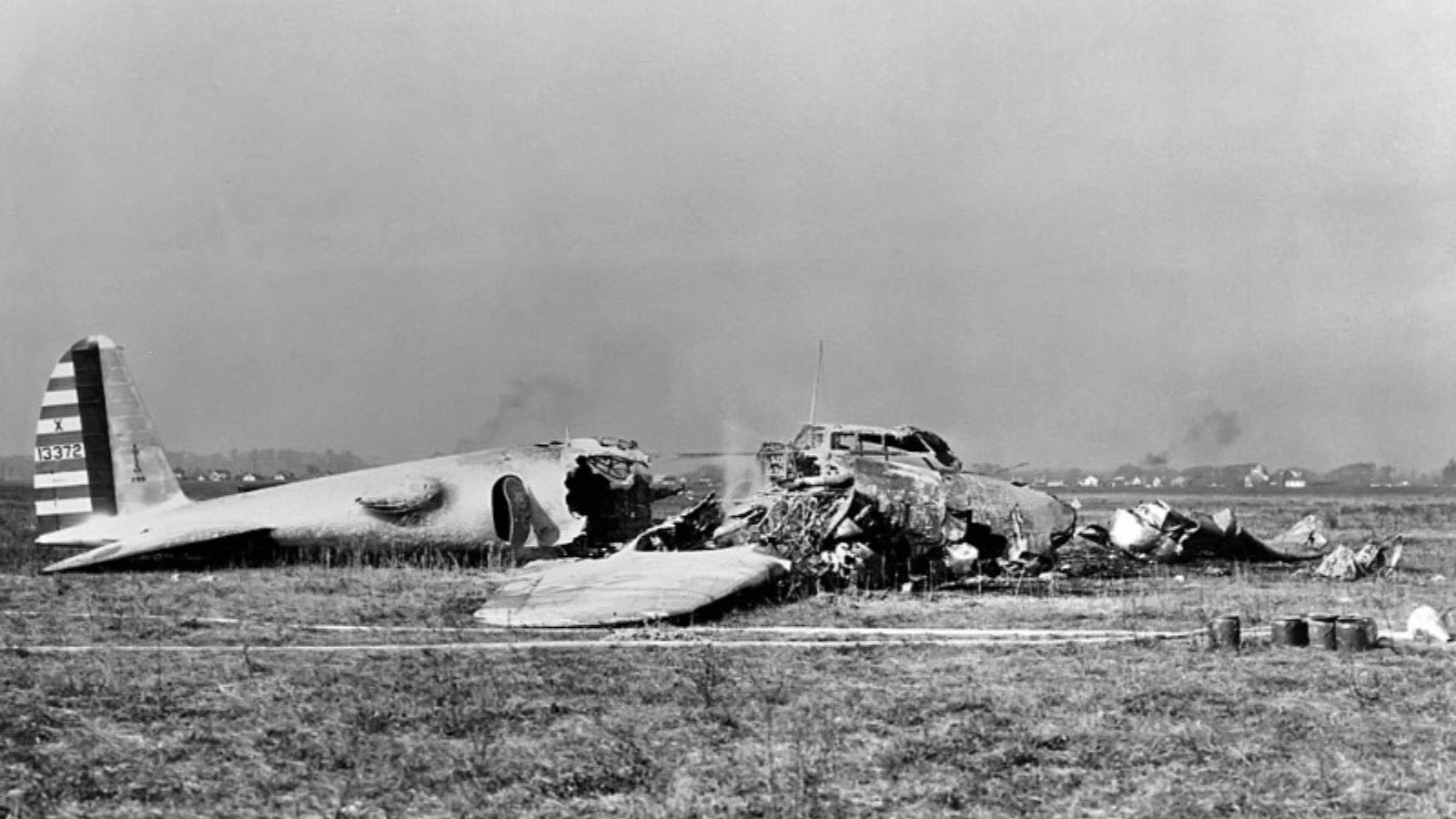

30th October 1935
(read time: 7 mins.)
Ployer Peter Hill brought the four Wright Cyclone engines to life as Model 299 gathered speed like an aluminium avalanche. With a grace that belied her size, the Flying Fortress’s nose lifted and she rose into the clear Ohio skies. At 300 feet, Model 299 stopped flying. Oh for a checklist.
One of my sons has been bouncing around Europe this past week. Being a little nerdy about such matters, he was quietly pleased to find that the Boeing leg of his journey would be in a 737-800 and not one of the troubled 737 MAX series.
It’s that MAX suffix which put The Boeing Company into a tail-spin in 2018 when their new automated MCAS system brought down Lion Air Flight 610 over the Java Sea.
The shocking news that the primary reason for the accident was insufficient pilot training on MCAS was compounded when a second 737 MAX fell out of the sky in an almost identical manner only six months later - Ethiopian Airlines Flight 302.
A total of 346 people lost their lives across the two accidents.
As a result of these tragedies and of a further door panel blowout on an Alaska Airlines 737 MAX earlier this year, Boeing’s 737 MAX production is currently under the watchful eye of the US Federal Aviation Administration (FAA).
I noticed that this week the FAA granted Boeing a licence to produce more 737 MAXs per month, up from 38 to 42. I guess their assessment of progress would be, ‘cautiously optimistic’.
Global airline safety is actually in great shape. Recent statistics released by the International Air Transport Association (IATA) show that the average fatality rate in the United States for air travel between 2018 to 2022 was 0.003 deaths per 100 million miles.
By contrast, the US Department of Transportation reports that over a similar period, the fatality rate by car was 1.26 deaths per 100 million miles.
In other words, based on these statistics, you are 420 times more likely to die in a car than in a plane.
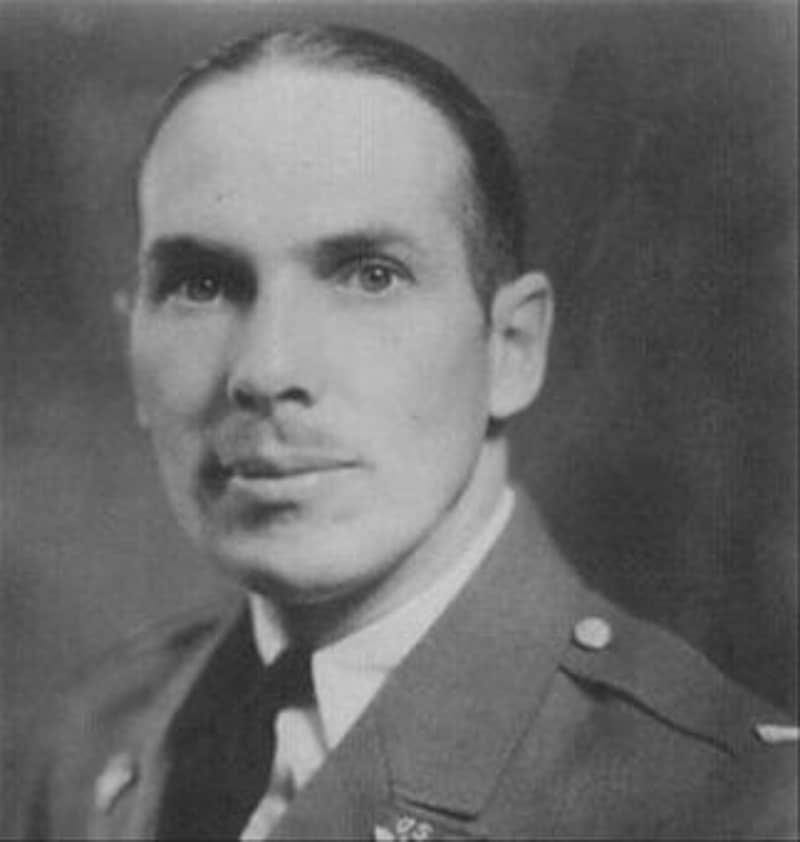
Ployer Peter Hill
was born on 24 October 1894 in Newburyport, Massachusetts. By 1894, the railroads had been around for a few decades, electric streetcars were replacing horse-drawn systems and the Wright Brothers were running a bicycle repair shop out of Dayton, Ohio.
In 1917, America entered World War I. Peter was 22 years old and recently graduated from Brown University, Providence, Rhode Island, with a BSc in civil engineering. Drawn by the romance of flying and an attraction to danger, he signed up for the newest branch of military service - The Air Service.
Learning to fly a plane in 1917 comprised watching someone else do it, then having a go yourself and hoping for the best.
Parachutes weren’t an option as they were bulky. In any case, the military leadership suspected that a pilot might be too keen to abandon his aircraft. To navigate, you followed roads and railways. If you got lost, you landed the plane in a field, climbed out and asked a farmer for directions.
Peter survived training, literally. Some trainee pilots did not. As it turned out, the war ended before Peter saw combat, robbing him of a chance to find out if “Excusez-moi monsieur, ou èst le front?” was an effective combat strategy. Still, he’d developed a taste for the uniform and decided to stay on.
The birth of the Flying Fortress
The 1920s and 1930s were halcyon years for aviation. Charles Lindbergh completed the first nonstop solo transatlantic flight in May 1927, while Amelia Earhart had achieved the same feat five years later to the day.
The fragile contraptions of wood and canvas gave way to more sophisticated flying machines made from steel tubing, sheet iron and, later, aluminium alloys.
By 1935, Peter Hill had become one of the Air Corps’ most respected test pilots. He was a ‘steady pair of hands’ and employed a methodical approach to flying, critical assets for a test pilot.
In the early 1930s, the US Army Air Corps needed a new high-specification bomber - one that could carry a substantial bomb load over long distances. They needed a fortress in the sky - a Flying Fortress.
And so the Model 299 prototype was born. She was streets ahead of the competition; four engines, bristling with machine guns, fast, powerful and - if you like that kind of thing - beautiful.
She was also a Boeing.
The Boeing Airplane Company was setting the standard for all-metal aircraft. The Boeing 247 had been introduced in 1933 and the Model 299, soon to be the B-17 Flying Fortress, would broadcast the company’s ambition for the future of flight.
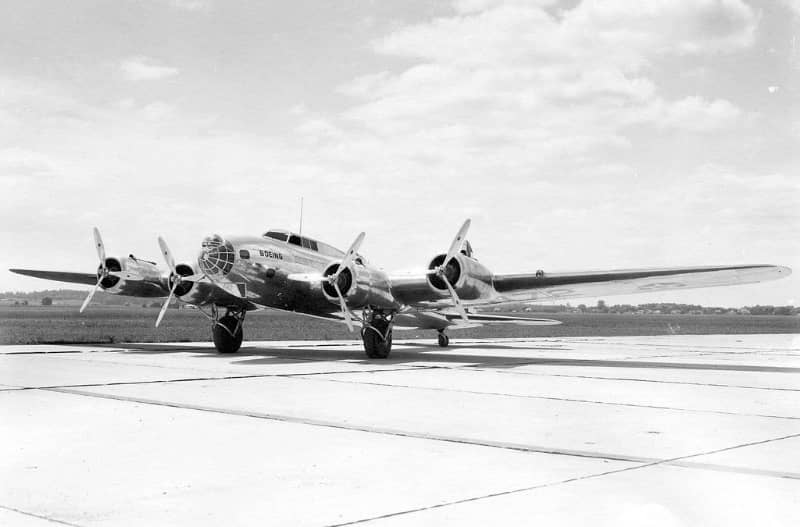
Flying Fortress test flight
Major Ployer Peter Hill was selected for the Army’s evaluation flight. He arrived early morning at Wright Field, Dayton, Ohio on 30 October 1935. The air was crisp, the skies clear.
Perfect flying weather.
The Major conducted his pre-flight walk-around of the Model 299, accompanied by Boeing’s chief test pilot, Leslie Tower. They discussed the quirks and nuances of the new aircraft. This would be a straightforward flight. Taking off, a few basic manoeuvres and landing.
The pilots boarded the plane and strapped in. At 14:30, after the usual pre-flight checks, Hill pushed the throttles forward. The four Wright Cyclone engines roared into life as Model 299 gathered speed like an aluminium avalanche. With a grace that belied her size, the Flying Fortress’s nose lifted and she rose into the clear Ohio skies.
At 300 feet, Model 299 stopped flying.
Without any notice, she had stalled and fallen from the sky. Model 299 crashed to the ground and exploded into flames.
The co-pilot, test observer and mechanic on the flight survived with minor injuries. Peter Hill and Leslie Tower would die a short while later.
What’s a gust lock?
It was a tragic day, not only taking the lives of two great American pilots but almost bringing down Boeing as well. The prototype they had bet the company on was now a dejected, smouldering wreck on the unforgiving Wright Field.
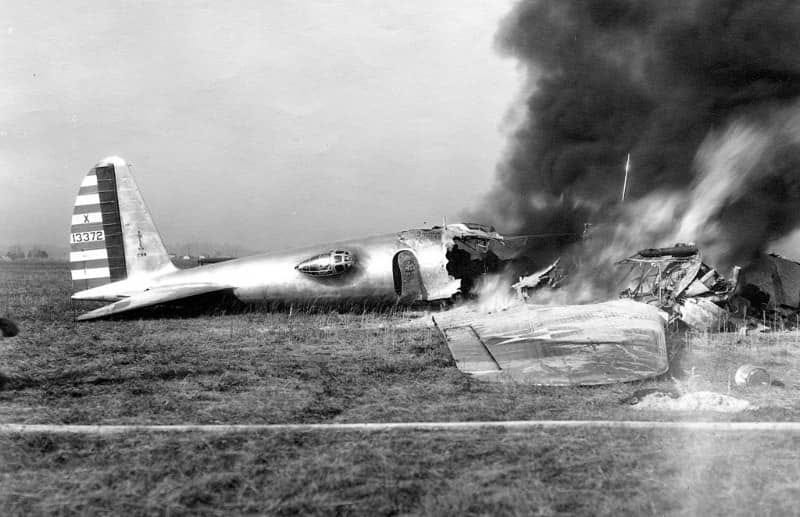
But what had happened to cause such a catastrophic outcome in a plane flown by two of the Air Corps’ most distinguished pilots?
When Peter Hill and Leslie Tower had been carrying out the pre-flight visual inspection of the plane, discussing those quirks and nuances, they had talked about the new sophisticated controls on board. There were engine controls, flap settings, trim adjustments and - crucially - a new ‘gust lock system’.
The gust lock system was designed to prevent the plane’s control surfaces from unwanted movement while it is stationary. Think of it as a parking brake for wings and tails.
Previously, a gust lock might consist of old tyres laid across the wings, or perhaps ropes anchoring them to the ground to restrict movement in strong winds.
Now the gust lock system was controlled from inside the cockpit. It was an extra something for the pilot to remember before takeoff.
The cause of the accident was devastating. Peter Hill had simply forgotten to turn off the gust lock before takeoff. As he pulled back on the yoke and the plane gained altitude, the corresponding action to adjust the elevators and ailerons was blocked.
The plane was unflyable.
Model 299 only took seconds to stall. As Leslie Tower lay dying in his hospital bed, he confirmed that he had realised the error but couldn’t release the gust lock in time.
The pre-flight checklist
At the inquest, the investigators confirmed the cause of the accident. However, they didn’t lay blame on Peter Hill. They concluded that the Model 299 had taken aviation beyond the point when pilots could fly from memory. She was too complex. There were too many controls, too many things to forget under pressure.
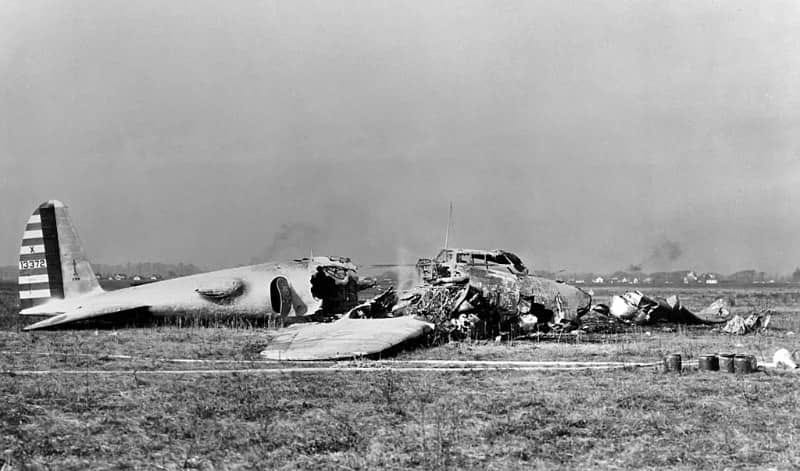
Out of this tragedy was born a procedure that is still the centre-piece of aviation safety today. The pre-flight checklist. Sounds simple, but such a checklist hadn’t existed prior to this moment.
Today, whether you fly in a 4-seater Cessna Skyhawk or a 550-seater Airbus A380, your safety depends on the pre-flight checklist.
A checklist doesn’t differentiate between age, intelligence or experience. It is a recognition of the limitations of the human memory.
If Major Peter Hill had used a checklist, he would have turned off the gust lock and the test flight would have most-likely been uneventful and quickly forgotten.
