



Spend a few minutes with me each week on a journey through history. One week, one event, one story worth telling. Steve Winduss. 5th July 2026

Happy Sunday!
Ask anyone to name a plot against the English crown, and you’ll most likely hear something along the lines of Guy Fawkes, gunpowder, and a suspiciously well-timed letter. It’s a terrific story—so terrific it has buried nearly every plot that came before it.
Which is a shame, because two decades earlier, under a different monarch, a quieter, more elegant conspiracy might have been remembered. No barrels of gunpowder, no cellar beneath Parliament, no last-minute tip-off. Just a young Catholic gentleman, a captive queen and a cypher they trusted completely—their every letter decoded and read by a spymaster who got there first.
This is the story of the Babington Plot. No bonfire night, no burning effigy, no place in the national memory. But it did get Mary, Queen of Scots beheaded, which arguably makes it the more consequential of the two.
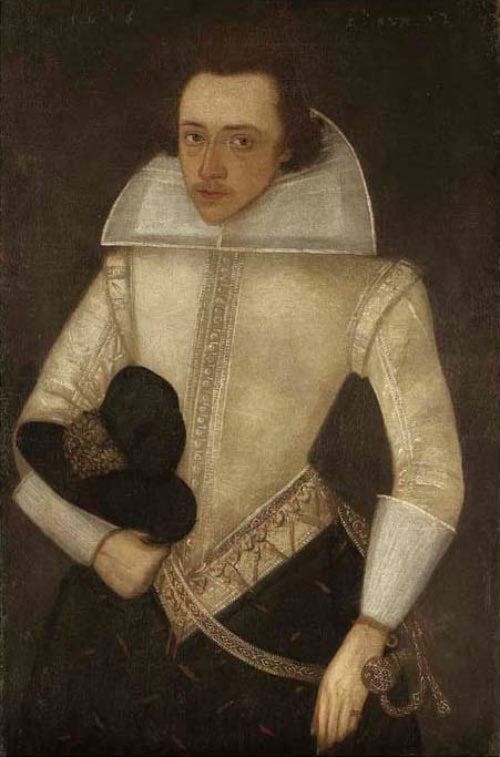
Anthony Babington...
...was born on 24 October 1561 in the almost non-existent village of Dethick, Derbyshire. This is not a place you stumble upon. Tucked into the hills a few miles from Matlock, it amounts today to little more than a scattering of farm buildings, a small church and the weathered shell of an old manor house.
Anthony was the third son of Henry Babington of Dethick, a Derbyshire gentleman who died when Anthony was about nine, leaving the boy in the care of guardians after his mother remarried. On paper, they were all respectable Protestants.
Off paper, the Babingtons were Catholics.
England’s progression towards Protestantism
Henry VIII didn’t set out to create a Protestant England. He set out to get rid of a wife, Catherine of Aragon. When Rome declined to help, he chose to remove the middleman. The 1534 Act of Supremacy made Henry ‘Supreme Head‘ of the Church of England, which solved the marriage problem and, as a useful side effect, gave him licence to dissolve the monasteries and help himself to the proceeds.
England was still essentially Catholic—just with Henry standing in place of the Pope.
His son Edward VI pushed things much further—though it should be said he had help. The king was nine when he inherited the throne, and it was his Protestant regents doing most of the deciding. Under their guidance came the Book of Common Prayer, bare churches and clergy free to marry. Edward didn’t get to watch much of it unfold. He was dead at fifteen.
Then came Edward’s half-sister, Mary I, who took one look at her brother’s Reformation and tried to put the whole thing back in the box. She restored papal authority, developed a ferocious appetite for burning Protestants at the stake, and by the time she died in 1558 had earned herself a nickname that has followed her around ever since: ‘Bloody Mary‘.
Then came Elizabeth I.
The Babingtons’ careful lies
In 1558, Elizabeth I inherited a country exhausted by two decades of religious whiplash. Her instinct was to calm things down rather than crank them up further. The 1559 Religious Settlement restored Protestantism as the official faith, but with blurred edges. As such, Elizabeth took the rather vague title of ‘Supreme Governor‘ rather than ‘Supreme Head‘. Services followed an English Prayer Book whose wording walked a careful line, while churches kept just enough colour and ceremony that they still felt like Mass, not stripped-down Protestant lectures.
You still had to turn up on Sunday, but for a while the policy was refreshingly pragmatic—go through the motions in public and we’ll turn a blind eye to what you get up to at home.
Like many English Catholic families, the Babingtons kept the old faith at home, while turning up to the new church just often enough to keep the fines at bay. Anthony’s childhood, in effect, was an apprenticeship in saying one thing and believing another—useful training, as it turned out, for a career in conspiracy.
From Elizabeth’s perspective, it wasn’t tolerance, exactly—more a firm decision not to relight the fires her sister had left smouldering. The peace held uneasily until 1568.
Then Mary, Queen of Scots showed up.
Mary, Queen of Scots
The story of Mary, Queen of Scots and her eventual execution on the orders of her cousin Elizabeth I is fairly well-trodden. How she ended up shuttled from one English stronghold to another, under lock and key and edging ever closer to a scaffold in the first place, is a little murkier.
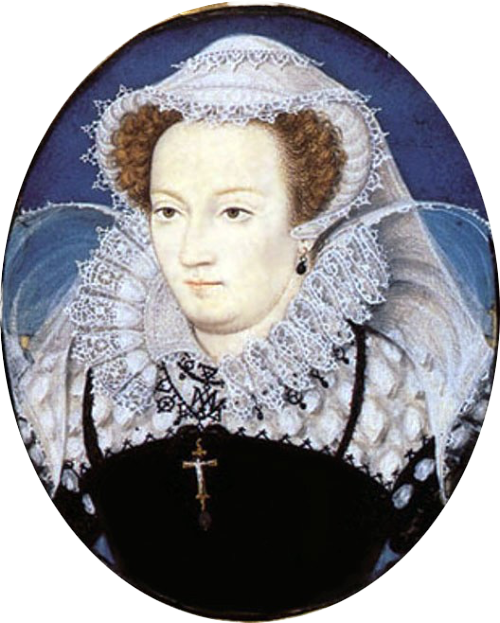
It’s time to fix that, so here goes…
Henry VII, founder of the Tudor dynasty, produced several children, but only two are of interest right now: Henry VIII and Margaret Tudor. In 1503, Margaret was married off to James IV of Scotland, a match designed to do what armies had repeatedly failed to—keep the English and the Scots from each other’s throats.
Religion swingometer—1503
Comfortably pre-Reformation era; everyone on both sides of the border still Catholic.
Margaret Tudor and James IV’s surviving son, James V of Scotland, arrived in 1512, making him Henry VIII’s nephew—Tudor on his mother’s side, Stuart on his father’s.
James V went on to marry Mary of Guise, a French noblewoman, and in December 1542 the couple had a daughter. James died six days later, which meant his newborn, Mary Stuart, spent almost her entire life as Mary, Queen of Scots.
Religion swingometer—1542
Mary’s parents were both Catholic, both Scotland and France were still officially Catholic, but across the border England had broken with Rome under Henry VIII’s 1534 Act of Supremacy.
Mary was raised in France and married the future French king Francis II at fifteen years old. Elizabeth I took the English crown seven months later. Mary wore the Scottish and French crowns for three years before Francis died when she was eighteen. There was little else to do but go home.
Religion swingometer—1561
When Mary, Queen of Scots, returned to Scotland at 18, the religious ground had shifted under her feet. Protestantism had triumphed in the Scottish Parliament a year earlier. Mary would be a Catholic queen ruling over a Protestant country.
Scotland was not amused. Sending a glamorous Catholic queen back into a Protestant powder keg was never going to end well.
Mary’s 1565 marriage to Lord Darnley didn’t last long, though that hardly mattered—by 1567 he’d been murdered. Hastily, and bizarrely, she then married the prime suspect in her husband’s murder, the Earl of Bothwell. Bad optics even by sixteenth-century standards. Mary was finished.
Forced to abdicate in 1567 in favour of her son James VI, and beaten at Langside in a last attempt to win the throne back, Mary fled to England and asked her cousin Elizabeth for sanctuary.
Elizabeth gave Mary more sanctuary than she’d bargained for; house arrest with guards and a lock on the outside of the door.
Claim to the English throne
When Elizabeth had ascended to the throne in 1558, Catholics believed that the sixteen-year-old Mary, Queen of Scots had a bloodline claim to the English throne stronger than that of Elizabeth I.
Mary was a fully legitimate descendant of Henry VII through an undisputed marriage, whereas Elizabeth I was Henry VIII’s daughter through a disputed marriage to Anne Boleyn.
England crowned Elizabeth without a moment’s hesitation, but Mary’s appearance in Cumbria ten years later in 1568 rekindled the Catholic chatter about her claim to the English throne.
She could hardly expect a warm welcome.
The young Anthony Babington
Around 1577, the young Babington was sent to serve as a page in the household of George Talbot, sixth Earl of Shrewsbury, who had the usual duties of a great Midlands landowner... and one with considerably higher stakes.
He was jailer to Mary, Queen of Scots.
Elizabeth’s government had dropped the ball. By parking Mary year after year in Shrewsbury’s great houses across Derbyshire and Yorkshire, they’d deposited her right in the middle of the densest Catholic network in the north, stocked with loyal households and no shortage of impressionable young men.
Babington was just a teenager. Mary was glamorous, tragic and royal—which is to say he was defenceless. By the time he left Shrewsbury’s household, he wasn’t sympathetic to her cause. He was besotted with it.
Babington comes of age
Anthony married Margery Draycot in 1579, then went up to London to study law at Lincoln’s Inn. By 1580 the law had been quietly shelved in favour of court life and a circle of Catholic gentlemen with a rather more interesting sideline... smuggling priests back into England.
The system was simple enough: land trained priests at whichever minor creek or port was least observed, equip them with false papers and pass them down a chain of Catholic safe houses until they’d effectively vanished from view. They would surface only to administer Mass, then retreat back into their priest holes.
When the celebrated Jesuit Edmund Campion was hunted down and executed in 1581, the atmosphere darkened. Babington retreated to Derbyshire and settled for the uneasy role of a recusant gentleman—fined for refusing to attend Church of England services, watched with a wary eye by his neighbours, simmering with resentment of Elizabeth’s regime and continuing to nurture a strong emotional investment in Mary’s cause.
Around the same time, while travelling in Paris, Babington fell in with Thomas Morgan, one of Mary’s most dedicated supporters abroad. Morgan and his allies drew Anthony into their clandestine correspondence with the captive queen. For a few years he carried letters to and from Mary himself. Then, whether from instinct, nerves or simple common sense, Babington withdrew.
Although he didn’t realise it at the time, he was too late. A web had already been spun and the spider in the middle was none other than Elizabeth’s spymaster, Sir Francis Walsingham.
The Babington Plot emerges
None of that mattered. By 1586 the conspiracy had a momentum all its own. Babington was too committed—and far too fond of Mary—to leave the web for long.
That spring, a Catholic priest named John Ballard arrived in London with an ambitious plan. Shortly after, Anthony and his group of young Catholic gentlemen met at a tavern near Temple Bar to talk it through. By May, the young, gullible Babington had been talked into leading the plot.
The plan was as simple as it was outrageously ambitious: Babington would lead a group of conspirators to assassinate Elizabeth I, place Mary, Queen of Scots on the English throne, and—with foreign backing mainly from Spain—restore the old religion. The Ridolfi Plot in 1571 had failed. The Throckmorton Plot in 1583 had failed. Now, in 1586, it was Babington’s turn to try his luck.
Anthony gathered six gentlemen to carry out the actual killing, but before they could move, he needed the authorisation of his queen.
Sir Francis Walsingham’s masterclass
Mary was by now held at Chartley Hall in Staffordshire under a much stricter regime than the Shrewsbury years—her correspondence supposedly cut off.
Sir Francis Walsingham, Elizabeth’s spymaster, had spent years tracking Catholic exiles. Babington was on his radar. There would be no surprises for Sir Francis. His informers were feeding him updates as the plot took shape. He had front seats to the show.
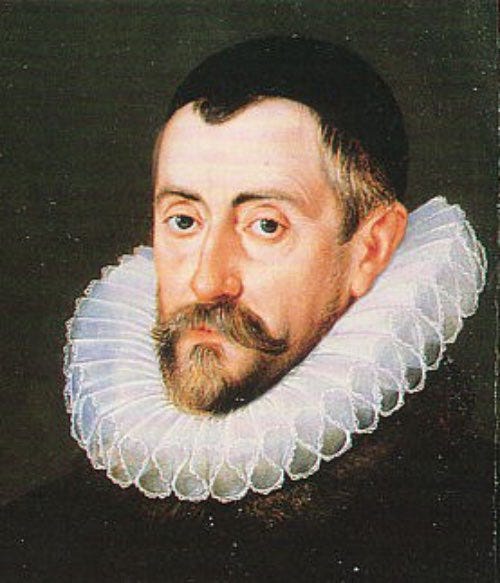
The villain—or hero, depending on your sympathies—was a Catholic priest-in-training called Gilbert Gifford. The ‘trustworthy‘ go-between turned out to be a double agent reporting directly to Walsingham.
Gifford’s process was simple and efficient. Letters to Mary were wrapped in a leather capsule, slipped into the hollow bung of a beer barrel, and rolled in with the regular delivery to the Chartley Hall household. Mary’s replies went out by the same route.
The Babington Letter
In reality, all correspondence first passed across the desk of Thomas Phelippes, Walsingham’s cypher expert. He read, decoded, copied and resealed each letter before sending it on its way. Rather than wait for his prey to slip up, Walsingham was handing Babington the banana skin.
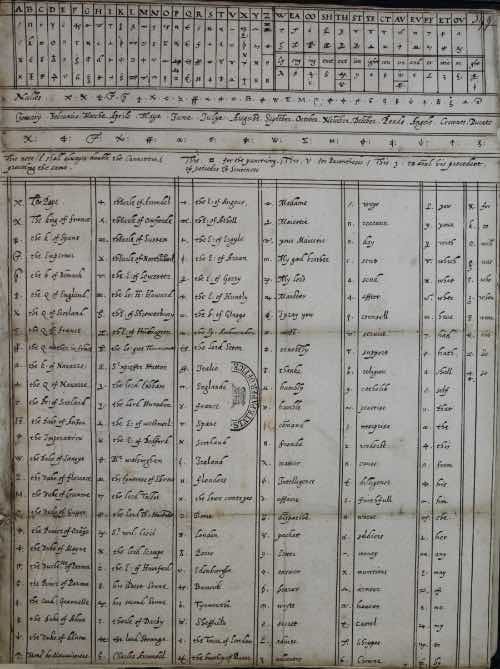
Into this trap, 440 years ago tomorrow, 6 July 1586, Anthony Babington sent his letter. It was hardly discreet. He laid the entire plot out in plain terms—six gentlemen, one assassination, a foreign invasion arriving on schedule. Then he asked Mary to bless the plot, as casually as one might ask a friend for a favour.
Mary, unaware that her most private letters had an audience of one very attentive Englishman, replied on 17 July. She discussed logistics. She discussed her own rescue. And somewhere in among all that—whatever her defenders later argued about the precise wording—she was understood to have given her blessing to Elizabeth’s murder.
