


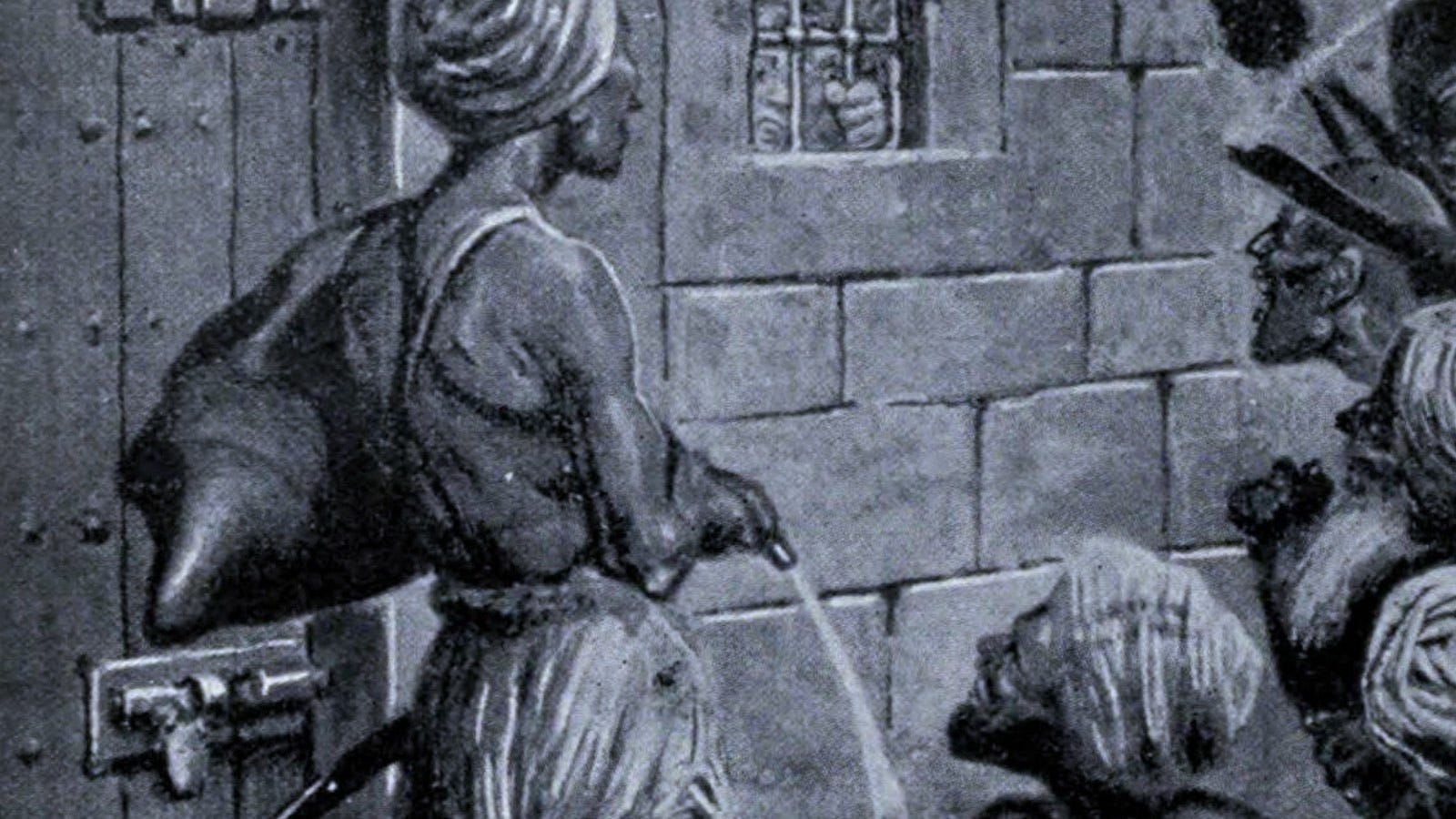

17 September 1711
21 June 1756
5 November 1798
(read time: 10 mins.)
What happened next would define John Zephaniah Holwell’s life, and arguably reshape the history of the Indian subcontinent. In Calcutta, Holwell and the surviving British soldiers and civilians were rounded up and crammed into a small guardroom known as the Black Hole. It measured roughly eighteen feet by fourteen. By the morning, 21 June 1756, most of the prisoners had died.
You’ve heard it. You may have even said it. It conjures a place that is overwhelmingly crowded, oppressively dark, somewhere you’d rather not be.
“It’s like the Black Hole of Calcutta”.
Your teenage son’s bedroom, essentially.
Most English idioms turn out to have rather dull origins. Not this one. The Black Hole of Calcutta was a real place, a real chamber and a real atrocity.
John Zephaniah Holwell...
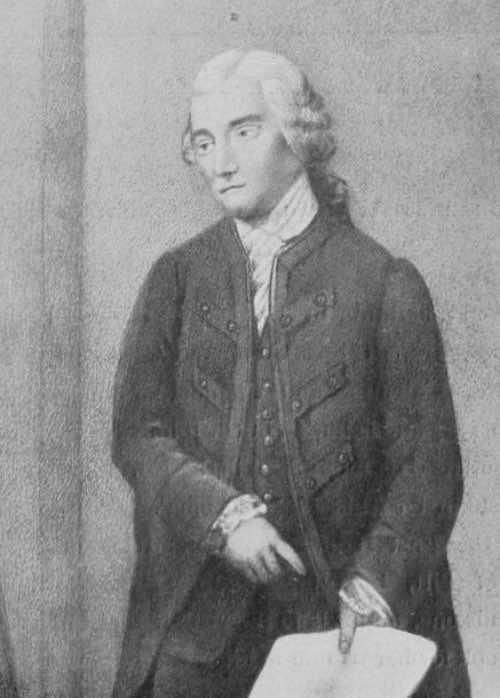
...was born in Dublin on 17 September 1711, son of Zephaniah Holwell, a timber merchant of London, and grandson of the astrologer John Holwell. The Holwells had long moved in ‘interesting’ circles. For ‘interesting’, read ‘chronically short of money’.
Holwell was educated partly at a school in Richmond, Surrey, and partly in Iselmond, near Rotterdam, where he acquired some knowledge of bookkeeping and modern languages. It was an eclectic preparation for life, little of which would prove useful for what lay ahead.
Zephaniah, ever the merchant, saw Rotterdam as the making of his son and apprenticed him to a bank in the city—it was, after all, one of the great commercial centres of the 18th century. The plan was sound. John, unfortunately, was not—the intensity of banking got the better of his health, and he came home.
Finding that ledgers left him cold, John abandoned the counting house for the operating theatre, returning to London to train under Andrew Cooper, senior surgeon at Guy’s Hospital. An unusual career change for sure. I suppose both professions required a cool head, but only one demanded that the client be physically restrained.
Training completed, Holwell sailed for Calcutta in 1732 as a surgeon’s mate on the merchant ship Duke of Cumberland. He was twenty years old. Bengal was the sort of place where ambition counted more than background—where a young man with little to his name could make something of himself. If he lived long enough.
Out of Curiosity
Surgery in the 1730s was not for the faint-hearted—for both parties. The showpiece operation was amputation. Anaesthesia didn’t exist, so a posse of assistants held the patient down. A good surgeon was a fast one.
Beyond cutting off limbs, surgeons removed bladder stones, cancerous growths and cataracts. They trained through apprenticeships, more carpenters than university-trained physicians, with tools to match.
It was quite common to find barber-surgeons: one man, two trades and an alarming number of blades. Well into the eighteenth century, barbers offered much more than haircuts—pulling teeth, setting fractures, lancing abscesses, bloodletting and administering enemas. If you wanted a haircut, I guess the sensible move was to arrive early.
In fact, Henry VIII united London’s barbers and surgeons in 1540 as the Company of Barber-Surgeons, a single guild that lasted two uneasy centuries before the surgeons finally walked away in 1745.
The red and white barber’s pole seen today has its roots in medieval Europe. Barber-surgeons are said to have hung their blood-stained bandages outside to dry, twisted around a pole. Over time, the painted spiral of red and white became the recognisable sign of the profession.
Later, especially in North America, a blue stripe was added. Some say the extra colour represents deoxygenated blood in veins; others that it simply echoes the colours of the American flag.
The East India Company…
…was founded in 1600, when Elizabeth I granted a royal charter to a group of London merchants seeking a share of the lucrative spice trade.
Initially focused on the East Indies, the Company found itself outmuscled by the Dutch and turned its attention to the Indian mainland—a trading post at Surat in 1612, then Madras, Bombay and eventually Calcutta by the end of the century.
By the mid-18th century, the Company was no longer just a trading enterprise. It was evolving into a state within a state—fielding its own armies, running its own courts and conducting its own diplomacy. It was throwing its weight around the Indian subcontinent with breathtaking confidence. Bengal, the richest province of the ailing Mughal Empire, had become its commercial crown jewel.
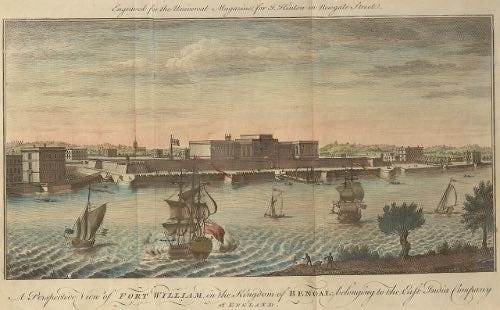
The Company had dug itself in at Calcutta on the Hooghly river and ringed its warehouses with the stronghold Fort William, named after King William III. The arrangement worked well enough, provided that the nawab—the Muslim ruler or governor—and his officials didn’t look too closely at what the ‘trading’ company was accumulating.
The original fort, completed by 1706, became the commercial and administrative heart of British-held Bengal. By the 1750s, however, it was regarded as badly sited and poorly defended—a vulnerability that Bengal’s new nawab, Siraj-ud-Daulah, would soon exploit.
Holwell’s unlikely promotion
Meanwhile, Holwell had spent more than two decades climbing the Company ladder. After a short spell as surgeon at the factory in Dacca, he returned to Calcutta in 1736 and settled in for eleven years collecting titles—alderman of the Mayor’s Court, principal surgeon of the Bengal presidency and twice Mayor—doctoring the sick and sitting on committees in roughly equal measure.
His grandest title came in 1751, when he was made perpetual zamindar of the Twenty-Four Parganas—the Company’s man on the spot for land revenue and law and order in the district. It sounded imposing, but for all the grandeur, he was still a bureaucrat at heart.
Crisis at Fort William
In 1756, Nawab Siraj-ud-Daula ordered the British in Calcutta to stop extending Fort William. As far as the nawab was concerned, the Company was building a fortress on his doorstep without bothering to ask. He was ignored. This was a mistake.
In response, Siraj-ud-Daula marched on Calcutta with an army said to have numbered 50,000 men, accompanied by 500 elephants and fifty cannon. It was not, by any measure, a subtle approach.
The British response was even less subtle. Governor Drake, most of his staff and many of the city’s British residents deserted the fort and scrambled aboard the Company’s ships on the river, leaving women, children and Anglo-Indian clerks to their fate. It has to be one of the most impressive acts of collective cowardice in colonial history. Behind them, they left a garrison of 170 soldiers under the improvised command of John Zephaniah Holwell… the tax collector.
If Holwell had written a CV for the post, he might have talked up his transferable skills: calm under pressure, astute when assessing hopeless situations and effective when persuading people to do things they’d rather not. As for collecting revenue, balancing ledgers and navigating Company bureaucracy, it turns out that they weren’t much use against a besieging army.
The outlook wasn’t promising. Apart from Holwell’s lack of military prowess, there were only two mortars in the fort, much of the powder was too damp to use, while the grapeshot had mostly been eaten by worms.
By afternoon, with the situation beyond saving, Holwell surrendered—on the understanding that quarter would be given.
It wasn’t.
The Black Hole of Calcutta
What happened next would define Holwell’s life, and arguably reshape the history of the Indian subcontinent.
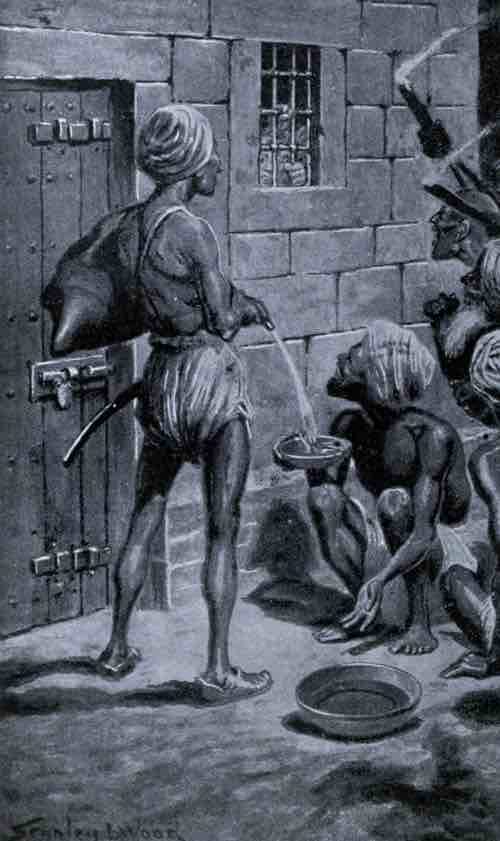
After the surrender on 20 June 1756, Holwell and the surviving British soldiers and civilians were rounded up and crammed into a small guardroom known, with typical military understatement, as the Black Hole—the lock-up for petty offenders. It measured roughly eighteen feet by fourteen.
Being imprisoned in a cramped cell in 40-degree heat, fierce humidity and no ventilation was bad enough. Being forced to strip first added an indignity that Holwell, a man of considerable pride, would have found unbearable.
By the morning of 21 June 1756, most of the prisoners had died from suffocation, heat, crushing or dehydration in that airless room.
The survivors were let out on the nawab’s orders. Holwell was so exhausted he had to be carried out. He survived because he was fortunate enough to find himself near one of the cell’s two windows in the crush. He later wrote: “We had been but a few minutes confined before everyone fell into a perspiration so profuse, you can form no idea of it.“
John Holwell had survived the Black Hole of Calcutta.
Holwell was dispatched in irons to Murshidabad, the nawab’s capital and released a few weeks later at the intercession of the Begum—the nawab’s grandmother. She remembered how fairly he had treated local petitioners while relieving them of their money. A tax collector saved by his own decency—go figure.
Systematic exploitation by the East India Company
With news of Holwell’s night in the Black Hole still ringing in his ears, Lieutenant-Colonel Robert Clive sailed from Madras, retook Calcutta in January 1757, and set about settling accounts with some enthusiasm.
That June, with 3,000 men, he faced Siraj-ud-Daulah’s army of 50,000 at Plassey. The odds were somewhat improved by the nawab’s own commander-in-chief, Mir Jafar, who had been paid off beforehand and kept most of his troops standing politely aside.
Nawab Siraj-ud-Daulah was captured and executed within the week, and in 1758 Clive became the Company’s governor in Bengal. From that point, the East India Company was no longer merely trading in Bengal—it was learning how to strip-mine a province.
The story that changed everything
Holwell didn’t publish his account of the Black Hole of Calcutta until 1758, in a pamphlet with the memorably modest title, “A Genuine Narrative of the Deplorable Deaths of the English Gentlemen, and others, who were suffocated in the Black-Hole in Fort William, at Calcutta“. It became one of the must‑read atrocity stories of the eighteenth century.
In Holwell’s account, of the 146 people crammed into the Black Hole, only 23 came out. The dead remained standing—the crush too great for them to fall. Three sides of the hole were solid brick; the fourth had two small barred windows and almost no air. Prisoners screamed, clawed at the windows and trampled on the weak. Bribes to the guards went unanswered. Some drank sweat wrung from their own clothing.
