


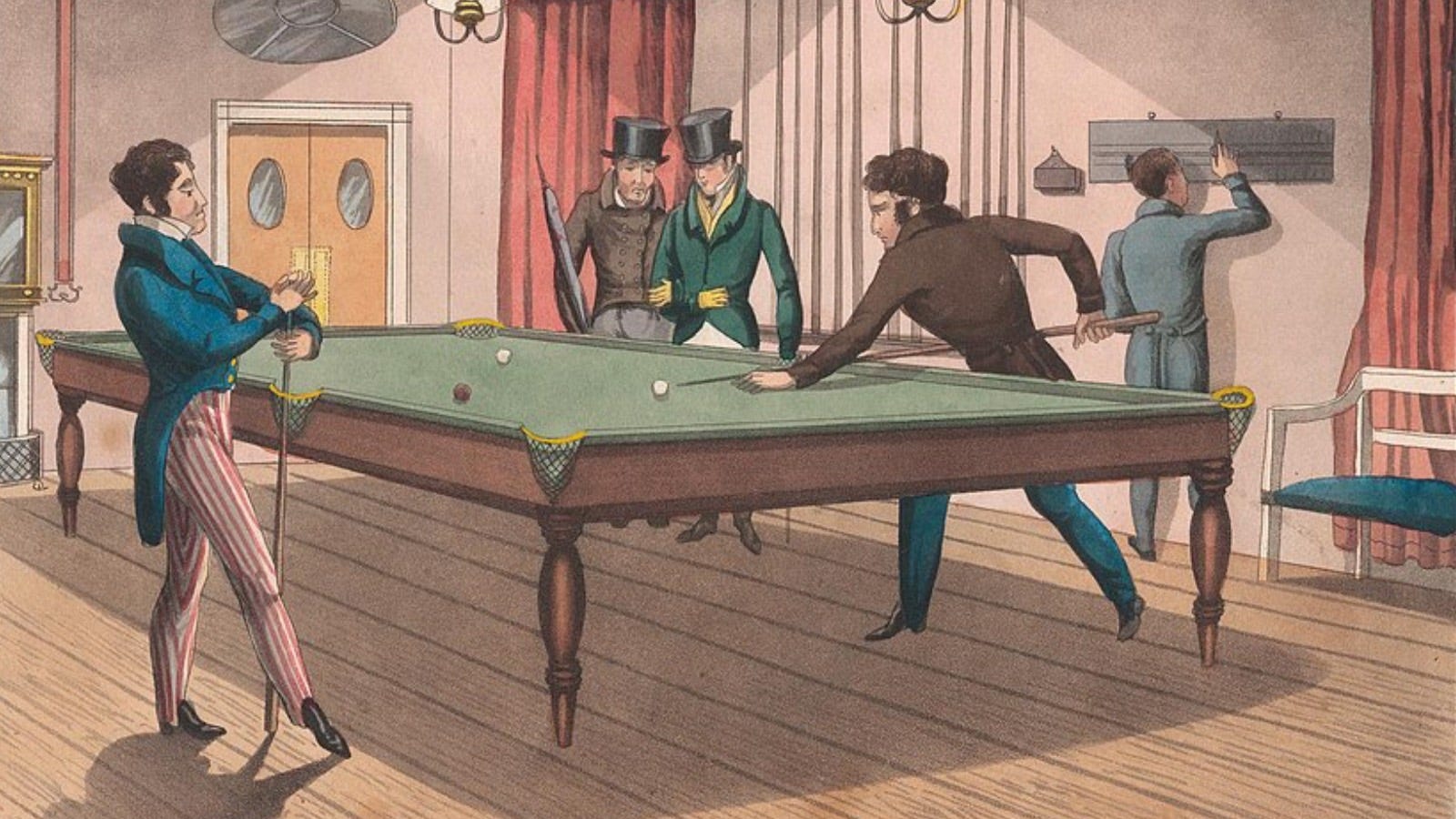

10th October 1865
(read time: 3 mins.)
By 1863 the billiards industry was in crisis. Balls were made from ivory; The slaughter of elephants didn’t raise an eyebrow but the soaring price of ivory caused by increasing scarcity did. A prize was offered to anyone who could invent an ivory-substitute ball. John Wesley Hyatt was determined to claim the prize. On 10 October 1865, Hyatt received his first patent for a new manufacturing process for billiard balls.
Billiards was established in the 15th century. This is the game played with cues on a 12-foot-by-6-foot table with six pockets and a green felt surface.
Only three balls are in play and players can accumulate points by potting either of the two other balls, potting their own ball off another (an ‘in-off’) or by touching both other balls with their own in one stroke (the “cannon”).
King Louis XI of France received the first known indoor billiard table in 1469. Mary Queen of Scots complained to the Archbishop of Canterbury just before her execution in 1587 that her captors had taken away her billiard table. After her execution, she was apparently wrapped in the green cloth from the same beloved table.
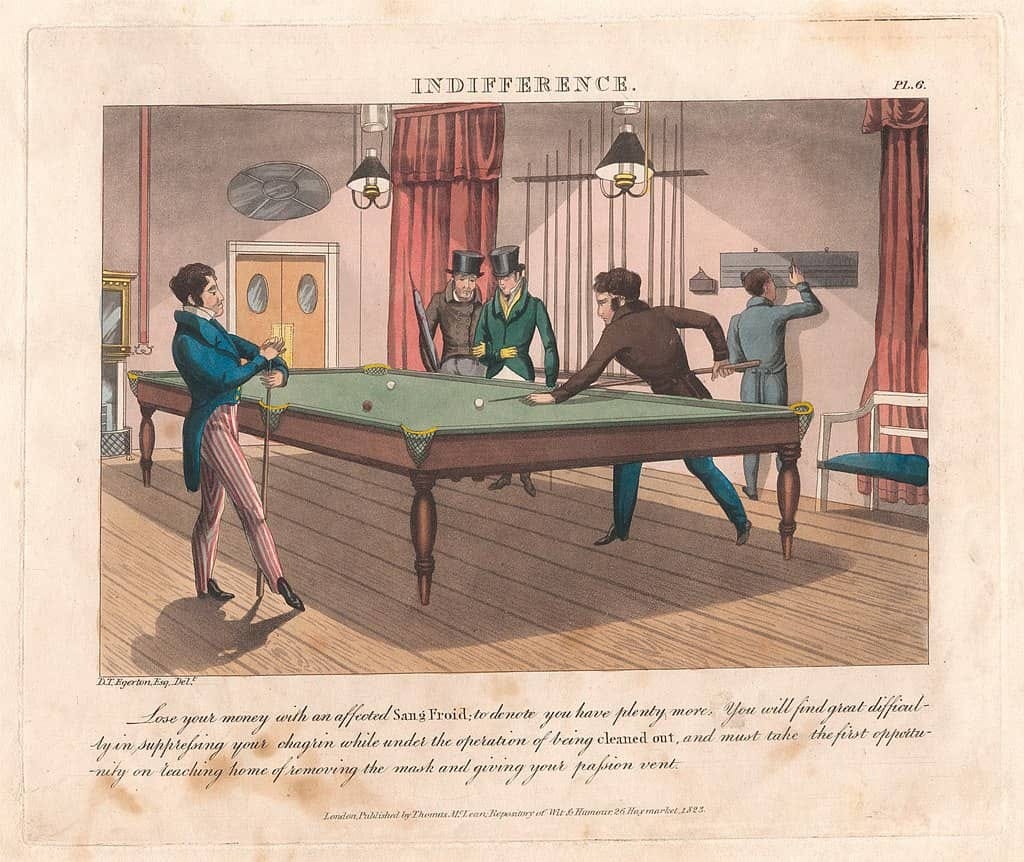
Billiards.. a game in crisis
Although initially a game for nobles, billiards’ popularity broadened over the centuries.
However, by 1863 the billiards industry was in crisis. Balls were made from ivory; elephants were being culled at an unprecedented rate for their ivory tusks. The slaughter of elephants didn’t raise an eyebrow but the soaring price of ivory caused by increasing scarcity did.
The New York billiard manufacturer Phelan & Colander offered a prize to anyone who could invent an ivory-substitute ball.
John Wesley Hyatt, a New York-born printer, was in his late twenties when he heard news of the $10,000 prize on offer. He was determined to claim the prize.
And so began Hyatt’s descent into obsession. Night after night he lived in his laboratory. He mixed compounds with the fervour of a medieval alchemist. He experimented with anything that might send a billiard ball spinning across green felt in the same manner as an elephant’s tusk.
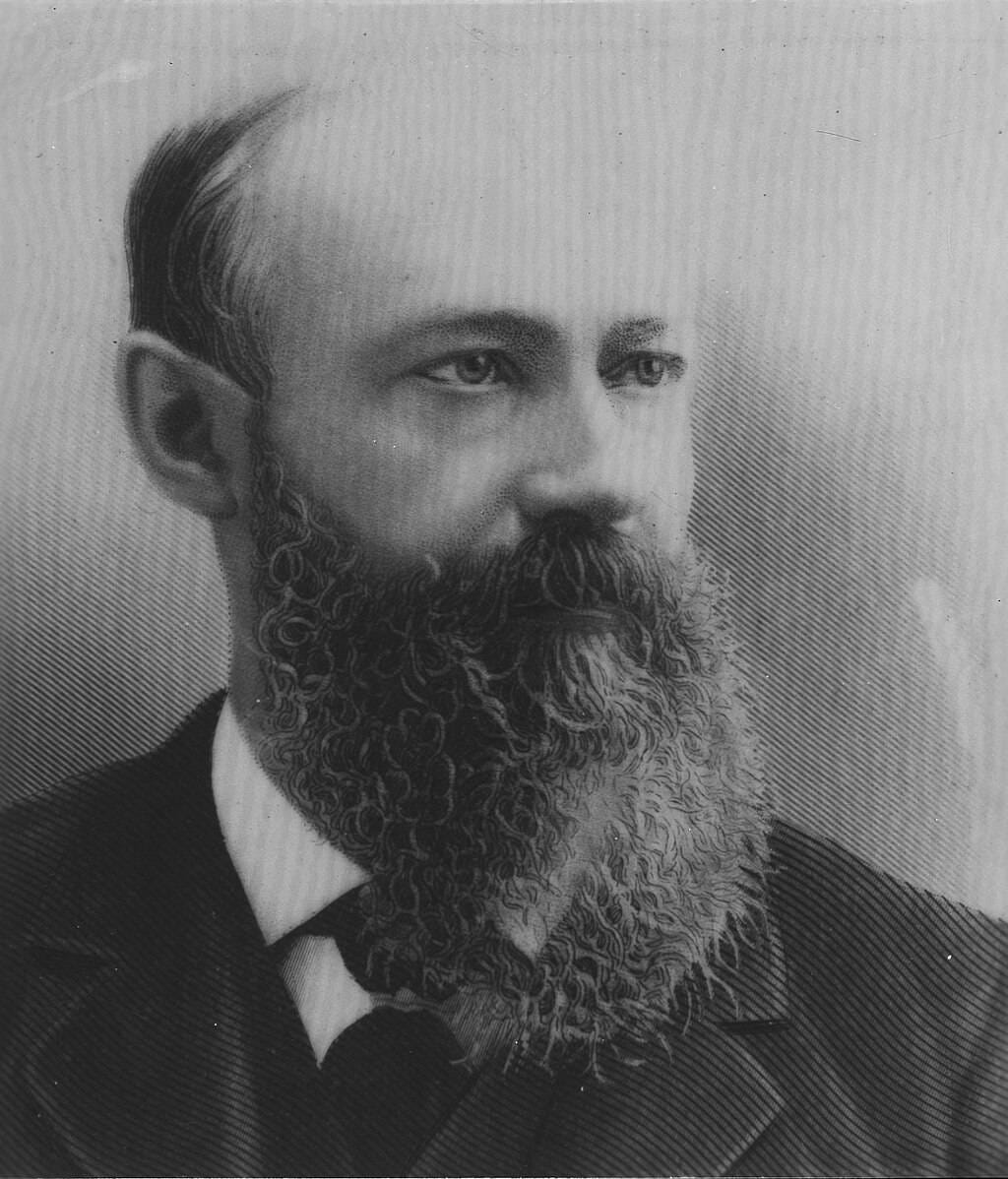
Wyatt’s patent
On 10 October 1865, John Wesley Hyatt received his first patent for a new manufacturing process for billiard balls. Hyatt’s billiard ball used a composition of shellac (the resin from a lac insect) dissolved in alcohol and mixed with ivory dust.
The new product had significantly reduced the quantity of ivory needed, but not removed it altogether. It wouldn’t be until around 1870-71 that Hyatt’s new company, the ‘Hyatt Manufacturing Company’ created a billiard ball without any traces of ivory.
Hyatt had dissolved nitrocellulose with camphor under heat and pressure. No ivory needed. The resulting hard, mouldable substance could be shaped into perfect spheres.
However, Hyatt admitted to a problem with his cellulite balls. He recalled...
...occasionally the violent contact of the balls would produce a mild explosion like a percussion cap.
This might be little unsettling for gentlemen relaxing around a billiard table. Hyatt further recalled that he had received a letter from a concerned billiard saloon operator in Colorado…
...each time an explosion occurs, instantly every man in the room pulls his gun.
The contribution of Hyatt’s patent for ‘celluloid’ would reach far beyond the genteel world of billiards. He had developed the world’s first commercially successful synthetic plastic.
His manufacturing process would extend to the production of piano keys, denture plates, detachable shirt collars and cuffs and would eventually provide the foundation for modern photographic film.
It is not clear if John Wesley Hyatt ever received his $10,000 prize. I don’t suppose the then-wealthy, successful businessman cared.

Thank you for joining me.
Steve
CHIEF STORY HUNTER & WRITER
ATTRIBUTIONS
‘Indifference’: Daniel Thomas Egerton, CC0, via Wikimedia Commons.
James Wesley Hyatt: See page for author, Public domain, via Wikimedia Commons.


CC0: https://creativecommons.org/public-domain/cc0/