
31st October 1632
(read time: 5 mins.)
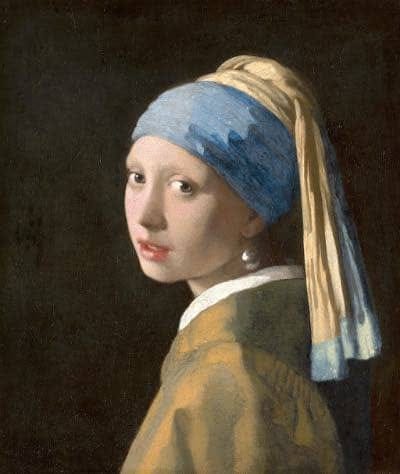
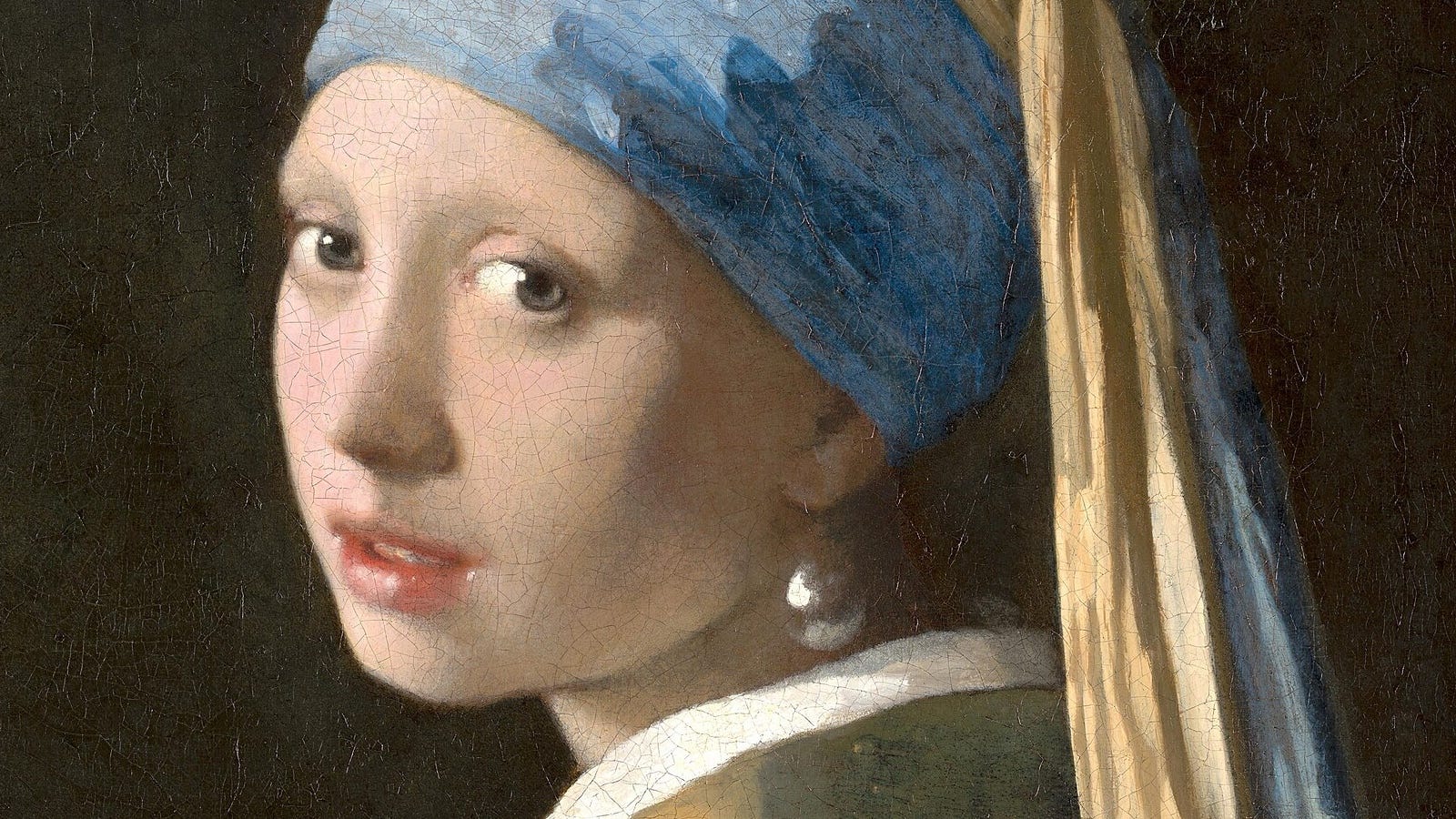
Johannes Vermeer’s young lady looks over her shoulder and catches your gaze. She’s wearing an exotic turban—pearl grey and golden yellow—with a jacket to match. Her lips are just parted, as if she’s about to speak. But your eye keeps returning to that pearl hanging from her left ear, catching the light. The identity of the woman in the painting has never surfaced. Enigmatic. Intimate. That’s the girl with a pearl earring.
For years I moved through the family home completely oblivious to the pictures Dad had hung on the walls. Over time he’d picked up prints of some famous masters, though it would take me forty years to work it out.
During a visit to the National Gallery in London last year, I was excited to see Edgar Degas’ ‘Scène de plage’. The thrill was less about appreciating the brushwork and more about finally recognising the painting that for years had hung in the lounge above where I parked myself on the sofa every day, oblivious.
The penny had dropped.
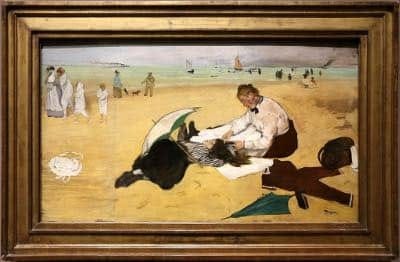
Degas wasn’t alone. One of Vincent van Gogh’s forty-odd self-portraits gazed out from the dining room wall, observing my daily routines with what I can only assume was profound disappointment. A Monet—who knows which one, he produced at least 2,000—presided over Dad’s study.
Dad never mentioned his guilty pleasure, perhaps because he’d realised his son wasn’t exactly bursting with cultural curiosity. I was all sport in those days.
But one print in particular comes to mind. I must have walked past it thousands of times. Every day, coming out of my bedroom and down the hallway, she was there, looking down at me. A woman.
I never once asked who she was.
Johannes Vermeer
…was born in Delft, a prosperous Dutch town, in 1632. His birth date is unrecorded but he was baptized on 31 October 1632. The Netherlands was in the middle of its Golden Age—a period of considerable wealth and artistic output that had turned a collection of rebellious provinces into one of Europe’s more successful economies.
Surprisingly little is known about Vermeer’s childhood—the records fall silent after his baptism in 1632 and don’t pick up again until he married in 1653. It’s a shame, because his family background suggests there was rarely a dull moment.
For starters, his grandfather was a convicted counterfeiter while grandma ran illegal lotteries. Johannes’ father also harboured the creative enterprise gene. He was a silk weaver who had diversified into the intriguing combination of art dealing and innkeeping.
Fortunately for posterity, Johannes chose painting over the family’s more colorful pursuits.
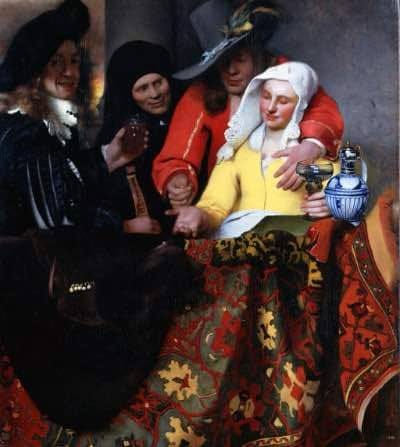
At the age of twenty-one, Vermeer married Catharina Bolnes. She was Catholic, he was Protestant. Johannes converted to Catholicism. As if to prove his commitment to his new faith, the couple then proceeded to have fifteen children, though four died in infancy.
Vermeer the meticulous painter
We don’t know who taught Vermeer to paint, or where. It’s quite possible that he taught himself, picking up techniques from the paintings he observed passing through his father’s dealership.
By 1653, Johannes had been accepted into the Delft Guild of Saint Luke as a master painter. He was also elected head of the guild several times. Despite this recognition from his peers, commercial success proved more elusive. There was a problem.
Vermeer painted slowly. Painfully slowly.
Throughout his career, he produced perhaps 35 paintings. Compare this to his contemporary, Rembrandt, who produced around 600 works, or to Jan Steen’s 800 paintings. And don’t forget Monet’s 2,000 mentioned earlier.
But Vermeer wasn’t lazy—he was meticulous. His technique involved grinding expensive pigments, layering translucent glazes and capturing light with an almost scientific precision. Some art historians believe this precision must have benefited from the use of a camera obscura.
Out of Curiosity
A camera obscura is an optical device that projects an image onto a surface. Typically, it is a darkened space, either a room or a box, with a small hole or lens in one side which projects light onto the opposite surface.
An inverted image of the outside scene is then produced to allow artists or draughtsmen to trace outlines with great accuracy. In addition, for an artist, it provided a tool to help judge relative light and dark and the overall ‘colour temperature’ in selected areas.
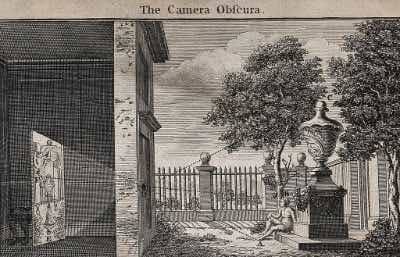
My personal experience of a camera obscura was at the Clifton Observatory in Bristol, overlooking the Clifton Suspension Bridge. At the top of the tower, a rotating lens, hood and mirror combine to project views across Avon Gorge onto a circular, concave surface in front of you.
In other words, by looking down at the projection, you can see a full panorama of the total area outside. You can see people walking and kids on bicycles while cars and buses crawl their way across the image. The effect is oddly captivating.
Vermeer didn’t paint grand historical or religious scenes. He excelled at painting snapshot moments of Dutch domestic life: a woman reading a letter, a maid pouring milk, a music lesson in progress. You are the unseen observer peeking through the window.
His ability to capture light set Vermeer apart in his era; light streaming through windows, reflections from objects of all kinds, seamless gradation from light to shadow.
It was all about the light.
Girl with a Pearl Earring
In 1665, Vermeer painted what would become that mysterious print on my childhood hallway wall. ‘Girl with a Pearl Earring’ has since become his most famous work, dubbed the ‘Mona Lisa of the North’.
The young lady looks over her shoulder and catches your gaze. She’s wearing an exotic turban—pearl grey and golden yellow—with a jacket to match. Behind her, nothing but darkness.
Her lips are just parted, as if she’s about to speak. But your eye keeps returning to that pearl hanging from her left ear, catching the light.
It turns out I wasn’t the only one who didn’t know who she was. The identity of the woman in the painting has never surfaced.
Enigmatic. Intimate. That’s the girl with a pearl earring.