



29th August 1791
(read time: 7 mins.)
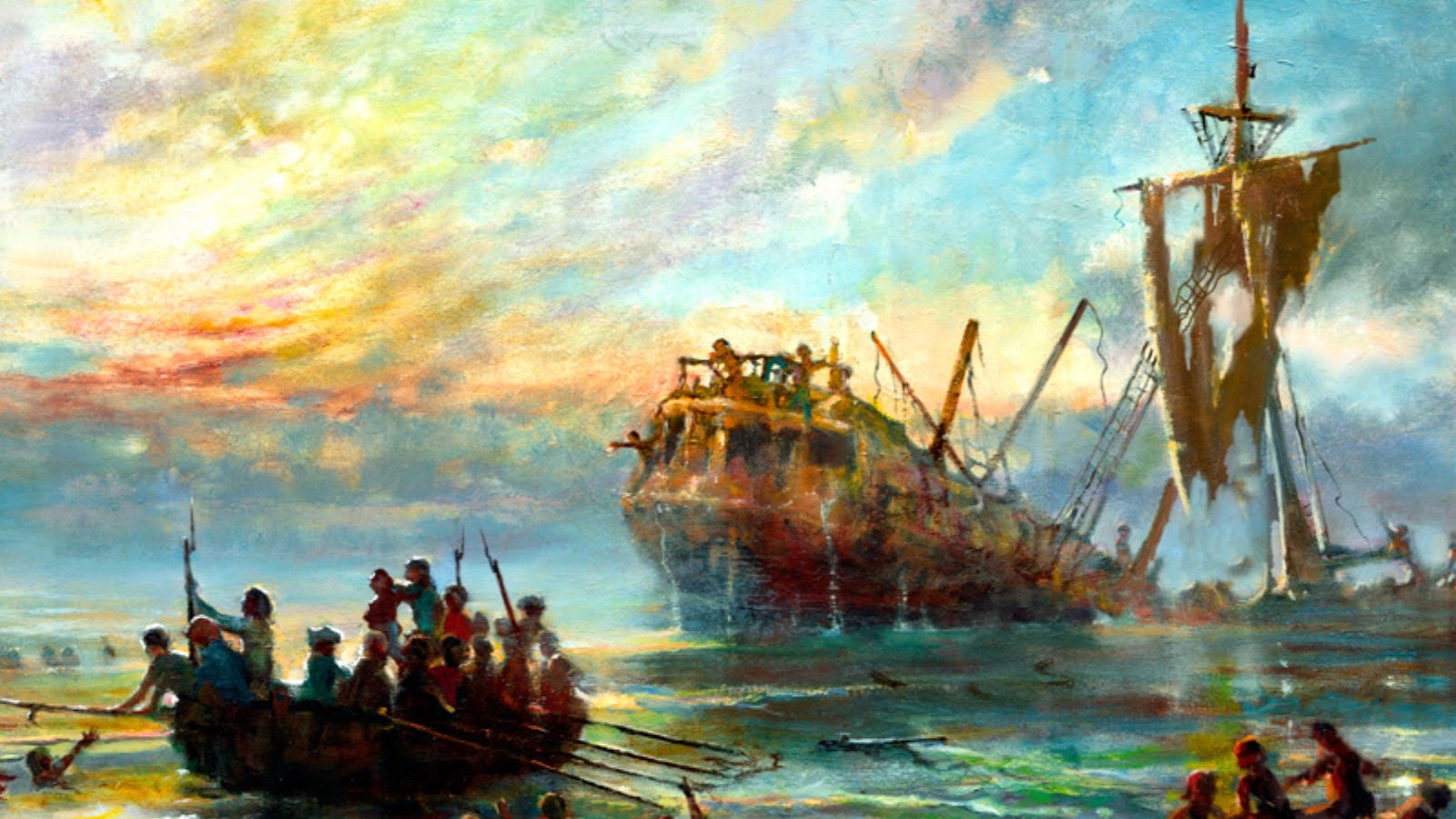
HMS Pandora headed north along the east coast of Australia, hunting for the mutineers of HMS Bounty. But as the frigate rounded Cape York from the Great Barrier Reef and entered the Torres Strait on 29 August 1791, disaster struck.
Happy Sunday!
A couple of days ago the British press erupted with news that sent shockwaves across the country. King Charles had stripped his younger brother of his princely title.
That means that Andrew - formerly known as Prince - will henceforth be called Andrew Mountbatten Windsor. This is an almost unprecedented fall from grace for a member of the royal family.
To rub salt into his wounds, the King is also evicting Andrew from his sprawling 30-room Windsor mansion. He will soon have to slum it in a modest five-bedroomed property on the King’s Sandringham Estate in Norfolk.
The British public has been increasingly unimpressed that Andrew’s close ties to convicted sex offender Jeffrey Epstein seemed to have been quietly ignored. Consequently, the press has closed in on Andrew like a hungry shark with a scent of blood in the water.
There’s something primordial about the process - a collective itch to see justice done, a thirst to watch someone who behaved badly get what’s coming to them.

This current method of retribution is positively civilised compared to previous eras. In the 17th and 18th centuries, hunting down wrongdoers who’d fled British justice didn’t involve press releases and strongly-worded statements. Instead, the Royal Navy would be dispatched to the four corners of the world to haul the miscreants home - where justice, and probably a noose, awaited them.
When Captain Kidd turned from privateer to pirate in the 1690s, the Crown dispatched HMS Advice to transport him home from Boston, Massachusetts for trial.
When the pirate Bartholomew Roberts terrorised the Atlantic in the 1720s, it took HMS Swallow several weeks of relentless pursuit before finally killing him off in battle within sight of the west coast of Africa.
And then there was perhaps the greatest pursuit of them all, tracking down the mutineers of the HMS Bounty.
HMS Bounty
Ask someone about the Mutiny on the Bounty and they’ll probably mention Captain Bligh, breadfruit or Marlon Brando.
In 1789, the HMS Bounty was indeed transporting breadfruit from Tahiti to the West Indies when Fletcher Christian and 24 crew mutinied, casting Captain William Bligh adrift in an open launch with 18 of his men.
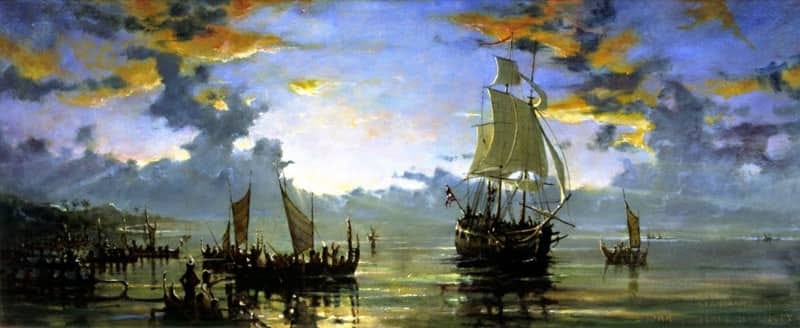
Three thousand six hundred miles later, Bligh had successfully, and miraculously, navigated the treacherous Coral Sea and Torres Strait to reach the Dutch haven of Timor.
The Dutch settlement commander, Mynheer Wanton, extended hospitality to Bligh and his crew, after which the English contingent returned home.
On hearing of the mutiny, the Admiralty bristled with indignation. How dare such an outrage occur under King George III’s colours? Their response was swift. First Lord of the Admiralty John Pitt commissioned one of His Majesty’s ships to hunt down the mutineers, arrest them and bring them home to face British justice.
And that ship would be the HMS Pandora.
Out of Curiosity
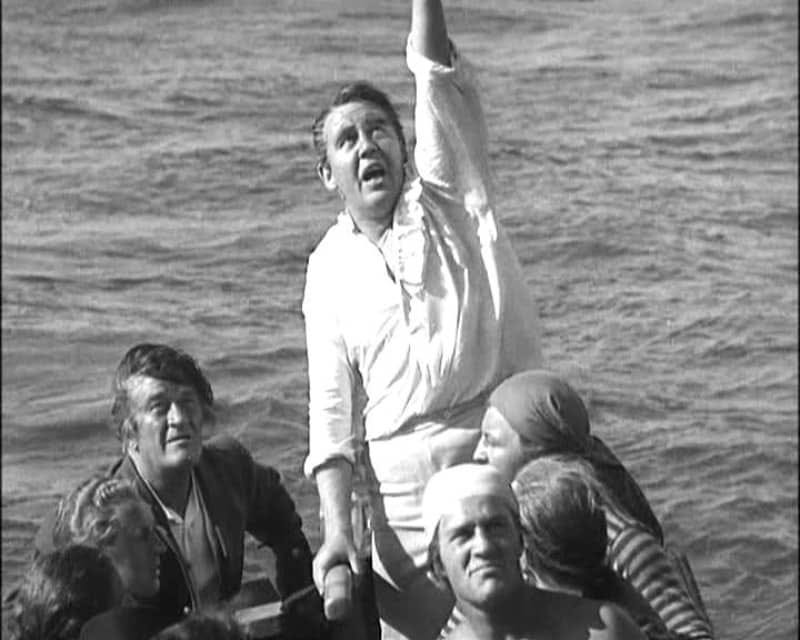
The film Mutiny on the Bounty premiered at the Capitol Theatre in New York City 90 years ago next Saturday, 8 November 1935. Clark Gable played the dashing mutineer Fletcher Christian while Charles Laughton magnificently portrayed Captain Bligh. The film claimed the Academy Award for Best Picture in 1936.
HMS Pandora and the hunt for the mutineers of HMS Bounty
Edward Edwards was born in Water Newton, near Peterborough, in 1742. He joined the Royal Navy at the age of ten and was appointed captain of the HMS Pandora 38 years later.
Edwards’ baptism on the Pandora wouldn’t be the gentle learning-the-ropes exercise he might have hoped for. Instead, he’d be leading a manhunt across the world’s oceans to seek out and capture the 25 Bounty mutineers.
HMS Pandora had been gathering barnacles at Chatham Docks for seven years before being hauled to Portsmouth for a facelift and adaptation for the voyage.
She gained four new 18-pounder cannons and was laden with enough provisions to last the 160-man crew well beyond the initial four-and-a-half-month leg of the journey to Tahiti.
The ageing 24-gun frigate set off from Portsmouth in pursuit of the mutineers 235 years ago this Friday, 7 November 1790. Captain Edwards gave instructions to head for Cape Horn at the southern tip of South America, then onwards to Tahiti.
Edwards struck gold when he landed at Matavai Bay, Tahiti in March 1791 and immediately rounded up 14 of the 25 fugitives. Most of them surrendered voluntarily. Despite living in paradise for two years, they preferred to take their chances back home.
Besides, at least four of them weren’t mutineers, but loyalists who couldn’t originally join Captain Bligh due to overcrowding on the open launch.
However, Fletcher Christian and his remaining ten crew weren’t on the island, so the search went on.
The crew of HMS Bounty had mutinied because of Captain Bligh’s cruel treatment to his men. Ironically, Captain Edwards served up similar helpings of cruelty to the same men once they were captured.
He kept his captives in a poorly ventilated wooden structure on deck, with little room to move. Their hands and legs were clapped in irons, and they were obliged to eat, drink, sleep and respond to calls of nature without leaving the makeshift cage.
The crew referred to this hellhole as ’Pandora’s Box’.
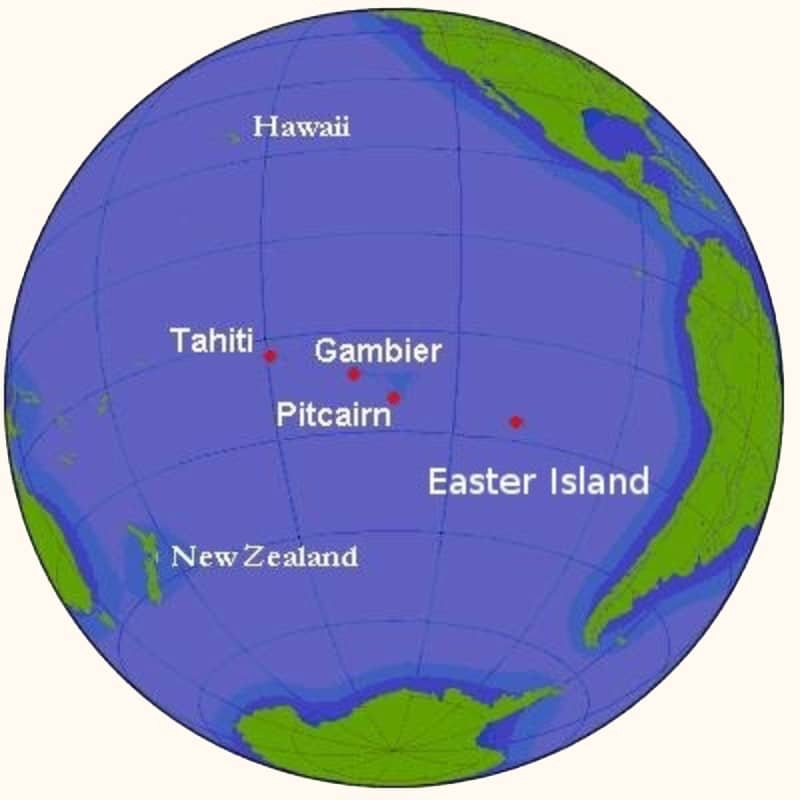
The hunt for Fletcher Christian and the remaining mutineers dragged on for the next four months. They island-hopped to the Society Islands, Cook, Union and Samoan Islands, Tonga, Tokelau and Rotuman - a grand tour of the Pacific’s most remote real estate.
Not a trace.
On 16 March 1791, Edwards discovered Ducie Island - a speck of coral that happened to sit just 290 miles east of Pitcairn Island, where Christian and his mutineers were, at that very moment, building their new lives.
A few more days’ sailing on the same bearing and the chase would have been over. However, Edwards turned north.
By August, the scent had gone cold and the captain decided to head home without Fletcher Christian and the remaining mutineers. The Pandora headed north along the east coast of Australia. But as the frigate rounded Cape York from the Great Barrier Reef and entered the Torres Strait on 29 August 1791, disaster struck.
HMS Pandora hits a reef
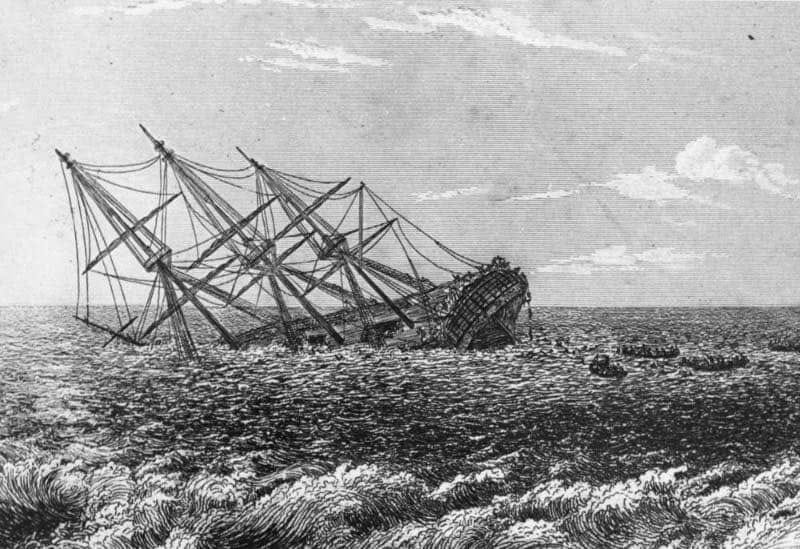
Captain Edwards tried to haul the ship off the reef with its anchor, but the hull was already nine feet deep in water. Despite pumping out water through the night, there was no hope. Within minutes of Edwards giving the order to man the lifeboats, the Pandora heeled over and sank.
Ten of the prisoners had been released to help with pumping water. As the four still chained in Pandora’s Box pleaded for mercy, the master of arms yelled…
Never fear, my boys, we’ll all go to hell together.
Thirty-one of Edward’s men perished along with the four captives trapped in Pandora’s Box.
Pandora’s Box
The expression ‘Pandora’s Box’ originated much earlier than the 1790 voyage of the HMS Pandora.
The Ancient Greek author Hesiod wrote the epic poem Works and Days sometime between 750 and 650 BCE. The poem describes the Five Ages of Man.
According to Hesiod, Zeus - the king of the gods - created the first woman, Pandora, to enact revenge on mankind. Zeus endowed Pandora with beauty, charm and cunning. He also bestowed her with the quality of curiosity.
Zeus gifted Pandora a jar containing sickness, death, sorrow, greed, envy, hatred, pain, war, poverty and… hope. He told her that she must not open the jar under any circumstances.
However, because he had blessed Pandora with curiosity, Zeus knew that she couldn’t resist opening the jar. And she did. All the misery and evil escaped from the jar to spread over mankind.
Only hope remained behind.
Hesiod’s story of Pandora marks the end of the Golden Age. It explains the origins of human suffering and the presence of hope as a tool to help endure that suffering.
