



11th November 1975
(read time: 11 mins.)
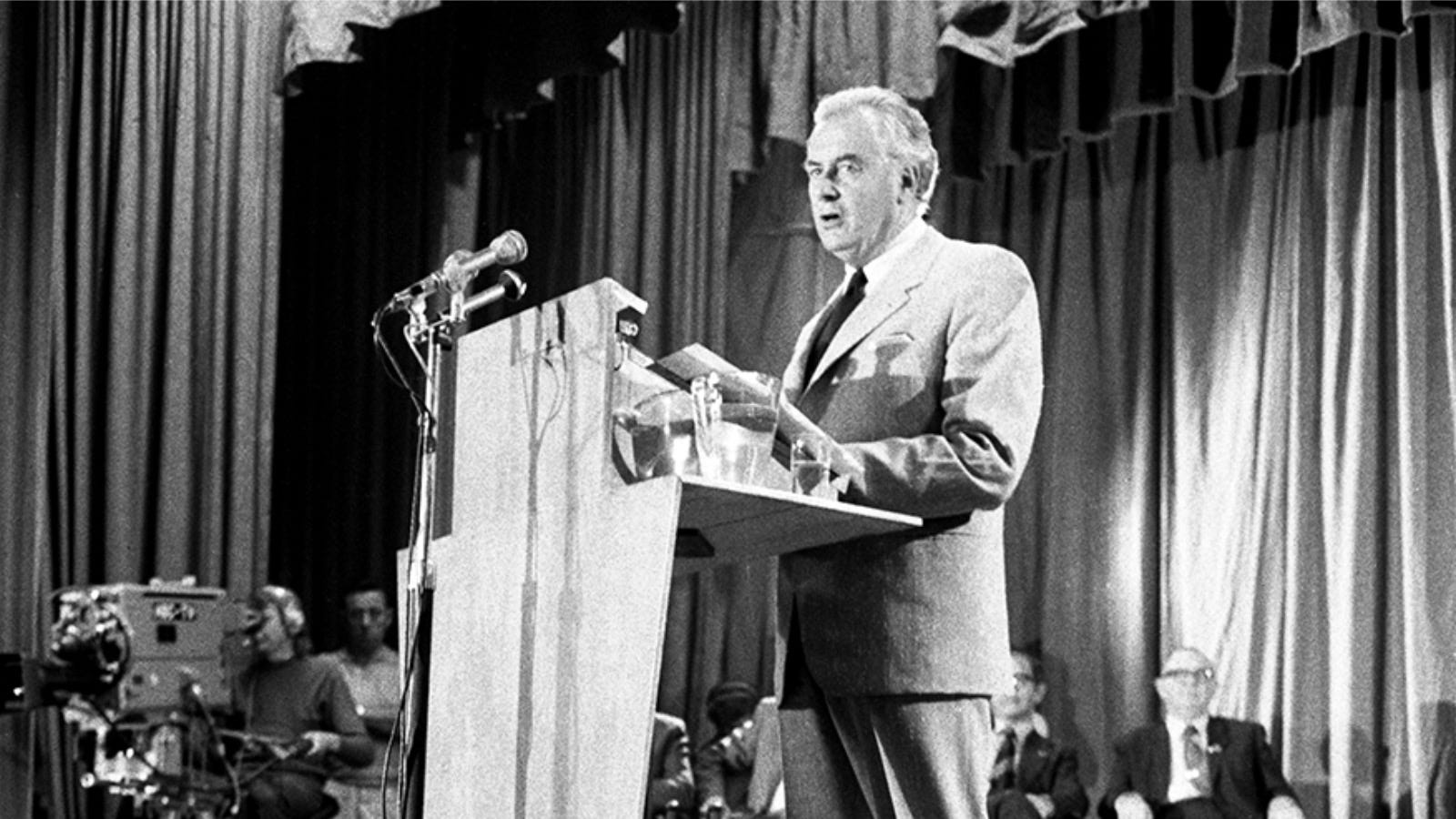
Gough Whitlam, Prime Minister of Australia, arrived at Government House, the governor-general’s official residence. It was the morning of 11 November 1975. The 1975 Australian Constitutional Crisis was about to ignite. Before Whitlam had a chance to speak, Kerr handed him a letter. It informed his guest that his commission as Prime Minister was terminated…
The 2025 United States federal government shutdown lasted for 43 days, officially the longest since shutdowns became a reality back in 1980 under President Ronald Reagan.
The Republican-controlled House of Representatives had been passing resolutions to fund the government since the start of October. Over in the Senate, the Democrats had other ideas. With only 53 of the 100 seats, Republicans couldn’t scrape together the 60 votes needed to push the legislation through.
Stalemate.
The longest previous shutdown in the United States lasted 35 days, also on Donald Trump’s watch during his first term as President.
But before Americans start polishing their award for unrivalled constitutional mayhem, a word about the competition.
Of course, the British have been collecting constitutional howlers for centuries, the most recent of which has to be the ‘B’ word we’re all still too traumatised to say out loud. (Brexit—damn, I said it.)
However, I propose a far more worthy candidate. In 1975, Australia delivered what must surely be the most bizarre political overthrow in democratic history. It was a Shakespearean tragedy that not even Shakespeare could have written.
May I present the ‘1975 Australian Constitutional Crisis’. Admittedly, the title has all the appeal of a dentist’s appointment, but don’t let the name fool you; this is a story of double-crossing, treachery, imperial meddling, conspiracy theories and a series of slapstick events so absurd that they surely could never be repeated.
And it began with exactly the same problem facing the United States today—someone turned off the money supply.
To understand how this farce came about, we need to consider the peculiar relationship between Australia and Britain that had evolved up to 1975.
Back in 1901, the Commonwealth of Australia was born. The six existing colonies merged to form a single federated entity. However, the new country was still under British control. It was only in 1986 that the final paperwork was completed to declare Australia fully independent from the United Kingdom.
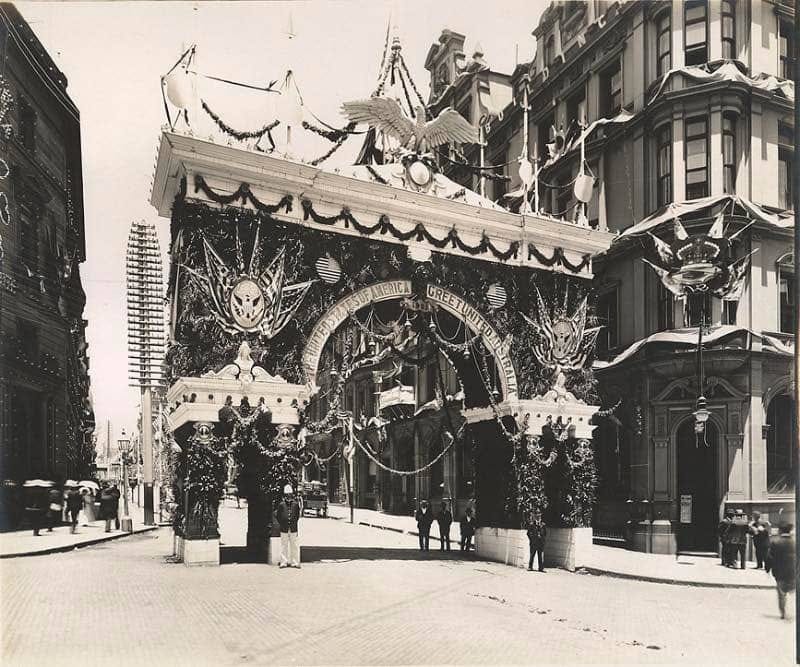
While the British breakup with America had involved revolution and war, Australia’s drift away from the mother country was rather like a lazy river—an amicable divorce conducted in slow motion. Both sides knew where things were heading, but nobody was in any particular hurry.
The Australian approach to independence was nothing if not pragmatic. Their proposition was this: We want our own country, flag, anthem and—most importantly—our own cold beer. We want complete independence and our unique Australian identity... but we’d quite like to keep the Queen, if that’s OK?
What could possibly go wrong?
Protagonist No. 1: Gough Whitlam
Edward Gough Whitlam was born in July 1916 in Melbourne and won his first parliamentary seat in 1952. By 1967, he had become leader of the Australian Labor Party (ALP).
Whitlam was a large, imposing man, with the presence of an international statesman. He was cosmopolitan, intellectual and charismatic. He could quote Shakespeare and draw on the Ancient Greek classics. In other words, Whitlam wasn’t your typical Labor parliamentarian.
The nation was tired of 23 years of Liberal-Country coalition, and so was Whitlam. He wanted to drag Australia into the new world. So he first set about modernising the Labor Party with the enthusiasm of a property developer eyeing a condemned building.
Five years later, Whitlam got his shot at the top job. He took it.
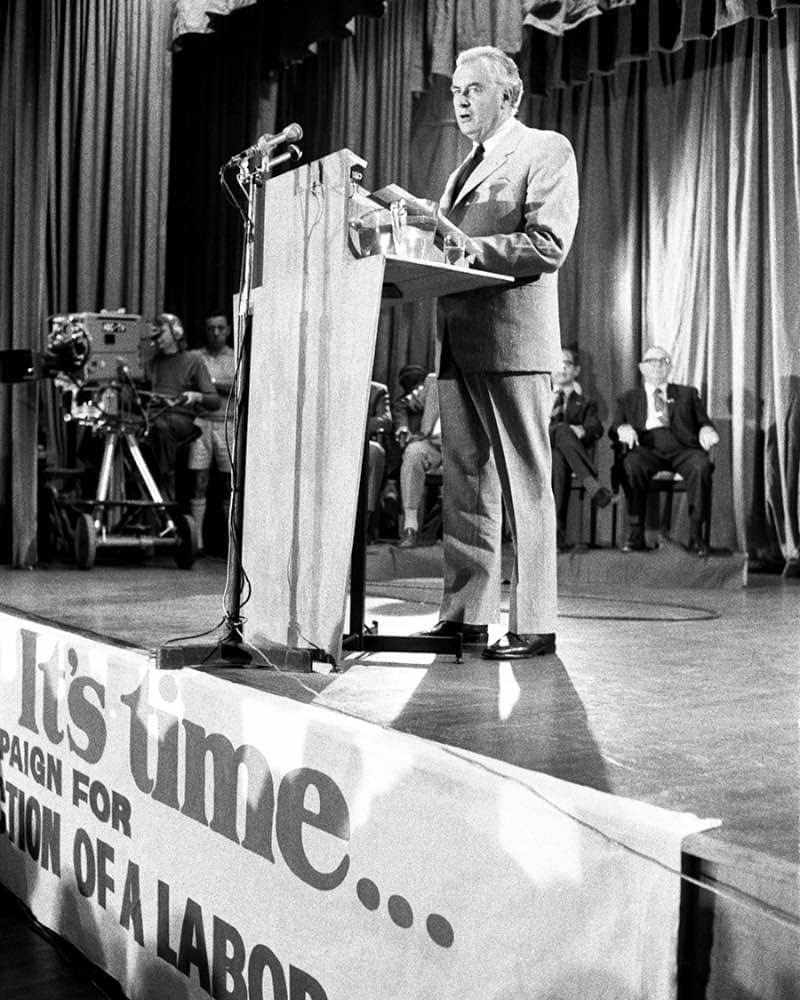
In October 1972, Prime Minister William McMahon called for an election. The Labor Party’s campaign slogan was ‘IT’S TIME’. On 2 December 1972, Australian voters agreed. Gough Whitlam became the 21st Prime Minister of Australia.
How the Australian Parliament works
Before diving into this chaotic story, a quick primer on the basics of the Australian parliamentary system might be useful. As a starter, think of it as a blend of British and American models.
Australia is a constitutional monarchy, so it has a head of state (currently King Charles III) represented in country by the governor-general who, in turn, is chosen by the Australian Prime Minister.
As a federal entity, Australia’s Parliament has a House of Representatives (151 members) and a Senate (76 members). All legislation must pass through both houses. The Prime Minister is responsible to Parliament and can be removed by a parliamentary vote of no confidence.
While the House of Representatives holds the real power in Australian politics, the Senate can block supply. In other words, it has the power to turn off the money supply that funds the machinery of government.
This superpower was designed as a check on executive power. It had never been used to bring down a government.
Until 1975.
What followed was the most frantic three years in Australian political history. It was a blitzkrieg reformation.
Even before his government was fully sworn in, the new Prime Minister had abolished conscription, withdrawn the last Australian troops from the Vietnam War, released draft dodgers from prison and opened the path towards universal health insurance.
Then Whitlam really got going.
Indigenous land rights were finally recognised, divorce laws propelled into the twentieth century and university fees abolished, while the arts received a long-overdue financial lifeline.
It was a fun ride if you supported the changes, terrifying if you didn’t.
Whitlam’s reforms were expensive. In October 1973, his luck ran out. The world oil crisis erupted. Oil prices quadrupled, inflation rocketed and unemployment followed right behind.
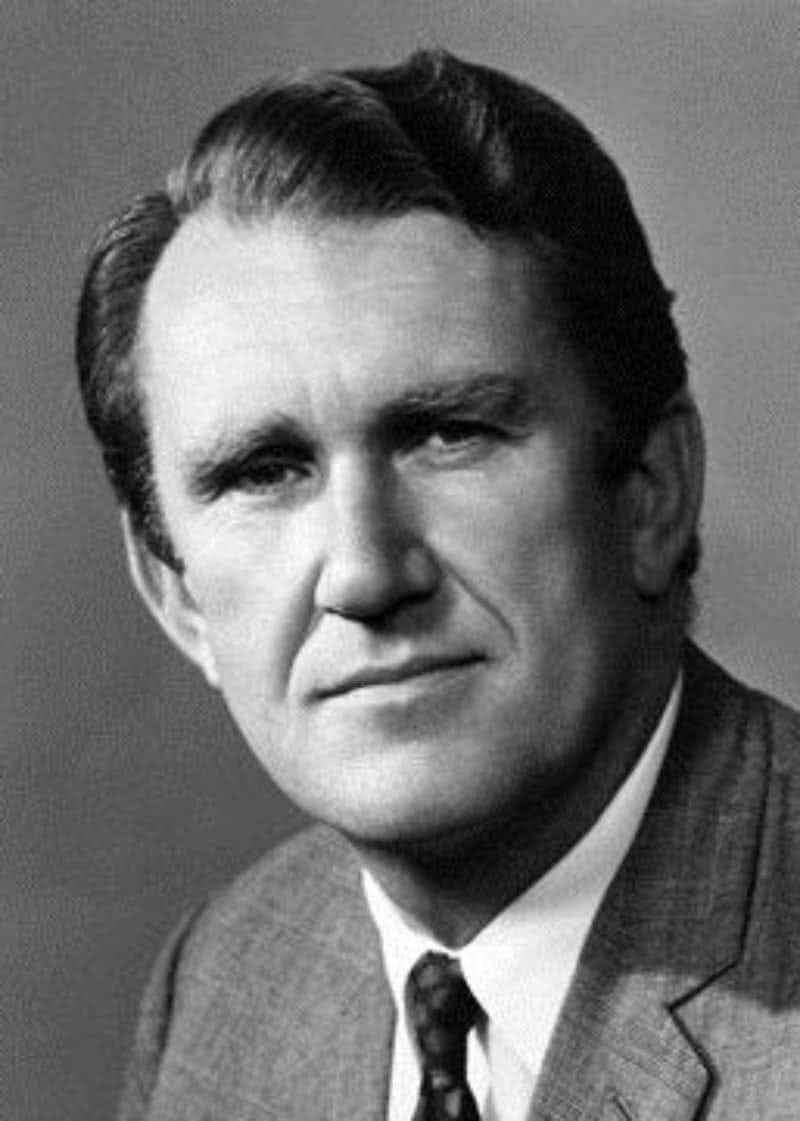
By May 1974, the Senate was twitching. Whitlam didn’t control the upper house, meaning that the Liberals could block supply—cut off the cash. Their leader, Malcolm Fraser, smelled blood.
Protagonist No. 2: Malcom Fraser
Malcolm Fraser was as conservative as they come. He was born in 1930 in Toorak, Melbourne, into a wealthy family. His critics despised him because he was a ‘squatter’, the pejorative Australian term for wealthy, rural landowners.
Out of Curiosity
The ‘squattocracy’ was Australia’s 19th-century version of the British aristocracy. Free settlers, often middle and upper-class English and Scottish, used their connections and wealth to help themselves to vast tracts of Australia’s most fertile land, laying claim simply by settling on it.
Sure enough, at the first opportunity, Fraser pounced. Under his instruction, the Senate voted to block the money supply. Whitlam’s reforms were put on hold. Public servants wouldn’t be paid, schools and hospitals would shut down, and pensioners would go hungry. Whitlam was under pressure.
To try and break the impasse, he convinced the governor-general—who we’ll come to in a minute—to call a double-dissolution election. All seats in the House of Representatives and Senate were up for grabs.
On 18 May 1974, Whitlam scraped back in with an even thinner majority. Worse still, Fraser was still blocking the money supply.
In the government’s scramble for cash, things went decidedly sideways. They attempted to borrow today’s equivalent of US$25 billion from Saddam Hussein’s Iraq—which was showing the early signs of being run by a homicidal maniac. Not content with this masterstroke of foreign policy, they also tapped Hussein for a US$500,000 donation to the Labor Party.
Not surprisingly, the deal collapsed. The ALP were outed.
Fraser was on a roll. He denounced the Labor government’s reprehensible behaviour and demanded yet another election. No election, no money.
An unstoppable force had come up against an immovable object. The machinery of state was grinding to a halt.
Protagonist No. 3: Sir John Kerr
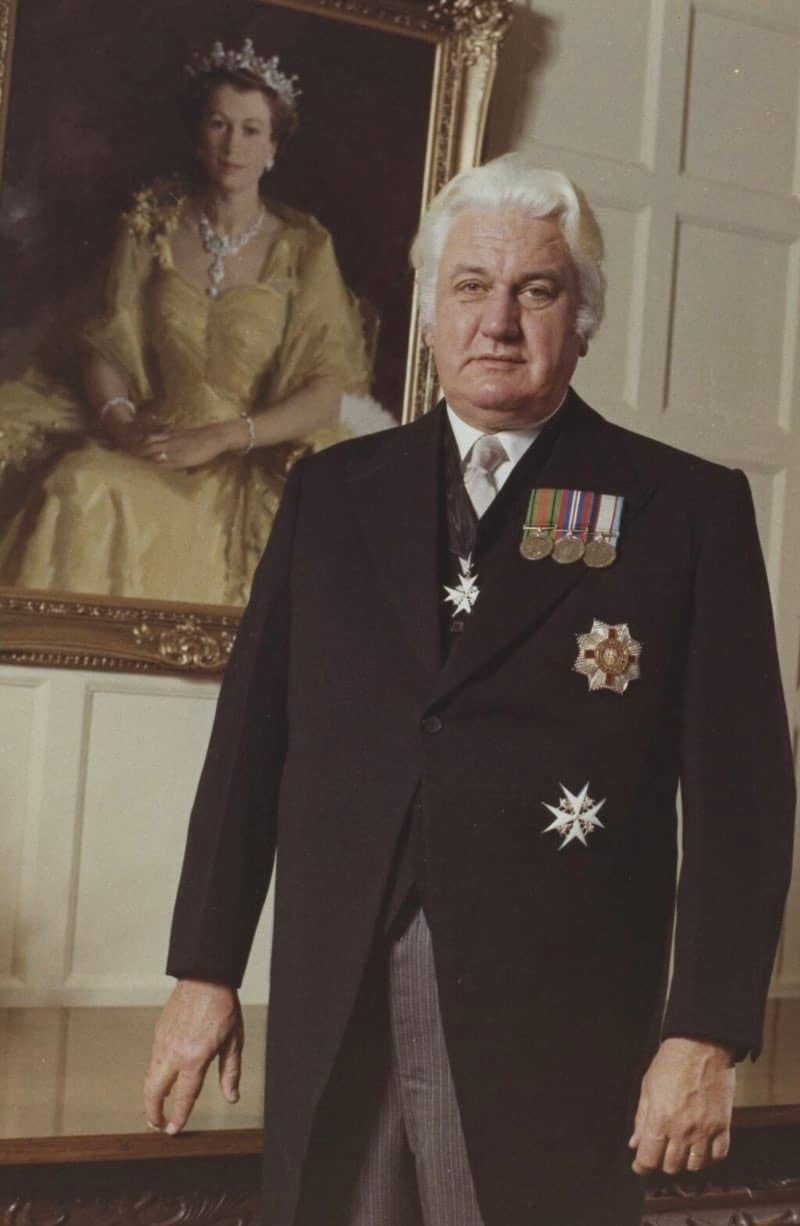
The British monarchy’s representative in Australia is the governor-general. Whitlam had appointed the incumbent, Sir John Kerr, in 1974. He figured that a man with a history of association with the trade unions should be favourable to Labor and thus a useful ally.
Let me have men about me that are fat,
Sleek-headed men, and such as sleep a-nights.
Yond Cassius has a lean and hungry look.
He thinks too much: such men are dangerous.
JULIUS CAESAR: Caesar speaks to Mark Antony
Whitlam had overlooked a few small details. Firstly, he’d tried to block Kerr’s knighthood the year before. Worse, Kerr knew he had been Whitlam’s fifth choice for governor-general—not even second or third… but fifth. And finally, Kerr had left the Labor Party, adopting a decidedly more conservative outlook.
In other words, Whitlam had appointed a man nursing multiple grudges and conservative sympathies. It was a masterclass in misjudgement.
Sir John Kerr had been watching proceedings from the sidelines with growing alarm. He was more used to worrying about cutting ribbons at school fêtes and hosting garden parties.
So why was he alarmed?
Well, buried in the Constitution were reserve powers that had never been tested. One of them was the power to dismiss a Prime Minister under Section 64 of the Constitution.
Kerr could sense his moment approaching.
A day to remember
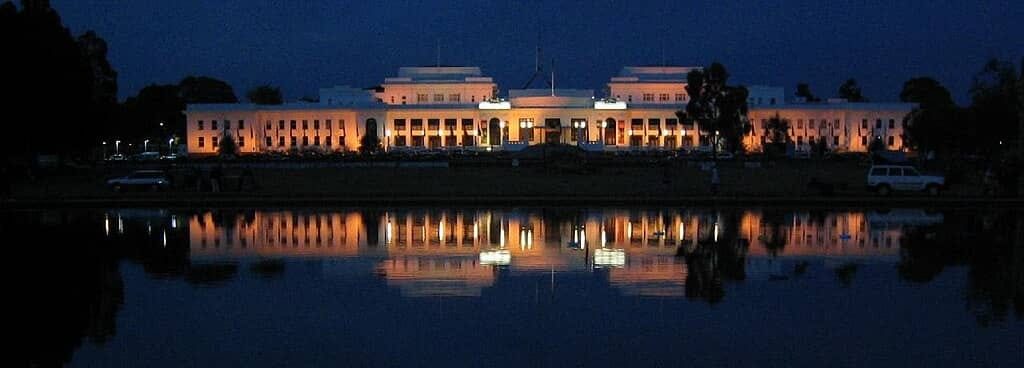
On the morning of 11 November 1975, Fraser made his move. It was Remembrance Day and this was going to be a day Australians would certainly remember.
While Whitlam was preparing to see Sir John Kerr to ask for a half-Senate election to break the deadlock, Fraser was covertly paying the governor-general a visit himself with a proposition.
At 1:00pm, Whitlam arrived at Government House, the governor-general’s official residence. However, before he had a chance to speak, Kerr handed him a letter. It informed his guest that his commission as Prime Minister was terminated.
Whitlam had been sacked.
Moments later, Kerr appointed Malcolm Fraser as caretaker Prime Minister.
Let’s just pause for a moment. Australia was—and is—a constitutional monarchy with republicanism bubbling just under the surface. The Queen was only head of state because nobody had bothered to suggest an alternative.
Sir John Kerr, acting on behalf of the Queen, had just fired Australia’s democratically elected Prime Minister. Or to put it another way, an unelected appointee of the British Empire had just overturned the will of millions of Australian voters.
Ouch.
But hold on—the story doesn’t end there. What happened next was total comedy caper.
Whitlam was out to lunch
What would any self-respecting former Prime Minister do the moment he had been unceremoniously dumped? How about a spot of lunch?
Still reeling, Whitlam had gone for lunch without broadcasting news of his downfall. With no mobile phones or social media to spread the word, few people were aware of the unfolding drama.
At 2:00pm, the Senate was voting on yet another Labor motion to pass the supply bills. Unaware that their government had fallen, Labor senators dutifully voted in favour.
However, just prior to the vote, the slippery eel Fraser had spotted an opening. Discreetly, he hurried to the Senate to instruct the Liberal senators to support the supply bills—the same bills they’d been blocking since mid-October.
In a flash of political opportunism, the deadlock had vanished. Crisis solved, prime ministership secured—all before anyone could blink.
Fraser had out-Machiavellied Machiavelli.
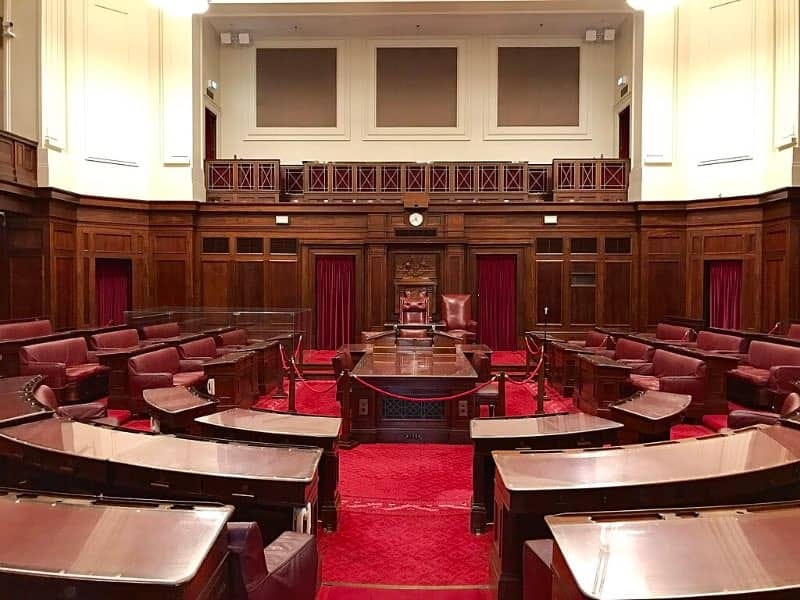
Once the truth came out, all hell let loose. Old Parliament House was in panic. People were running around ‘like headless chooks’ according to one parliamentarian at the time, it was ‘a real shamozzle‘.
The governor-general’s official secretary, David Smith, had the dubious honour of reading the proclamation confirming that the government had been dismissed. He ended with the words, “God save the Queen.”
By this time, Whitlam was standing over Smith’s shoulder, glowering. As soon as the proclamation had been read, Whitlam grabbed the microphone and delivered the immortal line….
Well may we say God save the Queen—
because nothing will save the governor-general”.
You can check it out here. (I’d suggest watching betweeen 2:15 and 3:00)
The crowd that had gathered outside Parliament was apoplectic. Their democratically elected Prime Minister had been fired by an unelected British official in a morning coat. The fury directed at Fraser and Kerr was white-hot, raw and deeply personal.
For certain generations in the United States, a common question at a social gathering might be “Where were you when Kennedy was assassinated?” In Australia, the question would be “Where were you when Whitlam was sacked?”
