



21st November 1915
(read time: 6 mins.)
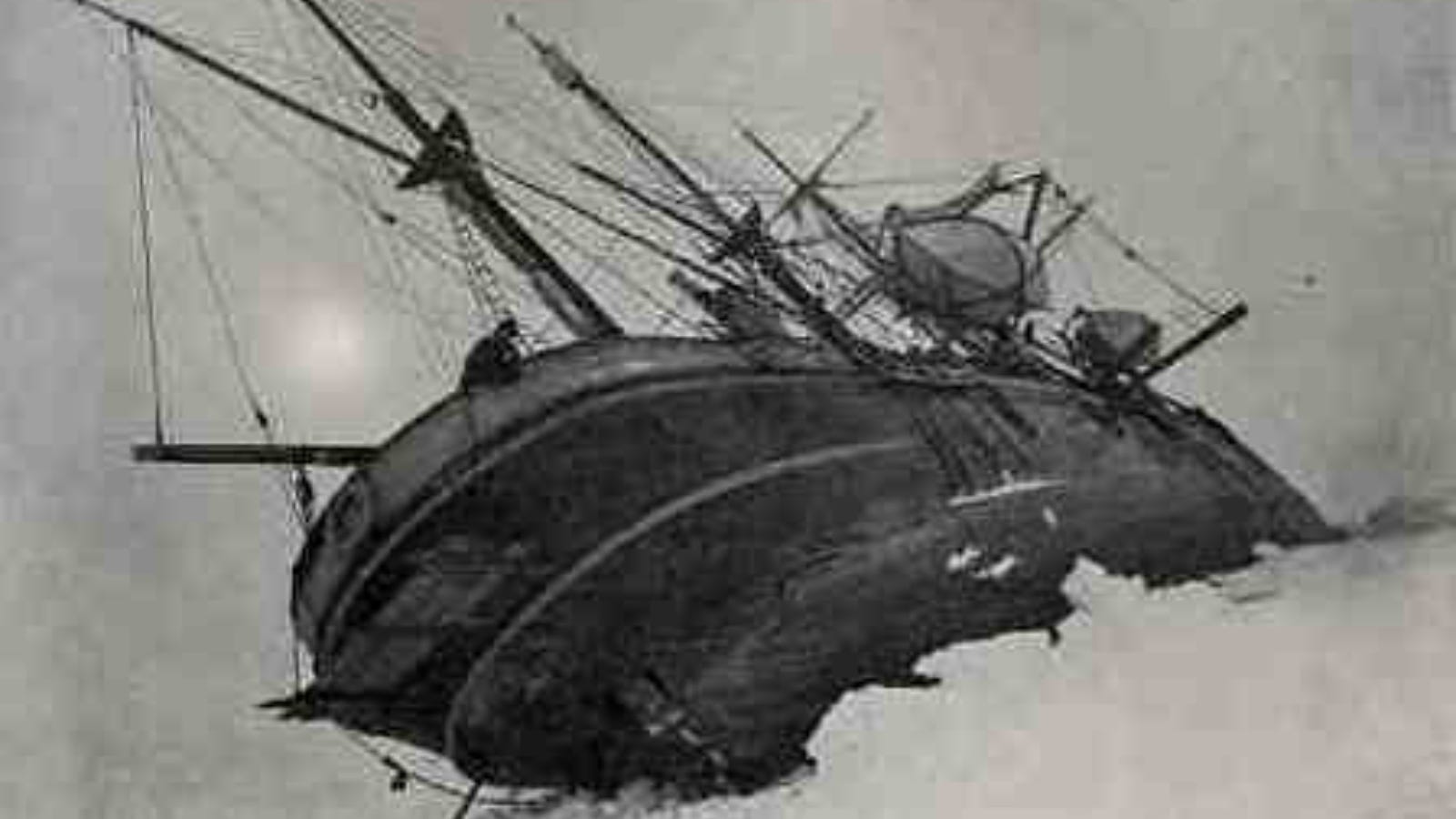
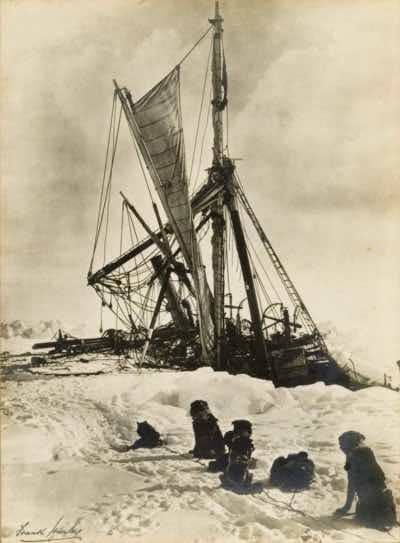
On 21 November 1915, Frank Hurley photographed the scene when the Endurance unleashed a resounding cry as her back broke. She had finally given way to the merciless ice floes. With the grace of a prima ballerina, the three-masted barquentine pointed her nose down and slipped gradually beneath the waves.
If you take a trip to the National Portrait Gallery in London, you’ll find ‘Room 30: Contemporary Conversations’, where paintings and early photographs hang side by side, engaged in what amounts to a polite but determined turf war.
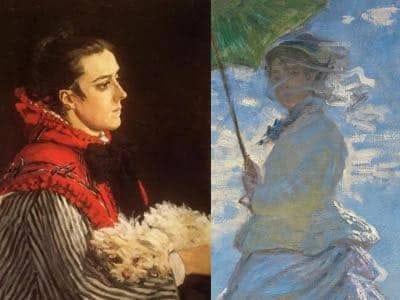
You can see artists of the era, freed from the tyranny of having to paint subjects exactly as they look, begin experimenting with impressionism, abstraction and wild colour. By contrast, the early photos look very staged and formulaic.
However, by the 1850s, photographers were experimenting too—adding drama and atmosphere to their images that the camera alone couldn’t capture.
Out of Curiosity
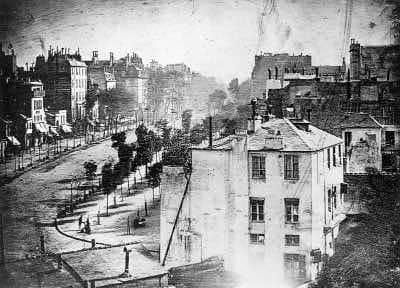
Joseph Niécphore Niépce created the earliest surviving photograph of a real-world scene in 1826-27. However, the first commercially viable photographic process was the daguerrotype, a process invented by Louis Daguerre.
His first ever photograph is thought to have been taken in 1837, although he created his earliest surviving daguerrotype, ‘Boulevard du Temple’, in 1838—publicly announced the following year.
Frank Hurley
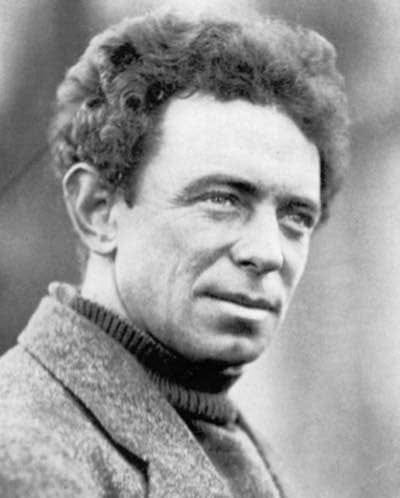
Which brings us, somewhat improbably, to a man standing on Antarctic ice in 1915, hauling glass plate negatives across frozen seas, determined to turn a disaster into something beautiful.
Frank Hurley was born in Sydney, Australia, on 15 October 1885. Australia was still a collection of separate colonies—federation was fifteen years away.
By eighteen, Frank had taught himself the basics of photography, which was still transitioning into something more artful than simply recording what the eye could see. By 1905, he was a partner in a postcard business in central Sydney.
This was the golden age of postcards, before the telephone took over as the primary form of communication. Frank photographed Sydney and the surrounding areas, converting his images into postcards.
However, he started to embrace the ‘Pictorialist’ philosophy of photography that had been evolving since around 1890. This focus helped him to develop a signature style that provided the basis of his photography for the next 50 years.
Out of Curiosity
For centuries, artists had perfected the art of painting what they could see. Take a look at Thomas Gainsborough’s ‘The Blue Boy’ or John Constable’s The Hay Wain. Life represented in oil or watercolour.
Then, after centuries of perfecting this skill, photography emerged.
What was the point of painting what you could see when photographs could do it faster and cheaper? The Impressionists and Post-Impressionists had an answer: Monet, Renoir, Cézanne, Van Gogh and their contemporaries stopped trying.
These artists decided to paint impression over precision, atmosphere over accuracy.
Constable’s clouds gave way to Van Gogh’s swirling skies while Gainsborough’s silken portraits evolved into Picasso’s angular, cubist faces.
Here’s the problem. Photographers such as Hurley were finding photography too mechanical. Point and click. A monkey could do that—but where was the artistry?
The Pictorialists had their own Impressionist awakening. They considered creating art rather than precise images by introducing soft focus, imaginative compositions and manipulation in the darkroom.
Like the Impressionists, these photographic artists sought mood and atmosphere, rather than documentary precision. They had discovered that blurring reality could somehow make it more truthful.
Ernest Shackleton’s Imperial Trans-Antarctic Expedition
Frank wanted the drama and artistic control of Pictorialism, but without the soft-focus romance. He wanted sharp edges, epic scale, dramatic skies—the kind of subjects Sydney Harbour couldn’t provide
Hurley needed something more extreme. He found it when he joined Douglas Mawson’s 1911 Australasian Antarctic Expedition.
It was a brutal baptism. With temperatures falling below minus 30 degrees Celsius, equipment froze solid. Changing photographic plates became an exercise in pain management.
Nonetheless, Hurley’s photos from that expedition have become iconic images of Antarctic exploration.
But the career-defining moment came in 1914, when Hurley joined Ernest Shackleton’s Imperial Trans-Antarctic Expedition. Shackleton’s challenge was to attempt the first land crossing of Antarctica.
The expedition set sail in August 1914. Their ship—the Endurance—spent six weeks pushing through pack ice, crossing the Antarctic Circle to within a day’s reach of their destination, Vahsel Bay.
But the ice had different ideas. The northerly gales pushed ice floes hard against each other. The Endurance came to a standstill and would remain locked in the Weddell Sea for the next ten months.
By late October, Shackleton and his men had left the precarious ship and set up what they colourfully referred to as ‘Ocean Camp’—shabby tents perched on a migrating ice floe with only penguins and elephant seals for company.
Hurley made repeated trips back to the stricken ship, rescuing 120 photographic plates from a collection of over 500. Agonisingly, he smashed the remaining negatives—the only way to guarantee not risking his life trying to retrieve them later.
The sinking of The Endurance
For the following month, the stranded crew of the Endurance watched helplessly as the vast, grinding walls of ice closed in on the trapped vessel. She groaned and twisted.
On 21 November 1915, the Endurance unleashed a resounding cry as her back broke. She had finally given way to the merciless ice floes. With the grace of a prima ballerina, the three-masted barquentine pointed her nose down and slipped gradually beneath the waves.
In fact, the Endurance came to a stop with her stern sitting proud of the water. She held that pose for a week, as if waiting for a final curtain call. Then, quietly, she surrendered to the Weddell Sea.
Those images rescued by Hurley document one of history’s greatest survival stories. Shackleton’s entire crew would survive 22 months stranded on the ice. Hurley’s photographs gave the world a front-row seat to their ordeal.
These photographs were stunning, if not somewhat controversial. Hurley created composites, combining multiple negatives into single dramatic images—turning documentary into romantic elegy.
Purists were horrified, but Hurley was unapologetic. He was an artist. He wasn’t just there to record facts.
FOOTNOTE
In a previous Breezer, I have mentioned my favourite painting, J.M.W. Turner’s The Fighting Temeraire (OK, more than once!). Art historians still debate whether Turner’s masterpiece is an actual depiction of what he saw when the HMS Temeraire was hauled up the River Thames by a steam-driven tug boat in 1838, on its way to being scrapped.
