Spend a few minutes with me each week on a journey through history. One week, one event, one story worth telling. Steve Winduss. 12th July 2026

Happy Sunday!
I’ve rarely met anyone entirely immune to an airport’s charms. Every ninety seconds, a multi-tonne metal tube, packed with people, luggage and in-flight snacks, hauls itself into the sky, bound for who knows where. Call it doomscrolling on your feet—same compulsion, better posture.
For me, it’s more about the airport itself; a hub where the continents converge, drawing travellers in and shunting them back out, watched over by a departures board reading like a menu of the world.
It’s a connection of pure faith: a check-in clerk with a fixed smile, a faceless voice on a tannoy, an agent at the gate checking your boarding pass barely looking up, a stranger in a hi-vis vest directing a pilot you’ll never meet toward a runway you can’t see.
Trains are more honest, I thought last Thursday, waiting on a platform to send my son off to London. The electric rail sizzles, warning you that something is approaching. Everything happens close enough to touch—the train included, though best to wait until it’s stopped.
The usual scramble—doors, bags, hurried goodbyes.
Then a moment’s silence before the electric motors strain against inertia and the train sets off. No leap of faith needed here; just rails, pointing in one direction, staying firmly on the ground. It’s round the bend and out of sight before you’ve finished waving.
Again, a strong sense of connection. Which gets you halfway to understanding canals.
For the last couple of years, I’ve spent a long weekend with a couple of old school friends on the Grand Union Canal around the historic inland port of Berkhamsted, drifting along a small stretch of the UK’s 4,000-mile canal network. The sense of connection is there, much like the railways. But there’s something else too—a creeping, unshakeable weight of history.
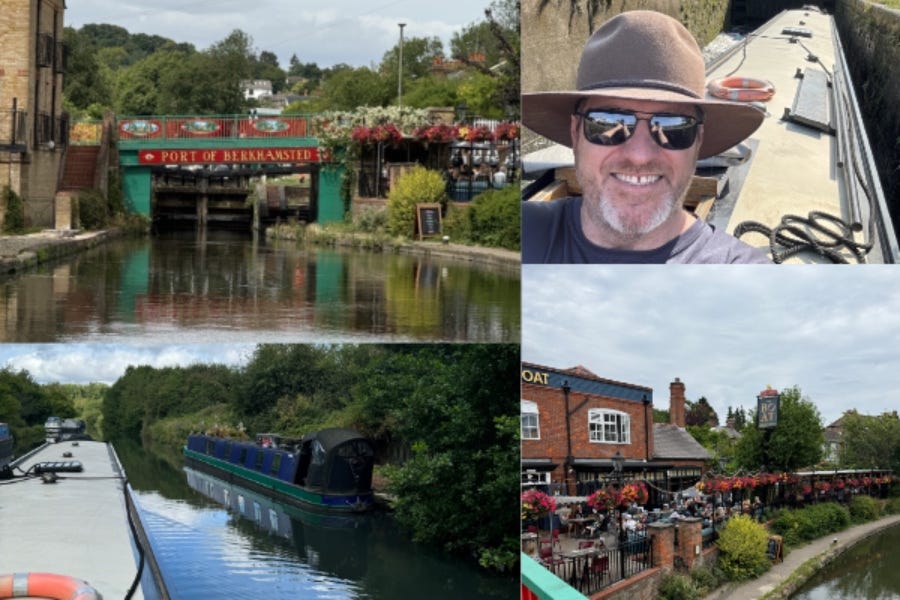
Yes, I know the railways define Britain’s Industrial Revolution every bit as much as the canals. Perhaps it’s the sight of the occasional neglected coal barge rusting in a siding that adds the extra weight. Perhaps it’s the maximum speed of four miles an hour. Or maybe it’s the locks, still working on gravity and ironmongery that hasn’t changed in two hundred and fifty years—if it ain’t broke, don’t fix it.
Whatever the reason, it was made possible because of a man named Egerton.
Francis Egerton...
...was born at Worsley, Lancashire on 21 May 1736, the youngest of eleven children born to Lady Rachael Russell and Scroop Egerton, 1st Duke of Bridgewater—Dickens would have wept with envy.
Francis’s early years earned him a reputation as a sickly, unpromising child. Later accounts claim that his mother had contemplated rewriting the family inheritance to cut him out. Harsh by today’s standards, but in an era of Primogeniture and strict settlements, business was business.
Primogeniture...
...took root in medieval England and survived until the property-law reforms of 1925, which abolished the system as the default. It followed a hereditary principle of magnificent simplicity: the eldest son got almost everything, and everyone else got a letter of encouragement.
The logic went like this—split an estate eleven ways and Scroop Egerton’s dukedom would have been replaced by eleven modest farms and considerably fewer dinner invitations. So Primogeniture declared the problem solved before it started: one heir, one estate, one powerful bloodline kept intact—and good luck to the rest.
Younger sons were dispatched to the Church, the Army or the Navy—roughly in that order of desperation—on the understanding that God, France or the sea would finish the job. Daughters fared worse still. Their job wasn’t to inherit anything, but to marry someone who could. The system was brutally efficient at keeping estates whole and families powerful. It was equally efficient at reminding ten out of every eleven children exactly where they stood.
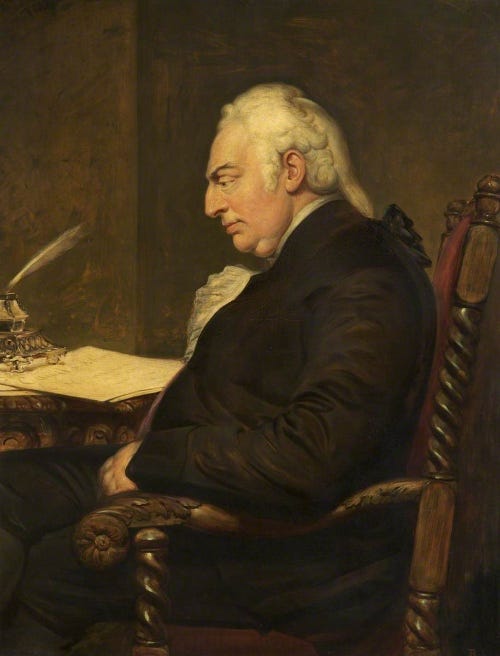
It’s funny how things work out. Francis’s mother never did get around to altering the inheritance. When his father died in 1745, his elder brother John duly stepped in as duke. John then obligingly died three years later without children of his own, leaving an eleven-year-old Francis as 3rd Duke of Bridgewater.
This was 1748. Britain was still catching its breath after two shocks. Firstly, there was the Jacobite rising two years earlier, a failed Stuart rebellion led by Bonnie Prince Charlie that had marched into England before collapsing at Culloden. Then, the War of the Austrian Succession was grinding to its exhausted conclusion—a sprawling European struggle over Maria Theresa’s right to inherit the Habsburg lands in the teeth of male‑only succession rules—yet another let’s‑exclude‑women‑from‑inheritance scheme.
Meanwhile, the Industrial Revolution was gathering a head of steam, powered above all by one crucial ingredient—coal.
Young Francis...
...wasn’t an obvious candidate for greatness. His trustees, tasked with preparing him for responsibility, despaired of him—”sickly, ignorant, awkward and plain unruly“ was the verdict of one.
Their despair was reaffirmed by the young Duke’s tastes for gaming and horse racing—the standard vices of an eighteenth-century aristocrat with more money than direction. But in 1753, when he set off on his Grand Tour—compulsory for young men of his class—Francis’s life was about to be rerouted entirely.
In the south of France, he encountered the one-hundred-and-fifty-mile-long Canal du Midi, completed in 1681 under Louis XIV and Europe’s first major long-distance canal. It linked the Mediterranean Sea to Toulouse, which in turn connected to the Garonne, itself flowing into the Atlantic. Together, the combined waterways became known as the Canal des Deux Mers, or Canal of the Two Seas.
Egerton found the business of canal construction utterly gripping. If told as a child not to try to push water uphill, he had taken it as a challenge rather than as a metaphor.
A very British engagement
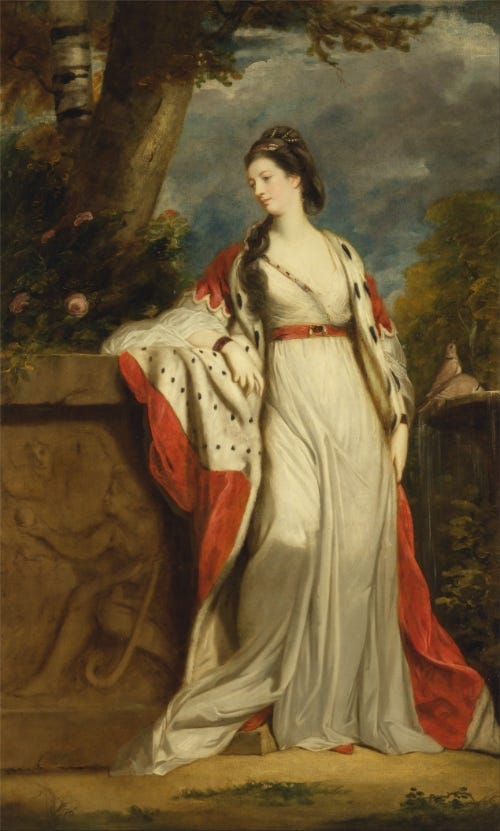
Back in England, life delivered its next twist. Now of age, Egerton fell for Elizabeth Gunning—the Dowager Duchess of Hamilton, and one half of a pair of Irish sisters so celebrated that London crowds reportedly gathered just to watch them walk past. The warning signs were everywhere, but Francis chose not to look.
Elizabeth had already been married to James, 6th Duke of Hamilton. They met at a St Valentine’s Day masquerade ball in 1752. James wanted her instantly... and by instantly, I mean that same night.
The calculating Irish beauty, however, wouldn’t be seduced without marriage. So James did what any duke gripped by an uncontrollable midnight urge would do. He dragged a parson out of bed and set off for a Mayfair chapel, determined to get married before common sense could prevail. Running short of an actual ring, he pulled one off the bed curtain on his way out— ‘With this curtain ring, I thee wed.’
By the morning, James was exhausted and Elizabeth was the Duchess of Hamilton.