

Dates with History Midweeker
The historical joyride for a curious mind


Dates with History Midweeker — Spend a few minutes with me exploring historical snippets and fascinating facts relating to this week. 3rd June 2026.

Happy Wednesday!
Another great midweek line-up for you, so let’s dive straight in.
Hiram Bingham III and the Inca Empire
When Hiram Bingham III, the son of missionaries, was born in Honolulu in 1875, his parents rather hoped he would follow their lead. Hiram had other ideas. A historian of Latin America at Yale, his mind was perpetually elsewhere—obsessed with the lost cities of the Inca.
At its height by the 1530s, the Inca Empire ran like a spine down the Andes—today’s southern Colombia, Ecuador, Peru and Bolivia, all the way into Chile and Argentina.
In barely a century, the Inca had constructed near-impossible road systems through mountainous terrain, with cities of interlocking stone so precisely cut that they needed no mortar. Then Francisco Pizarro arrived in 1532, murdered the emperor, and the whole extraordinary enterprise began to unravel.
A century of empire isn’t nothing—Alexander the Great’s empire collapsed within a decade of his death in 323 BCE, while France’s First Empire under Napoleon barely managed ten years (1804–1814). On the other hand, Byzantium carried the Roman flame for around 1,100 years and—depending on where you start and stop the clock—you can stretch ‘Rome‘ itself across more than two millennia.
In July 1911, Bingham set off into Peru’s Sacred Valley with a small team and a mission to find Vilcabamba—the jungle refuge where the last Inca lords were said to have vanished.
He came up short.
What he found instead—in July 1911—was considerably more spectacular. Machu Picchu: temples, palaces and vertiginous agricultural terraces sitting undisturbed in the clouds.
Bingham called it the Lost City of the Incas, photographed every corner, excavated across several expeditions and published a bestselling book that turned Machu Picchu into the travellers’ magnet it remains today.
Hiram Bingham died 70 years ago this Saturday, 6 June 1956 in Washington D.C.
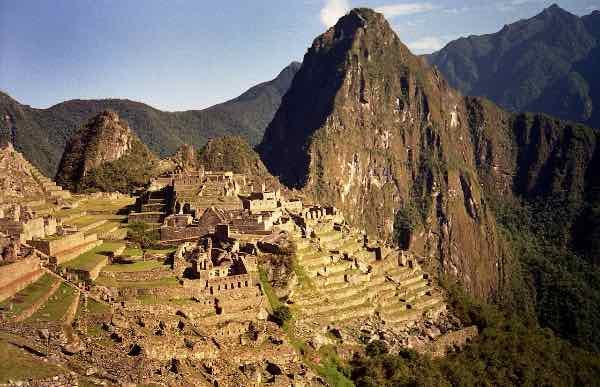
FOOTNOTE: When Bingham refers to the ‘lost’ city, let’s not forget that local indigenous families had been living there for generations.
Out of Curiosity
The Swedish tennis superstar Björn Borg—eleven Grand Slam singles titles, five consecutive Wimbledons—was born on the day Hiram Bingham died.
Edmund Langley, Duke of York
History remembers the bold, the brilliant and the brave. Edmund of Langley was none of these.
The fourth son of Edward III was born 685 years ago this Friday, 5 June 1341, at Kyngeslangley (King’s Langley) in Hertfordshire. Edmund grew up beneath the considerable shadow of two of his more formidable brothers. His eldest brother, Edward the Black Prince, was the most feared warrior in Europe. John of Gaunt was the most powerful nobleman in England. Edmund, by contrast, was just Edmund.
He has been described as a man of ‘limited ability‘, a generous comment when you consider that he served without distinction in France and Spain, and presided over a failed expedition to Portugal. Nonetheless, when King Richard II left for Ireland in 1399, Edmund was appointed to mind the shop in his absence.
His nephew Henry Bolingbroke—son of John of Gaunt—chose that precise moment to invade and seize the throne. Edmund prepared to oppose him, found little support and quietly submitted to the man who would become Henry IV.
Not exactly Braveheart. Not exactly the Black Prince, either.
A short break...
No Dates with History next Wednesday, but don’t let that stop you from contacting me and sharing your thoughts.
Just drop me an email at steve@dateswithhistory.com and talk to me. Thanks, Steve.
Siblings, of course, have always argued. Toys, inheritances, the last bread roll. My brother once threw a dart into my foot. Well, more accurately, ever the opportunist, I swung my foot nine inches to the right to meet it. The screaming was entirely genuine. The innocence was not.
Edmund and his brother John managed something rather more spectacular without actually falling out. Edmund became the first Duke of York in 1385—the man from whom the House of York took its name—while John of Gaunt inherited the House of Lancaster through his wife Blanche and a very long story.
Two brothers, two houses, one throne—a situation that would eventually produce thirty years of the Wars of the Roses.
Neither lived to see it. John died in February 1399. Edmund followed in August 1402.
Their descendants, however, would. From 1455 to 1485, the Wars of the Roses tore England apart. The House of York produced three kings of England: Edward IV, Edward V and Richard III, while the Lancastrians produced three Henrys. Nobody really won outright.
That is, until Henry Tudor defeated Richard III at Bosworth Field and married Elizabeth of York to become the first Tudor King, Henry VII.
By the time Edmund of Langley died at home in 1402, he had quietly nudged English history off course entirely by accident.
Question of the Week
It is the largest national park in South Africa.
It covers an area roughly the size of Wales.
It sits in the northeast of South Africa, bordering Mozambique to the east.
It is home to all five of the Big Five—lion, leopard, elephant, buffalo and rhino.
It was established in 1898, making it one of the oldest game reserves in Africa.
What is its name?
And Finally…
The American Red Cross, an offshoot of the Red Cross, was founded in 1881. Taking a lead from the Salvation Army’s Donut Lassies in World War I, the American Red Cross formed a similar unit during World War II.
The Donut Dollies were young, female volunteers who risked their lives serving doughnuts to soldiers on the front lines.
Their role extended to providing pastoral care and a home-from-home to distract soldiers from the realities of war. This initiative extended to the Korean War and, finally, the Vietnam War.
Friday is National Donut Day, a moment to celebrate and honour Donut Dollies throughout the 20th Century.
I was lucky enough to meet my very own Donut Dolly in 2023, the delightful Penni Evans. She had joined the American Red Cross in 1969 only to find herself in the thick of the Vietnam War by March of 1970. She was 22.

Penni shared her experiences with me; some harrowing, some uplifting, but with no hint of regret. One year in the Vietnam War had profoundly affected the rest of her life.
Meeting and talking with Penni was a privilege. If you get a quiet moment, check out our podcast at Batting the Breeze—Donut Dollies.
My favourite quote from the episode…
“We got on a bus, it’s just like a regular bus, but it had, like, chicken wire mesh or something over the windows… and somebody asked what that was for, and they said that’s to keep the grenades and such being thrown in by the VC (Viet Cong). And we’re going, “Oh well, hello!””
Question of the week… answer
Kruger National Park.
Long before it became a household name, this landscape was first protected in 1898, after President Paul Kruger had moved to safeguard the Lowveld.
A generation later, it was formally proclaimed the first national park of South Africa 100 years ago last Sunday, 31 May 1926.
Today, Kruger National Park forms part of the Great Limpopo Transfrontier Park, a vast conservation area shared between South Africa, Zimbabwe and Mozambique.
It stretches nearly 360 kilometres from north to south and contains more species of large mammals than any other African reserve.
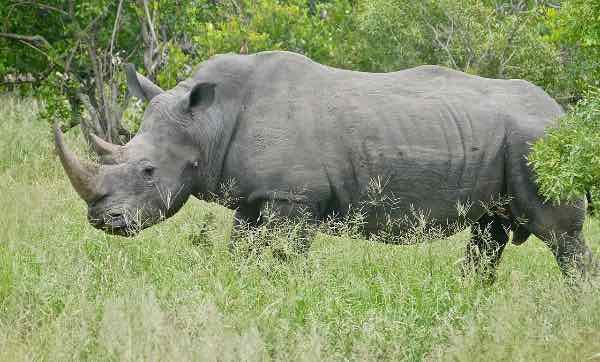
It was also the stage for one of conservation’s great comebacks—the white rhino. Once extinct in the region, they were reintroduced in 1961 and their numbers rebuilt into a thriving population.
Today, there are believed to be over 2,500 white rhinos in Kruger National Park.
Out of Curiosity
Norma Jeane Mortenson—the girl who would become the global screen icon Marilyn Monroe—was born in Los Angeles 100 years ago last Monday, 1 June 1926, the day after Kruger National Park was officially proclaimed in South Africa.

Thank you for joining me. Enjoy the rest of the week!
Steve
CHIEF STORY HUNTER & WRITER
ATTRIBUTIONS
Machu Picchu: Carlos Ebert from São Paulo, BrazilGRU, CC BY 2.0, via Wikimedia Commons.
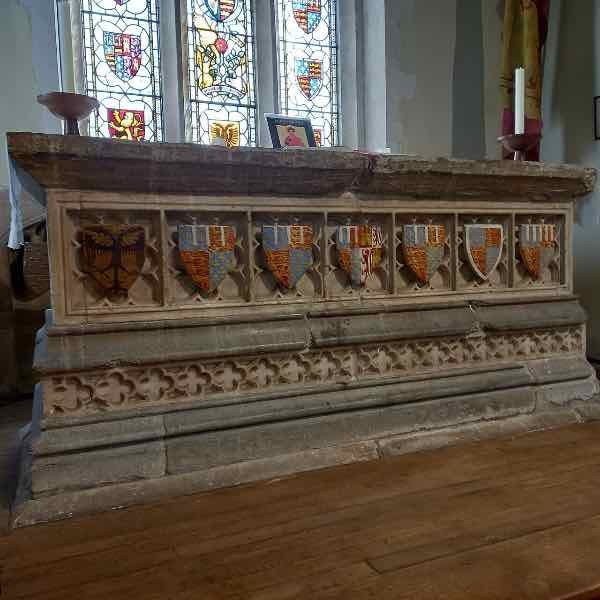
The tomb of Edmund of Langley: Alansplodge, CC BY-SA 4.0, via Wikimedia Commons.
White Rhino, Kruger National Park: Bernard DUPONT from FRANCE, CC BY-SA 2.0 via Wikimedia Commons.
CC BY 2.0: https://creativecommons.org/licenses/by/2.0/deed.en
CC BY-SA 2.0: https://creativecommons.org/licenses/by-sa/2.0
CC BY-SA 4.0 https://creativecommons.org/licenses/by-sa/4.0/deed.en
.jpg)

_male_..._(46078947015).jpg)
I also have an archive of one-to-one interviews with some extraordinary folk with a story to tell. You can listen to the Batting the Breeze Original Stories podcast FREE on Apple Podcasts, Spotify, Overcast,Pocket Casts, Amazon Music or almost any podcast player of your choice. Check out the Batting the Breeze website.
Registered address: 115 Burley Road, Christchurch, Dorset, UK BH23 8AY
Copyright © 2026 Logical Business Ltd. All rights reserved.
Dates with History and Batting the Breeze are properties of Logical Business Ltd.