

Dates with History Midweeker
The historical joyride for a curious mind


Dates with History Midweeker — Spend a few minutes with me exploring a handful of historical moments, figures and the occasional oddity connected to this week. Some you’ll know. Some you won’t—hopefully! 10th June 2026.

Happy Wednesday!
“I didn’t expect a kind of Spanish Inquisition.”
”Nobody expects the Spanish Inquisition.“
(Monty Python’s Flying Circus, 1970)
The birth of the Spanish Inquisition
The Spanish Inquisition may be the most confidently name-dropped chapter in history where almost nobody can get beyond the title. Often, people’s knowledge begins with Monty Python and ends shortly after with a shrug or an oblique reference to torture.
Yet it was real enough: a royal-church tribunal established in 1478 to hunt down heresy, a chain of command, offices, staff and a heroic volume of paperwork. Not a mood or a metaphor—an actual organisation, and a surprisingly durable one.
The backstory starts in 711 when Muslim armies overran the old Visigothic Kingdom and the Iberian Peninsula became something rare: seven centuries of Christians, Muslims and Jews living alongside one another in a state of more or less managed unease.
From the 11th century, that balance had begun to shift. The crowns of Castile and Aragon—Portugal joining the effort in due course—pushed southward, and Muslim dominance slowly fractured under the pressure.
But it was the marriage of Ferdinand of Aragon and Isabella of Castile in 1469, joining the two most powerful Christian kingdoms at the hip, that was decisive. The Reconquista—the centuries-long campaign to push Muslim rule off the peninsula—was entering its final act.
Out of Curiosity
The marriage of Ferdinand and Isabella is often treated as the opening act of Spain itself—though what followed was less a nation than a composite monarchy, held together by the Habsburgs through sheer dynastic willpower. It took the early Bourbons, arriving in the 1700s, to finally turn the peninsula into something approaching a unified state.
The Romans had landed back in 218 BCE. After two centuries of grinding warfare, the republic claimed the whole area as ‘Hispania‘.
Hispania became ‘Spania‘, then ‘España‘, with the English name ‘Spain‘ eventually emerging—a straightforward enough journey.
Where Hispania itself originated is murkier: possibly a Phoenician phrase for ‘land of rabbits‘, or perhaps the Greek ‘Hesperia‘, meaning ‘land of the west‘. The Phoenicians, evidently, were easily impressed.
As the Catholic Monarchs set about forging a national identity, they needed an enemy. Nothing bonds a nation quite like a common threat. The conversos—Jewish converts to Christianity—and later the moriscos, their Muslim equivalent, found themselves cast in that role. Conversion, it turned out, was not quite enough.
When Isabella visited Seville in 1477, Dominican preachers lost no time in bending her ear: these conversos and moriscos were Christians in name only.
Ferdinand seized the moment. He pressed Pope Sixtus IV for a papal bull establishing a new inquisition under royal—rather than papal—control. Sixtus, with the Ottomans pressing at the edges of Christendom, was in no position to refuse.
And so, on 1 November 1478, 200,000 days ago today, the Spanish Inquisition had its mandate.
Conversos rushed to confess, hoping that remorse might spare them from burning at the stake. The inquisitors were open to the idea and added that true penitence involved naming other heretics. Naturally.
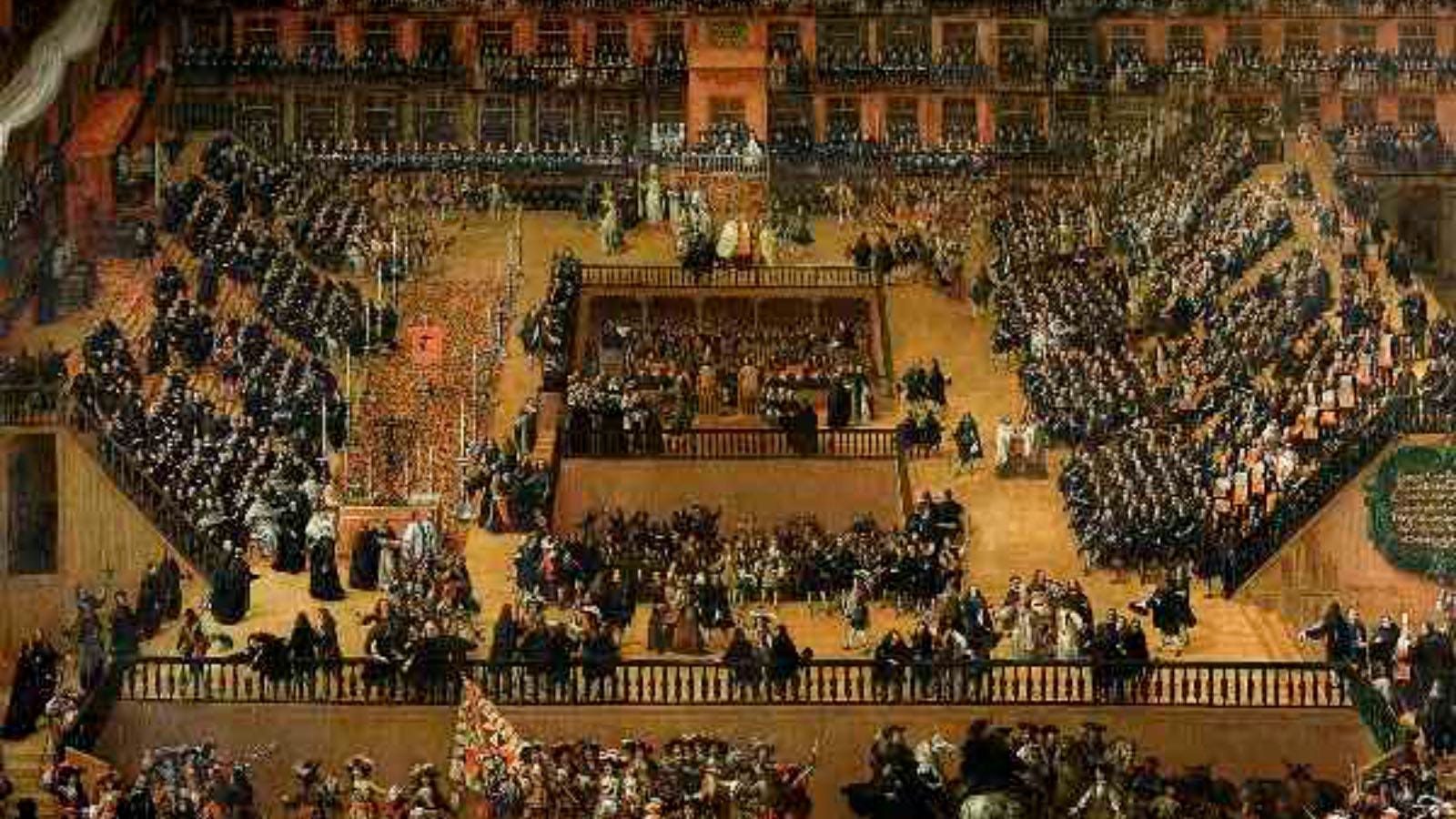
Sentences were read out at the auto-da-fé, an elaborate public ritual of penance with an almost festive quality, often attended by royalty. For the condemned, of course, the festivities were somewhat one-sided.
The tribunals, torture and terror of the Spanish Inquisition ran for 356 years—1478 to 1834—placing 150,000 people on trial, of whom a few thousand were executed.
As the converso population dwindled, the Inquisition cast around for new business; Protestant leanings, bigamy, blasphemy, witchcraft—anything that would keep the paperwork moving.
By the Bourbon era, the idea of a formal inquisition was out of step with an increasingly secular, Enlightenment-minded state, until it was finally abolished by Queen Regent María Cristina in 1834.
APOLOGIES
Last week I mentioned that there wouldn’t be a Midweeker this week, and here I am!
I should have said that there’s no Weekender this Sunday or Midweeker next Wednesday, but back in full force the Sunday after. Thanks. :)
Message in a bottle
Captain Diekmann of the German barque Paula was heading eastward from Cardiff to Makassar in the Dutch East Indies when, 140 years ago this Friday, 12 June 1886, he committed a Dutch gin bottle to the Indian Ocean.
No, he hadn’t been drinking. The bottle was part of a decades-long experiment by the German Naval Observatory in Hamburg to chart ocean currents and discover faster, more efficient shipping routes.
Diekmann recorded the event in the ship’s log and thought no more about it.
Between 1864 and 1933, German captains cast thousands of such bottles into the world’s oceans, each containing a printed slip asking the finder to note where and when they’d found it and to return the message to the sender.
Six hundred and sixty-three message slips were returned. However, only one bottle was ever recovered intact, note still inside. It was Captain Diekmann’s.
It probably made the Western Australian coast within a year of being thrown overboard, then slipped beneath the sand and stayed there, undisturbed, for over a century.
On 21 January 2018, Tonya Illman was walking a remote stretch of beach north of Wedge Island, 100 miles north of Perth, when a bottle neck caught her eye, poking from the dunes. “It just looked like a lovely old bottle,” she said, “so I picked it up thinking it might look good on my bookcase.“ Inside, rolled tight and damp but still legible, was a slip of paper.
The experts had no doubts. A 19th-century Dutch gin bottle, a printed form dated 12 June 1886, handwriting that matched Captain Diekmann’s logbook entry line for line. It was genuine.
Guinness World Records declared it the oldest message in a bottle ever recovered—beating the previous record by 23 years.
Question of the Week
He was born in 1776 in East Bergholt, Suffolk, England. His father owned Flatford Mill and fully expected his son to take over the family corn business. He had other ideas.
This artist once wrote to a friend: “I should paint my own places best—painting is but another word for feeling.”
He only sold 20 paintings in his lifetime.
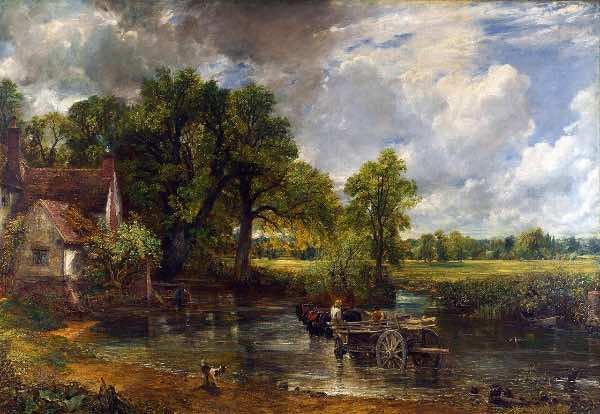
He famously used ‘a thousand greens‘ to capture the natural beauty of his trees and meadows, applying dashes of light-coloured pigment known by critics as his ‘snow‘.
He trained at the Royal Academy Schools while J.M.W. Turner was already making his name there. The near‑contemporaries remained rivals rather than friends.
Who was he?
A Moment in Time
Hamburg, 90 years ago this Saturday, 13 June 1936. At the Blohm+Voss shipyard, a German naval vessel slides into the water. Adolf Hitler is in attendance.
Arms shoot skyward in salute. All but one. One man stands with his hands down, arms crossed. Defiant.
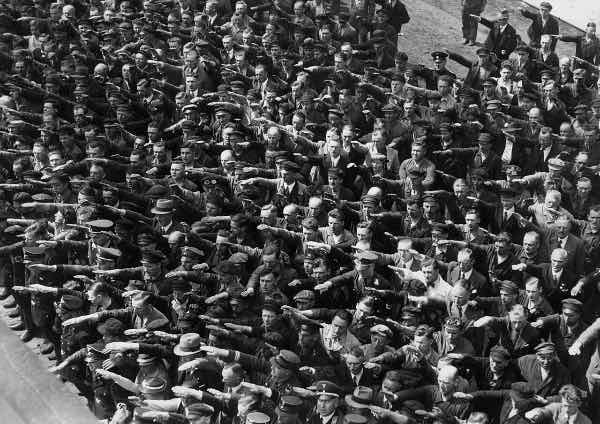
That man is believed to be August Landmesser, born in 1910, a shipyard worker who had joined the Nazi Party in 1931 in the hope of finding work. It might have worked out, too, had he not fallen in love.
In 1935 he became engaged to Irma Eckler, a Jewish woman, and was promptly expelled from the party. The new Nuremberg Laws made their marriage illegal. Their daughters were born into a state that considered their family a crime.
Landmesser paid for that defiance. After prison came conscription into a penal unit—politically unreliable men, criminals, undesirables—dispatched to the worst fronts to ‘atone’ in combat. August was killed in Croatia on 17 October 1944, aged 34.
Irma didn’t survive the war either. She was deported to the Bernburg Euthanasia Centre in early 1942 and murdered in the gas chamber, one of roughly 14,000 victims.
Question of the week… answer
John Constable...
...was born 250 years ago tomorrow, 11 June 1776, and is now regarded as one of Britain’s greatest landscape painters, far more valued than he was in his own lifetime.
He grew up painting the meadows, skies and waterways he knew intimately—and never stopped.
His great rival, J.M.W. Turner, was born the year before. Where Constable painted what he felt, Turner painted what he imagined.
The rivalry was real—as I discovered at the recent Constable v Turner exhibition at Tate Britain in London. The paintings were displayed as opposing pairs: one Constable, one Turner, room after room. Punch, counterpunch. A boxing match in oils. Magnificent.
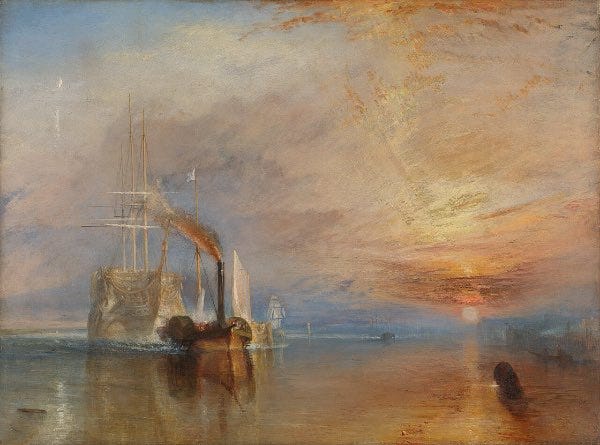
They also share Room 40 at the National Gallery, where The Hay Wain and The Fighting Temeraire—their finest works—face each other, a few feet apart. Still squaring up, after all this time.
I wonder what the two artists would have made of that.

Thank you for joining me. Enjoy the rest of the week!
Steve
CHIEF STORY HUNTER & WRITER
ATTRIBUTIONS
August Landmesser: See page for author, Public domain, via Wikimedia Commons.
The Hay Wain: John Constable, CC0, via Wikimedia Commons.
The Fighting Temeraire: J. M. W. Turner, Public domain, via Wikimedia Commons.
Auto-da-fé: Francisco Rizi, Public domain, via Wikimedia Commons.


CC0: https://creativecommons.org/public-domain/cc0/
I also have an archive of one-to-one interviews with some extraordinary folk with a story to tell. You can listen to the Batting the Breeze Original Stories podcast FREE on Apple Podcasts, Spotify, Overcast,Pocket Casts, Amazon Music or almost any podcast player of your choice. Check out the Batting the Breeze website.
Registered address: 115 Burley Road, Christchurch, Dorset, UK BH23 8AY
Copyright © 2026 Logical Business Ltd. All rights reserved.
Dates with History and Batting the Breeze are properties of Logical Business Ltd.