



Dates with History Midweeker — Spend a few minutes with me exploring a handful of historical moments, figures and the occasional oddity connected to this week. Some you’ll know. Some you won’t—hopefully! 8th July 2026.

Happy Wednesday!
Here goes…
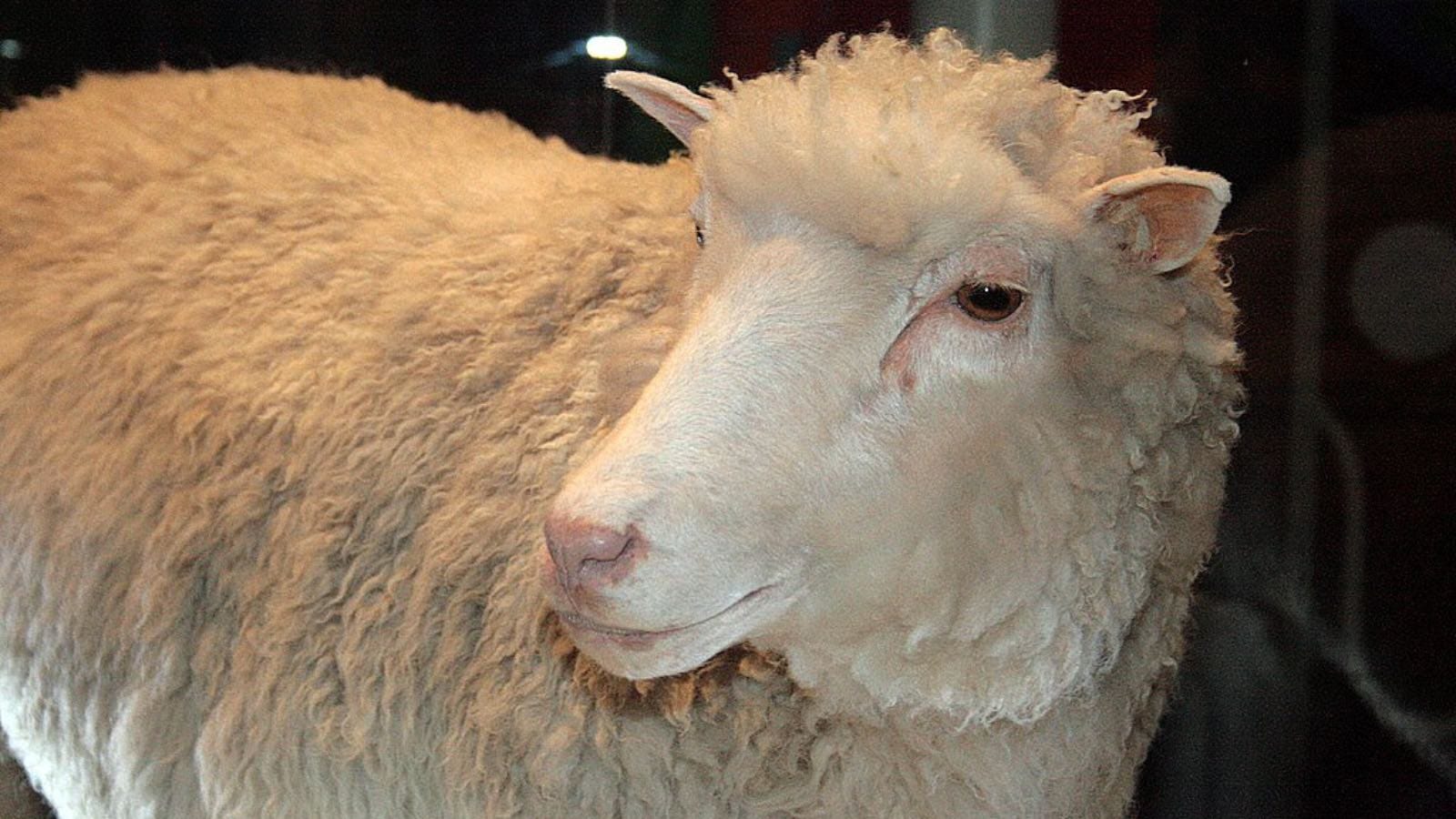
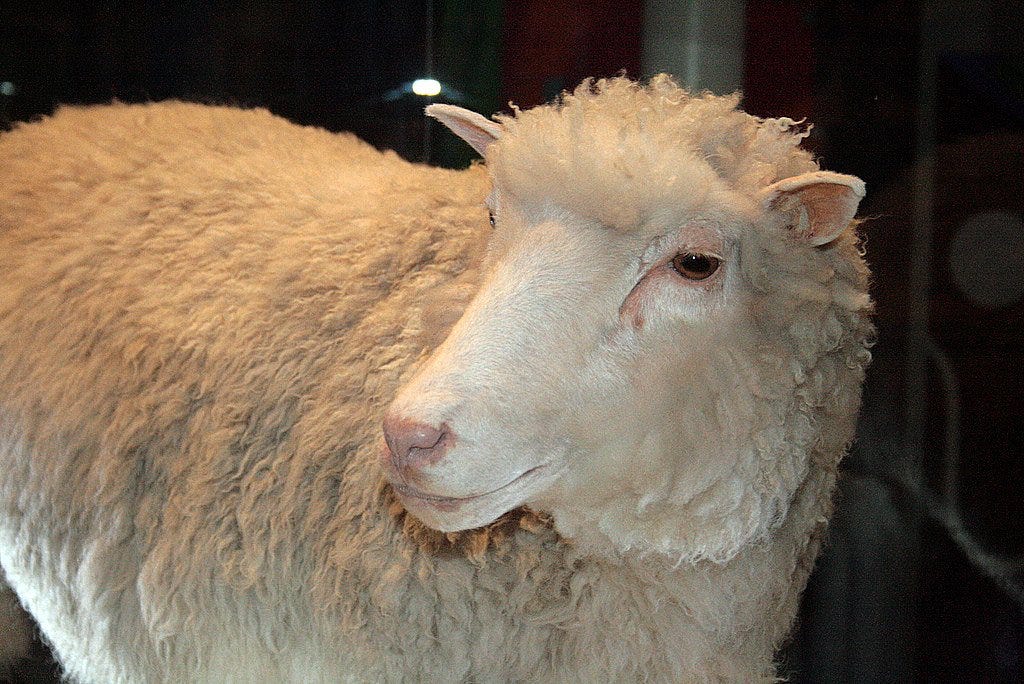
Dolly the sheep
Thirty years ago last Sunday, 5 July 1996, it took 277 attempts to clone a sheep from a single adult cell in a laboratory somewhere in Scotland. Only 29 embryos made it past the first round. And from those, only one lamb ever drew breath. Her name was Dolly.
Dolly the sheep was born at the Roslin Institute near Edinburgh, the first mammal successfully cloned from an adult somatic cell—that is, any ‘body’ cell not directly involved in reproduction.
Scientists Ian Wilmut and Keith Campbell took a cell from the udder of a six-year-old Finn Dorset ewe and placed its nucleus into an egg cell borrowed from a Scottish Blackface ewe that had been stripped of its own genetic material.
A second Blackface then carried the pregnancy to term and gave birth to Dolly—who arrived looking, walking and baaing like a Finn Dorset. The Blackfaces had done the heavy lifting while the Finn Dorset got all the credit.
Out of Curiosity
When I learned how Dolly got her name, I corroborated my sources even more carefully than usual, unsure whether to report it out of incredulity, propriety, or both.
Here’s the thing: ‘Dolly‘ was no accident. As she had been cloned from an udder—in other words, a mammary gland cell—they named her after Dolly Parton, a tongue-in-cheek nod to the country music singer-songwriter’s most celebrated asset.
Parton, to her enormous credit, was delighted rather than offended. As she put it herself, there’s “no such thing as baaad publicity.”
For seven months after her July 1996 birth, Dolly lived in obscurity. Then, in February 1997, the announcement that a mammal had been cloned from an adult cell turned a lab secret into front-page news and launched a worldwide reckoning with the ethics of copying life.
Meanwhile, Dolly lived an otherwise ordinary sheep’s life. She mothered six lambs in the fields around Roslin, before arthritis and a contagious lung cancer led vets to put her to sleep in February 2003. She was six and a half years old—little more than half a Finn Dorset’s usual span.
Dolly’s celebrity didn’t end with her death. She stands today in a glass case at the National Museum of Scotland, the world’s most famous sheep frozen mid bleat.
So what? Dolly showed that an entire mammal could be built from the nucleus of a single adult cell—upending decades of biological dogma—and the field hasn’t quite looked the same since. Today, companies sell made-to-order copies of pets, high-value livestock and even rare and endangered animals, for anyone who can’t quite let go.
Yet what any of this really means for questions of individuality and identity remains an open argument, not a settled fact. Not bad, for a Finn Dorset ewe called Dolly.
The Daguerreotype
Before he captured reality, Louis Daguerre spent years faking it. As co-inventor of the Diorama, he would light a vast canvas from the front, then the back, and turn a sleepy alpine village into one mid-avalanche—or a dozing mountain into a raging volcano. Parisians queued round the block to see it.
Then, in 1829, he partnered with Nicéphore Niépce, who had already created the ‘earliest surviving photograph of a real-world scene’ in 1826-27. Niépce died in 1833, leaving Daguerre to finish the job—which he did.
By 1837 Daguerre had perfected the first commercially viable photographic process, which he modestly called the ‘Daguerreotype‘.
His first-ever photograph is thought to have been taken in 1837, although he created his earliest surviving daguerreotype, ‘Boulevard du Temple’, in 1838—publicly announced the following year.
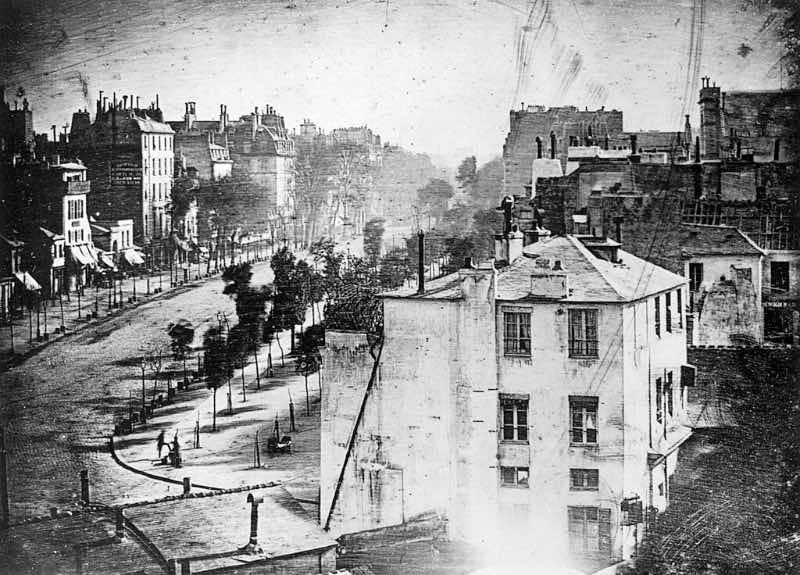
In 1839, France did something remarkable with Daguerre’s new trick of trapping light on silver: it bought the secret outright, pensioned off the inventor and Niépce’s heir, and declared photography a gift to the world—in the interests of prestige and influence. ‘Drawing with light‘ would spread as fast as curiosity could carry it—everywhere, that is, except Britain, where Daguerre had quietly patented the process anyway, and kept the meters running for the British.
Louis Daguerre retired to the village of Bry-sur-Marne, north-central France, where he died 175 years ago this Friday, 10 July 1851.
Question of the Week
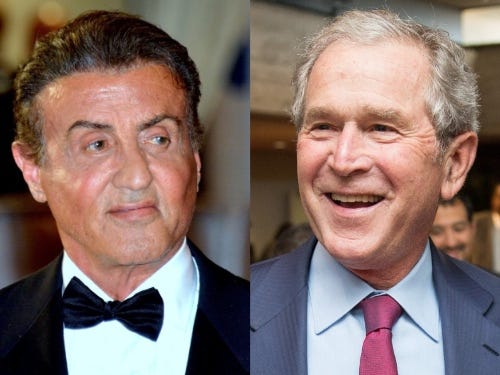
Apart from their Republican leanings, former US President George W. Bush and Hollywood actor Sylvester Stallone have something else in common.
What is it?
And Finally…
Next Saturday marks World Population Day, born out of Five Billion Day on 11 July 1987, when—surprise, surprise—the world’s population surpassed 5 billion. The United Nations recognises this day to raise awareness of the issues of our rapidly growing population.
I checked out other related milestones, which were a little staggering: The global population reached 1 billion in 1804, around the time the first steam locomotive ran in Wales, Thomas Jefferson was President of the United States and Napoleon was proclaiming himself as Emperor of France.
The Industrial Revolution significantly turned up the dial from that point. If I ignore the fact that homo sapiens emerged around 250,000 years ago and consider their first known move out of Africa as a starting point, then it took 71,804 years to reach that 1 billion landmark (with a touch of poetic licence).
It then took just 123 years to reach 2 billion and 33 years to reach 3 billion. Since that point in 1960, the world has added 1 billion people to its population, on average, every 12 years!
The world’s population passed 8 billion in 2022. The 9 billion landmark is currently expected in 2036. Food for thought.

Question of the week… answer
George Walker Bush and Sylvester Stallone were born on the same day, 80 years ago last Monday, 6 July 1946.
George W. Bush arrived in a Connecticut hospital with a father already entrenched at Yale and a family whose ambitions stretched from the oilfields to the Senate.
Sylvester Stallone arrived in Hell’s Kitchen—then a working-class, gritty stretch of New York City, west of Times Square, wedged between Eighth Avenue and the Hudson River—delivered by forceps clumsy enough to leave him with the slurred drawl later mistaken for artistic choice.
One inherited his swagger. The other had to write his, literally, scripting the film Rocky (1976) in three and a half days while broke enough to have sold his dog Butkus for fifty dollars. Bush rose through oil and baseball for a decade before politics caught up with him. Stallone fought upward through rejection letters before Hollywood did.

Thank you for joining me. Enjoy the rest of the week!
Steve
CHIEF STORY HUNTER & WRITER
ATTRIBUTIONS
Dolly the sheep: Toni Barros from São Paulo, Brasil, CC BY-SA 2.0 via Wikimedia Commons.
Boulevard du Temple: Louis Daguerre, Public domain, via Wikimedia Commons.
George W. Bush: File:Charlie Strong with George W. Bush and Jesse Jackson.jpg: Eric Draper, LBJ Foundationderivative work: Pv21, CC BY 2.0 via Wikimedia Commons.
Sylvester Stallone, 2019: Georges Biard, CC BY-SA 3.0 via Wikimedia Commons.
CC BY-SA 2.0: https://creativecommons.org/licenses/by-sa/2.0
CC BY 2.0: https://creativecommons.org/licenses/by/2.0/deed.en
CC BY-SA 3.0: https://creativecommons.org/licenses/by-sa/3.0
CC BY 3.0 IGO: https://creativecommons.org/licenses/by/3.0/igo/deed.en


