


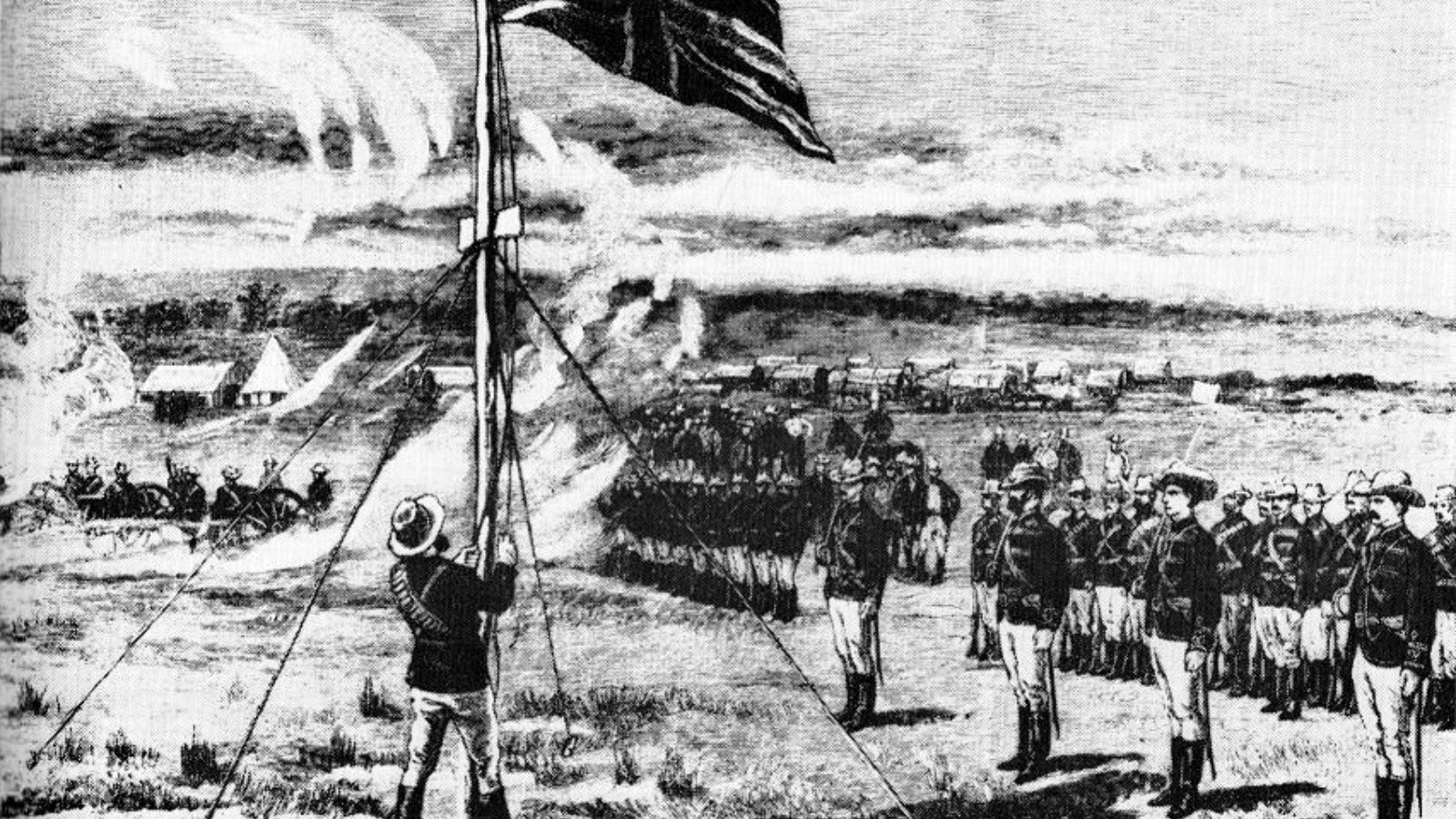

18th April 1980
5th July 1853, 1st September 1870, 15th July 1871, 13th September 1890, 26th March 1902, 18th April 1980
(read time: 8 mins.)
Cecil Rhodes’ extraordinary journey from Bishop’s Stortford to South Africa, Fort Salisbury and Rhodesia, with a massive diamond heist somewhere in between.
In 1982, I was lucky enough to take part in a rugby tour to Zimbabwe. As a passionate 17-year-old, it was all about the rugby. The fact that the African nation was undergoing a political change of monumental proportions largely passed me by.
That is, until we arrived. Our candid hosts regaled us with stories of midnight curfews, roadblocks, land reforms and—somewhat unnervingly—dodging bullets instead of rugby balls.
Two years earlier, Zimbabwe had cast off 90 years of minority white rule. But by 1982, the honeymoon was over for President Robert Mugabe and his Zimbabwe African National Union (ZANU).
This was going to be an illuminating four weeks.
The founding of Zimbabwe
Evidence of human habitation in the Zimbabwe region suggests that the San people (Bushmen) had lived there for up to 30,000 years.
Two thousand years ago, Bantu-speaking farmers migrated from the north. These were the ancestors of the Shona people, who had settled in the region as early as 200 CE. Today, they are the dominant ethic group in Zimbabwe, occupying Mashonaland in the north and much of the south.
In 1834, the Ndebele people were disengaging from Shaka Zulu and his rapidly expanding Zulu kingdom in the south of the continent. They headed north to carve out the kingdom of Mthwakazi, which Europeans would call Matabeleland, in the south and west of today’s Zimbabwe.
The Shona and the Ndebele would live a less-than-harmonious existence for the next 50 years. I’ll return to that.
At the time of the 1980 elections, the Shona people comprised 75-80% of Zimbabwe’s population, with Mugabe winning 57 out of 80 seats. The opposition ZAPU party, led by Joshua Nkomo, won 20 seats, all from Matabeleland.
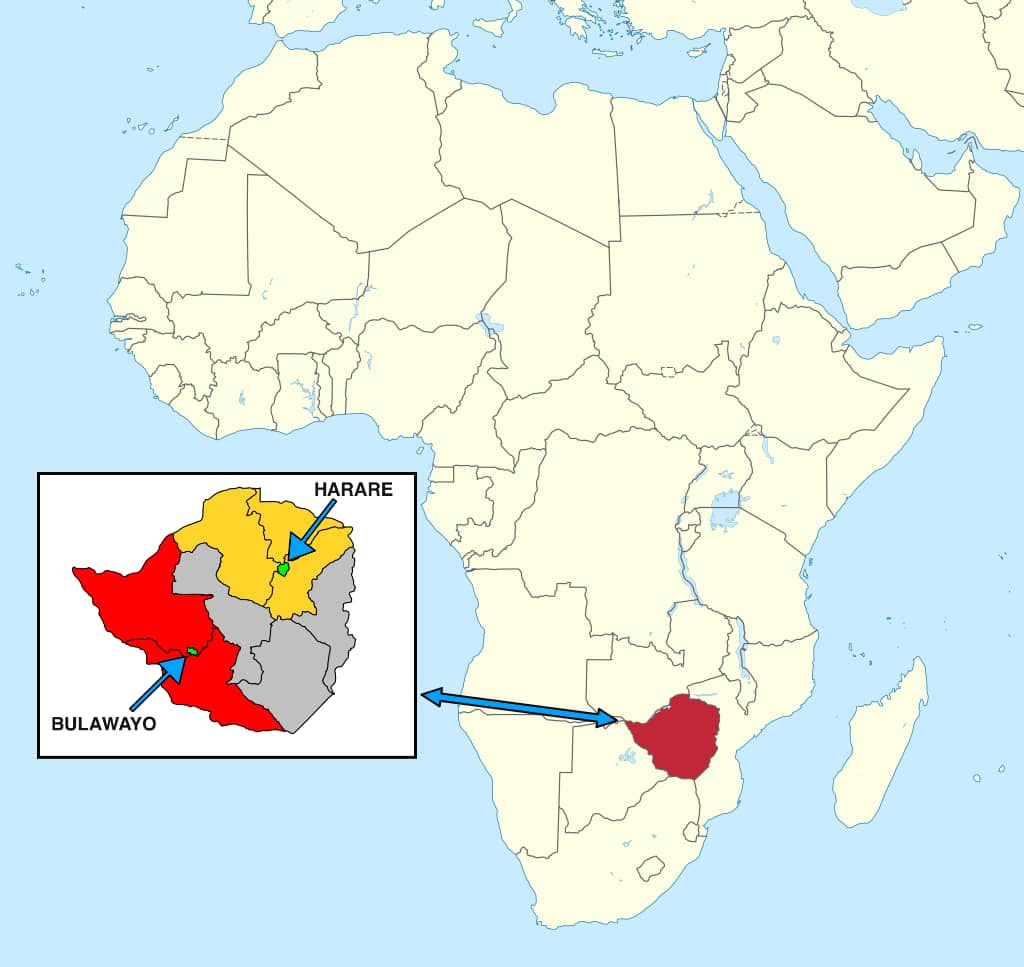
The dissident problem
A few months before our touring party arrived in the capital of Zimbabwe, Harare, Robert Mugabe had expelled Nkomo and his ZAPU colleagues, apparently for plotting a coup.
At the same time, Ian Smith’s exclusively white Republican Party was crumbling—unable to find its place in the new Zimbabwe.
By the time we arrived, the ‘dissident problem‘ was in its infancy. ZIPRA, ZAPU’s military wing, had melted into the bush. Attacks on government property and officials were becoming an unwelcome daily occurrence.
As I am writing this, I am wondering why we were even sent down there in the first place! I’m all for playing through an injury, but playing through an insurgency?
Mugabe’s answer to the dissident problem was his infamous Fifth Brigade, learning its trade in North Korea at the time. Luckily, for me at least, it wouldn’t be wreaking its particular brand of havoc until some time in 1983.
The Gukurahundi massacres, beginning in early 1983, constituted systematic state genocide that led to the slaughter of over 20,000 civilians in Matabeleland and Midlands over the following five years.
Cecil Rhodes
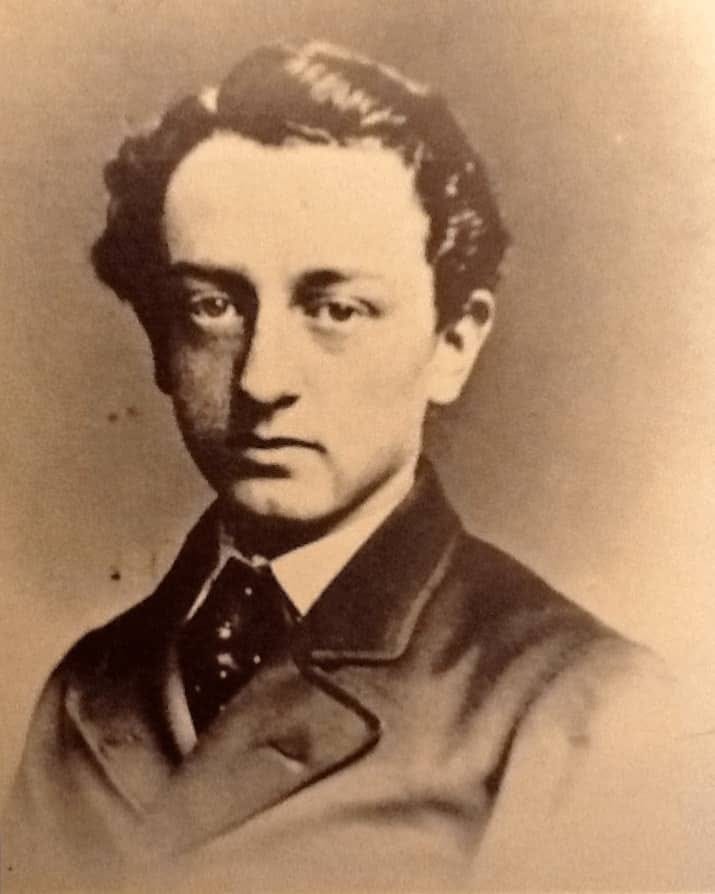
In the sleepy Hertfordshire village of Bishop’s Stortford on 5 July 1853, the local vicar, William Rhodes, and his wife announced the arrival of their son, Cecil.
Cecil was a sickly child.
Having received an education from the local grammar school, Cecil was armed with a battery of Latin and mathematics, fortified by an unshakeable sense of British superiority.
The 1850s were a period of British imperial expansion, when Britain had rather generously labelled herself as the ‘workshop of the world’. Christianity was the superior religion, British culture the finest example of civilisation and British government the most enlightened form of rule.
It was an entirely reasonable worldview… if you happened to be British.
As he reached 17 years old, Cecil’s continued poor health set him on a trajectory that would change his life. It would also change the course of South African history.
South Africa and diamonds
Cecil Rhodes was sent to South Africa on 1 September 1870. He would become a name that was cursed, celebrated or condemned, depending on who held the pen.
Having landed in Durban, Rhodes travelled to Natal with impeccable timing. Three years earlier, the young Erasmus Jacobs had stumbled upon the ‘Eureka’ diamond while fossicking along the Orange River near Hopetown.
Word travels fast when fortunes are to be made, and soon southern Africa found itself the object of considerable international attention.
On 15 July 1871, diamonds were discovered at Colesberg Kopje. This was much bigger news than Erasmus Jacobs’ 1867 discovery. Jacobs’ diamond was an alluvial deposit, washed down the Orange River; exciting but commercially uninspiring.
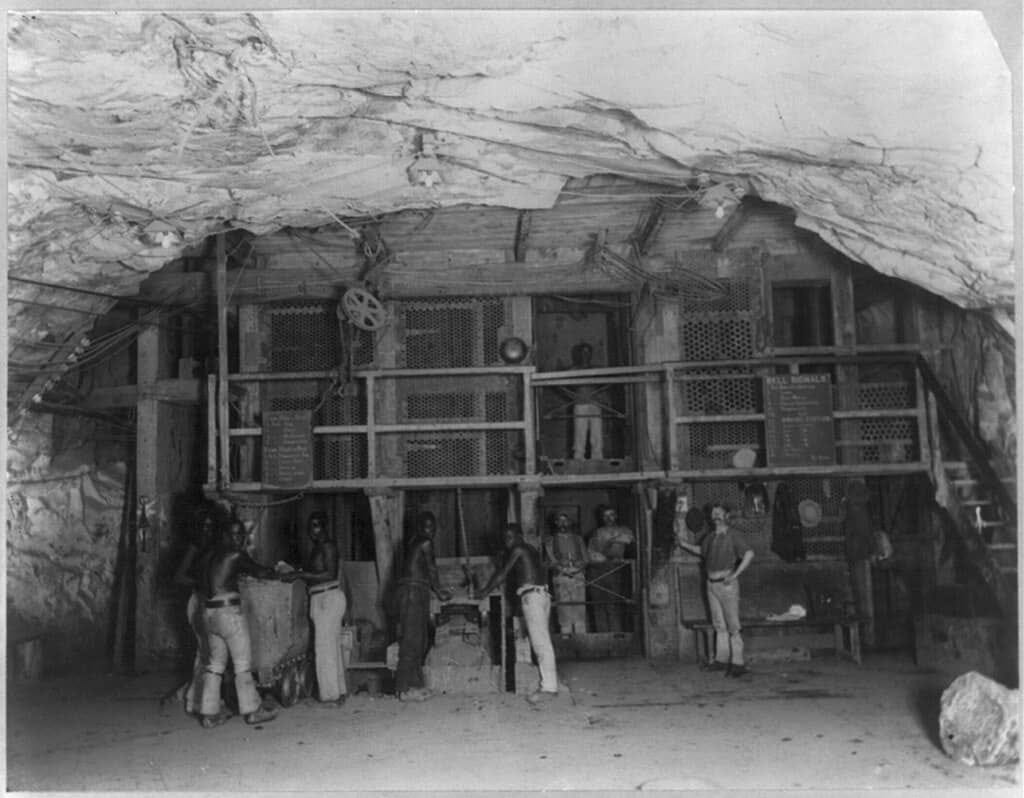
By contrast, Colesberg Kopje would be the world’s first known kimberlite pipe, a volcanic chimney where diamonds are actually formed. It was a geological jackpot, a pot of gold at the end of the rainbow, except that this pot was about to be systematically plundered.
The settlement became known as Kimberley (hence the ‘kimberlite pipe’) and the subsequent mine, ‘The Big Hole’.
The discovery provoked a rush that would transform the entire region into a chaotic scramble of prospectors, swindlers and dreamers.
Rhodes understood the old adage about selling shovels during a gold rush. In his case, though, he cornered the market in water pumps, selling them to diamond miners who were constantly battling against groundwater.
The venture provided a comfortable living and, more importantly, seed money for grander schemes.
As a result of the diamond discovery at Colesberg Kopje, the landowners, the De Beer brothers, felt compelled to sell. They had only purchased the land less than six months earlier, but had no means of protecting it—or themselves—from voracious intruders.
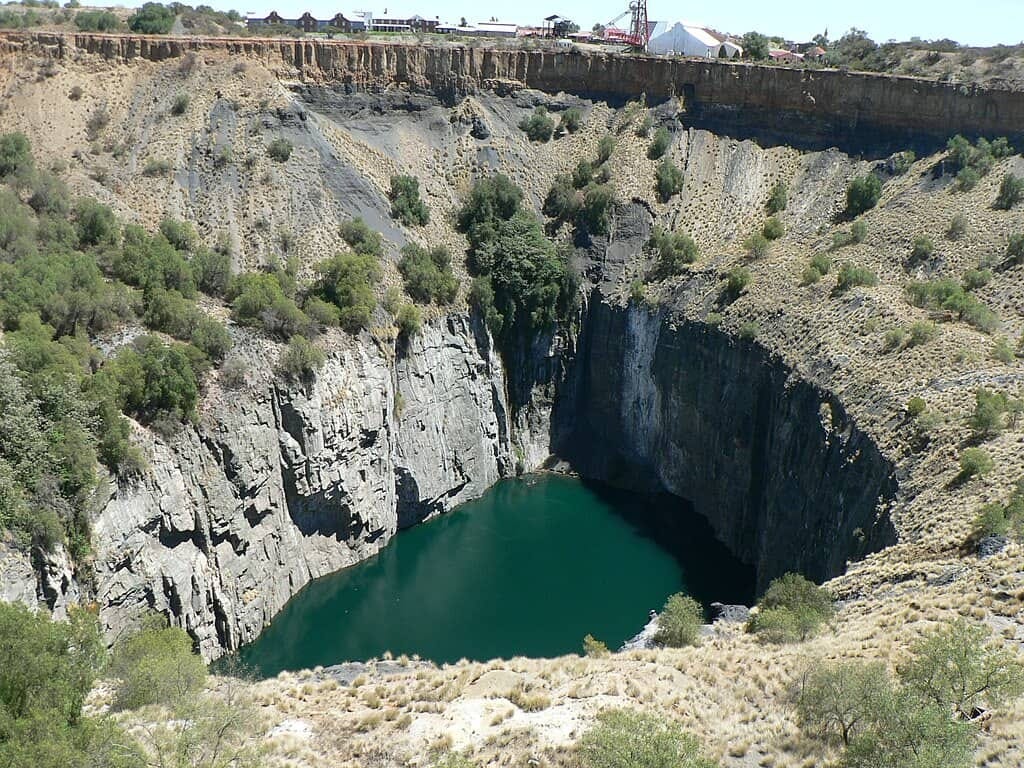
The De Beers sold the land to Alfred Johnson Ebden for £6,600. Ebden proceeded to sell off most of it through small claims.
Rhodes used the proceeds of his pump sales to buy up many of these claims. When diamond mining faced a slump in 1874-75, Rhodes remained relentless. A decade later in 1888, with financial backing from the Rothschilds and a merger with a rival company, De Beers Consolidated Mines was founded.
By 1891, De Beers had cornered 90% of the diamond market. Rhodes had pulled off a diamond-backed coup within three years and become one of the world’s wealthiest men.
British imperialism and Fort Salisbury
But Rhodes’ appetite extended far beyond diamonds.
Backed with an unswerving belief in empire (of the British variety) and an inkling that further mineral wealth lay to the north, Rhodes secured a Royal Charter from the British government.
The British South Africa Company (BSAC) was founded in 1889.
The BSAC structure was based on the model of its forerunner, the British East India Company (formed in 1600), combining commercial exploitation with empire-building.
Convinced of gold deposits beyond a man’s wildest dreams in Mashonaland, Rhodes sent his ‘Pioneer Column’ north in June 1890 with settlers, police, supply wagons and a belief that fortune favours the well-armed.
For three months, the Pioneer Column progressed through the bush. They planted British flags and signed treaties with local chiefs who couldn’t read.
Having endured 400 miles of disease and hostile wildlife through unmapped territory, the Pioneer Column arrived at a spot they thought suitable for Rhodes’ first northern settlement.
On 13 September 1890, Lieutenant Edward Tyndale-Biscoe raised the British flag and declared the founding of Fort Salisbury (named after the British Prime Minister, Lord Salisbury - another Cecil as it turns out—Robert Gascoyne-Cecil).
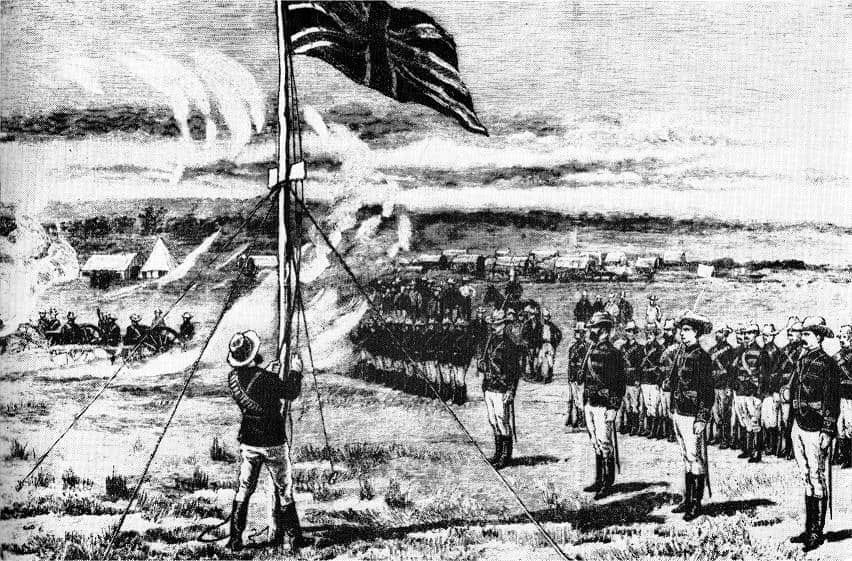
Rhodes’ promises of gold beyond imagination turned out to be just that—imagination. Undaunted, he shifted the emphasis to farming and cattle ranching, presumably using the shovels he had acquired for gold mining. Fort Salisbury transformed itself from a mining settlement into the administrative hub of a new territory, ‘Rhodesia’.
The founding of Fort Salisbury marked the beginning of 90 years of white minority rule in Rhodesia. The Shona and Ndebele people were dispossessed and became labourers on their own land.
But their day would come… just as I was setting out on my rugby tour, as it happens.
Out of Curiosity
In 1911, the British South Africa Company had formally amalgamated the two areas of Rhodesia north of the Zambezi River into a single state, Northen Rhodesia.
In October 1964, Northern Rhodesia declared independence to become the Republic of Zambia under Kenneth Kaunda.
British South Africa Company rule ended in 1923 when Southern Rhodesia became a self-governing colony.
In 1965, Ian Smith issued the Unilateral Declaration of Independence (UDI), stating that Southern Rhodesia would forthwith be independent of Britain but would maintain British-guaranteed support for his white minority government.
The only problem was that Smith had forgotten to tell the British.
He was genuinely miffed when British Prime Minister Harold Wilson refused to recognise the breakaway colony and imposed punishing sanctions on Rhodesia instead. It was a spectacular miscalculation by Smith, rather like when your kids leave home and expect you to carry on doing their washing.
For the next 15 years, the beleaguered Republican battled the growing insurgency from ZAPU and ZANU. The white population had seen which way the wind was blowing before Smith did... and headed for the exits. Rhodesia had become an international pariah.
By 1979, Smith was spending an eye-watering 47% of GDP on defence. Eventually, he was dragged kicking and screaming to Lancaster House in London.
The outcome triggered new elections in Rhodesia, with Robert Mugabe’s ZANU-PF party winning comfortably and the new state of Zimbabwe receiving international recognition on 18 April 1980.
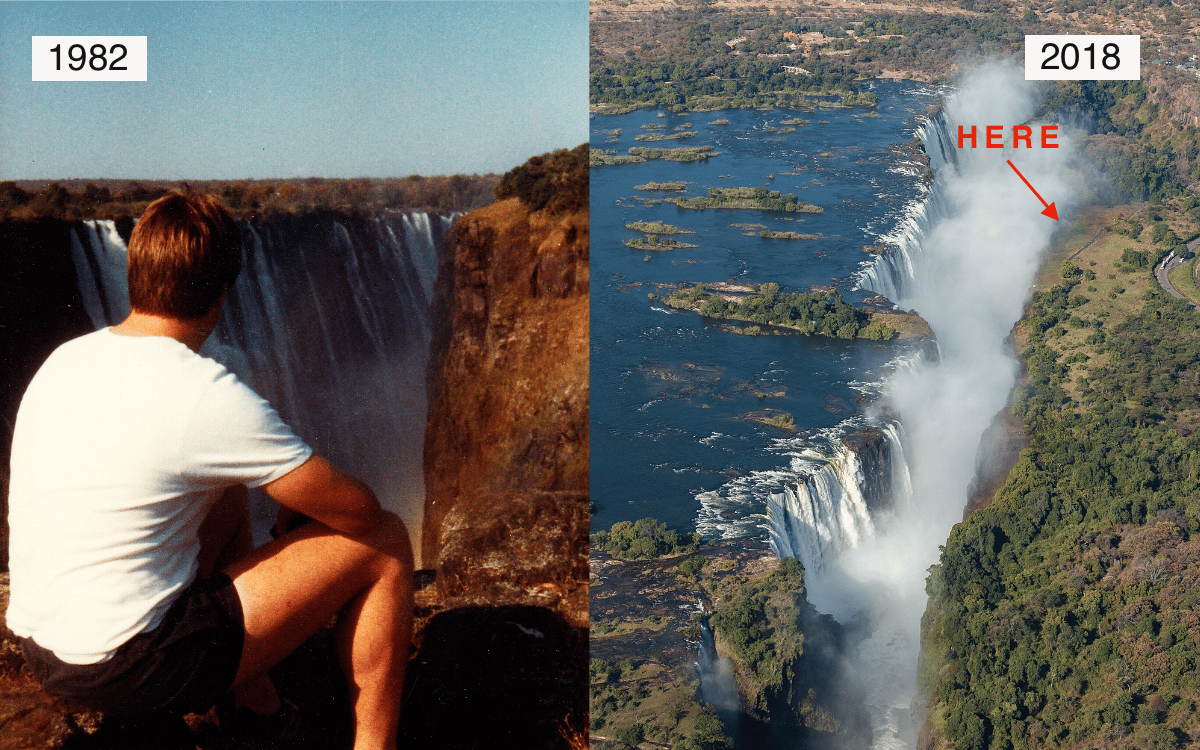
Which brings me full circle to my rugby tour in 1982. We won all our matches, 7-0, the hospitality was outstanding, the scenery breathtaking… and I met a wonderful young lady called Sarah. I never saw her again.
Out of Curiosity
As for Cecil Rhodes, not content with dominating the world diamond market and empire-building northward through Africa, he found time to become Prime Minister of the Cape Colony (ie the British-controlled territory of South Africa) from 1890 until 1896.
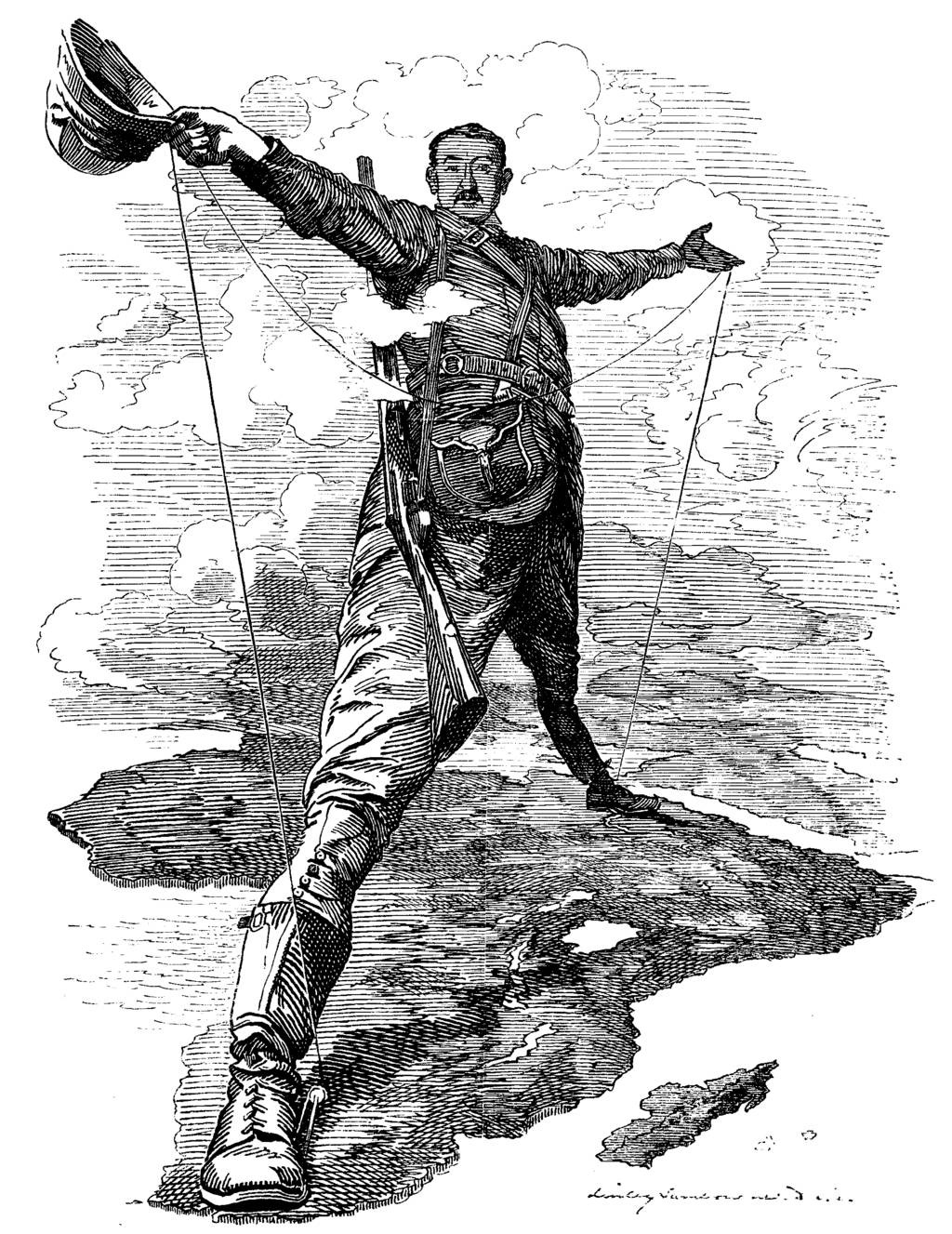
His grand dream of creating a British corridor from Cape Town to Cairo remained a dream. His health deteriorated after 1897, and he died on 26 March 1902 from heart failure, aged just 48.

Thank you for joining me.
Steve
CHIEF STORY HUNTER & WRITER
ATTRIBUTIONS
LEFT: Me at Victoria Falls, 1982: RIGHT: Same spot in 2018: Diego Delso, CC BY-SA 4.0, via Wikimedia Commons.
The Big Hole, Kimberley: Andrew Hall, CC BY-SA 3.0, via Wikimedia Commons.
Zimbabwe: TUBS, CC BY-SA 3.0, via Wikimedia Commons.
Matabeleland: Peter in s, CC BY-SA 4.0, via Wikimedia Commons.
Rhodes Colossus: Edward Linley Sambourne (1844–1910), Public domain, via Wikimedia Commons.


.svg)
.svg)

CC BY-SA 3.0: https://creativecommons.org/licenses/by-sa/3.0
CC BY-SA 4.0: https://creativecommons.org/licenses/by-sa/4.0/deed.en