



21st September 1915
(read time: 2 mins.)
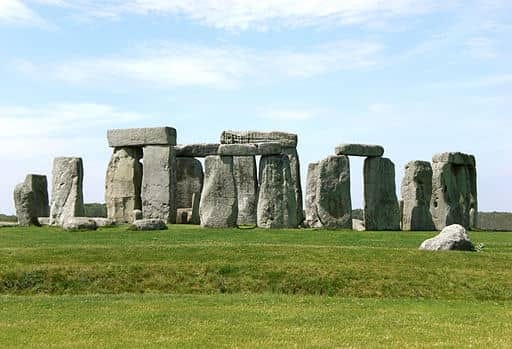
Stonehenge is a megalithic monument standing about two miles west of Amesbury in Wiltshire, UK. It is one of the world’s most sophisticated prehistoric structures. A chap called Cecil Chubb decided to buy Stonehenge for the nation.
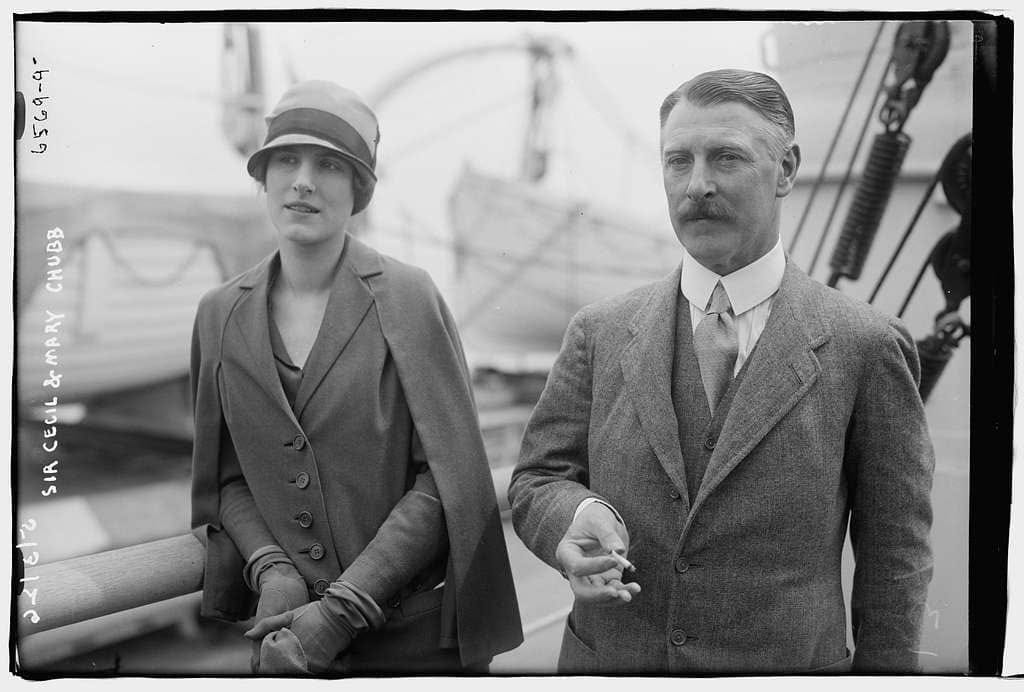
Cecil Chubb was born in 1876 and attended a rival school to mine, Bishop Wordsworth’s, in Salisbury, Wiltshire.
He built a successful career as a barrister and considerable wealth as an investor, racehorse owner and cattle breeder. However, Chubb is most famous for a rather unusual purchase. On 21 September 1915, he went to an auction at the Palace Theatre, Salisbury.
Anecdotally, he had been sent there by his wife, Mary, to bid for a set of dining chairs. In actual fact, Cecil came home with something quite different.
He had bought Lot 15: Stonehenge, 30 acres, 2 rods, 37 perches of adjoining land.
In other words, he had bought Stonehenge, the prehistoric monument still standing on Salisbury Plain. I didn’t realise that buying Stonehenge was a thing! The total cost was £6,600, equivalent to approximately £600,000 today.
Out of Curiosity
Stonehenge is a megalithic monument standing about two miles west of Amesbury in Wiltshire. It is one of the world’s most sophisticated prehistoric structures and its earliest phase, the circular earthwork, pre-dates the Egyptian Pyramids.
Construction started 5,100 years ago with completion around 1600 BCE.
If you live in England, you might think that 1,500 years for a major infrastructure project is quite reasonable—after all, the High Speed 2 (HS2) rail network currently under construction is mounting a spirited challenge to that timeline.
The extraordinary construction time period can partly be explained by the fact that the larger stones, weighing up to 50 tons each, were transported from 20 miles away. Even more mind-blowing—the smaller stones, weighing up to four tons each, were brought from Wales, 150 miles away.
Although the wheel as a method for easier transport was invented around 3,200 BCE in Mesopotamia, news didn’t reach England until c2500 BCE.
That would make the Stonehenge builders’ timing spectacularly unlucky, missing out on wheels by mere centuries, at least for the first half of the project.
Only three years after purchasing Stonehenge, Chubb generously donated the monument to the nation. Today, Stonehenge is a UNESCO World Heritage Site with more than one million people visiting each year.
Cecil Chubb died at home, 22 September 1934, a few miles up the road from me in the centre of Bournemouth.

Thank you for joining me.
Steve
CHIEF STORY HUNTER & WRITER
ATTRIBUTIONS
Sir Cecil and Mary Chubb, 1900, public domain.
Stonehenge, Wiltshire: Operarius, CC BY-SA 3.0 DE.

CC BY-SA 3.0: https://creativecommons.org/licenses/by-sa/3.0