



11th June 1770
(read time: 5 mins.)
Heading north on 11 June 1770, Captain James Cook and the HMS Endeavour hit a reef. Holed and limping into a small river estuary, there was only one option left: the venerable art of ‘careening’.
Imagine you’re 12,000 miles from home. You have no communications, no backup. You’re on the high seas with no engine, just sailcloth and temperamental winds to drive you. Even your maps are vague, incomplete and sometimes completely wrong. There’s a massive landmass somewhere nearby, about the size of Europe, but you can’t find it!
You’re at sea for weeks without sight of land. Your food supply is limited (and pretty disgusting at that). Your living quarters are cramped and the threat of mortal disease lurks around every corner. Sound like fun?
That was life for the 18th-century European voyagers who literally threw caution to the wind in the pursuit of mapping the world, documenting natural history, searching for prosperous trade routes and, above all, hoping to lay claim to new lands for colonial expansion.
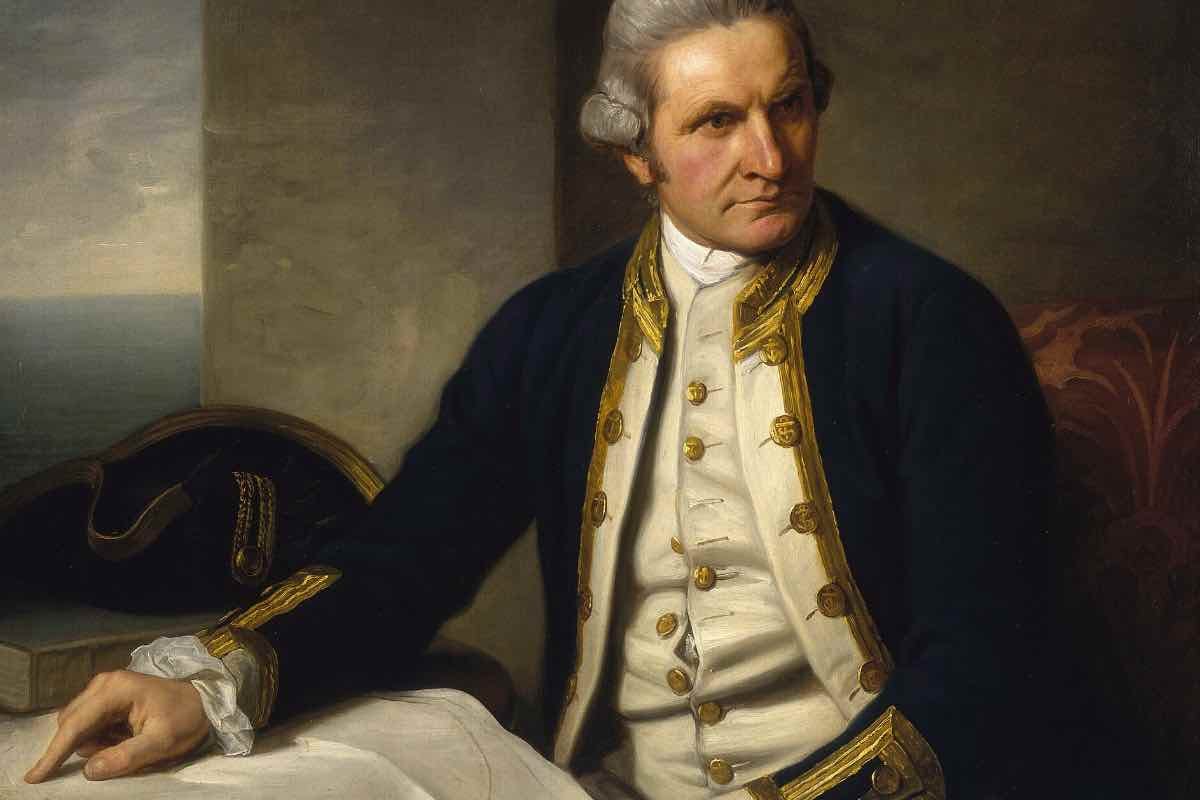
Captain James Cook
The story of Captain James Cook—formally a Lieutenant in the Royal Navy at the time but captain of the HMS Endeavour—departing from Plymouth in August 1768 in search of Terra Australis Incognita, ‘Unknown Southern Land’, is well trodden.
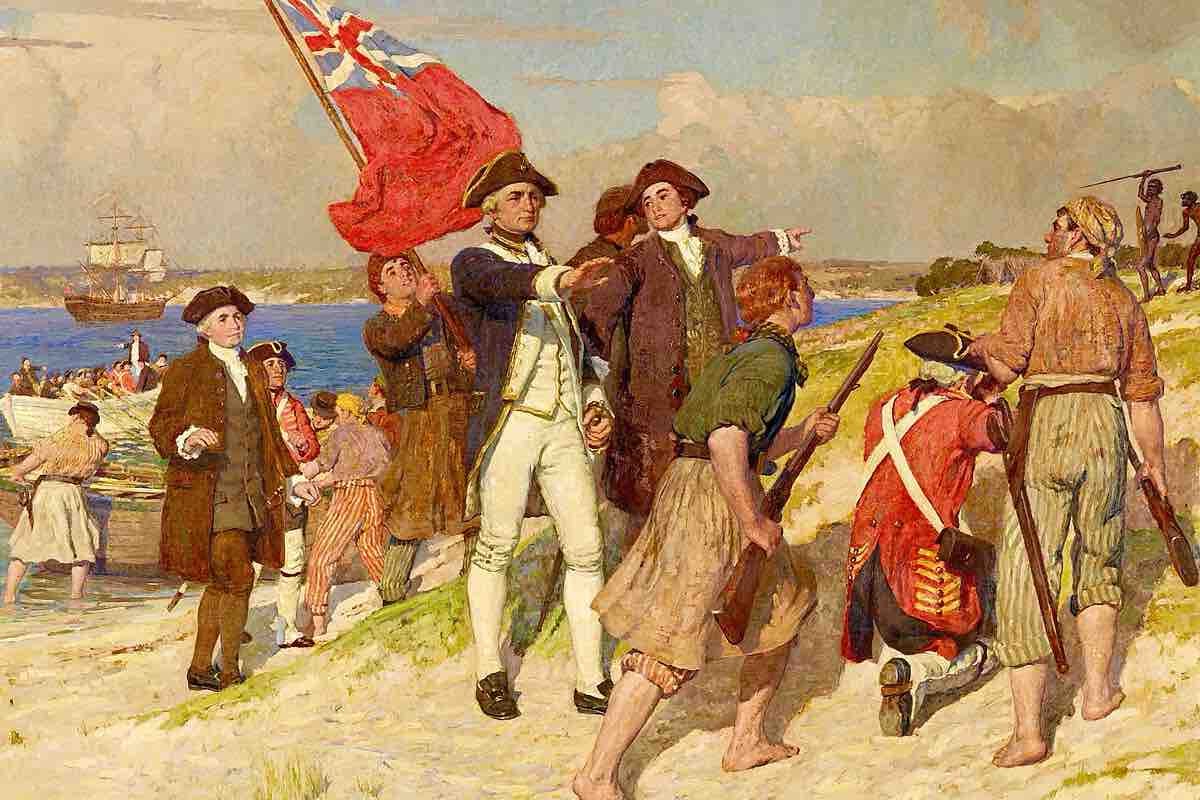
Less known is what happened after Cook had planted his flag at Botany Bay in 1770 as he continued his exploration of the east coast of the unknown southern land.
Out of Curiosity
Interesting fact: Australia is wider than the moon; 2,500 miles wide by 2,100 miles high.
Endeavour Reef
Heading north, Cook looked to make quicker progress by sailing through the Great Barrier Reef at night. It was a rare miscalculation—for a man whose navigational instincts bordered on the supernatural—and it must have stung.
On 11 June 1770, the ship hit the reef and stuck fast at a spot today known, with commendable simplicity, as Endeavour Reef. Badly holed below the waterline, the Endeavour started to flood.
All the crew, including Cook, took turns pumping in short shifts. They threw tons of ballast, water casks and six guns overboard in an attempt to keep her from going under.
Cook needed to head for dry land, but had to keep the ship afloat to get there. Midshipman Jonatan Monkhouse suggested ‘fothering’. Cook agreed.
The method was straightforward, if not exactly fragrant. Monkhouse took an old sail, stitched into it a generous mixture of chopped oakum and wool, then blended this with dung collected from the animals kept on board.
The resulting object—part sail, part compost heap—was then dragged beneath the hull, where the suction of water rushing through the hole would pull the mixture into the breach and slow the leak.
It worked, proof that desperation has always been the mother of invention.
Once fothered, Cook set off towards mainland Australia. The sound a wooden ship makes when it grinds across coral is not, by all accounts, a reassuring one. In danger of sinking at any moment, Cook identified a suitable estuary—unmapped, of course, because everything up here was unmapped—where he could run the boat aground to carry out repairs.
Let’s take stock: You’re on the other side of the world; no cranes, no dry dock, no helpful passing ships. The vessel that is your only conceivable way home has a gigantic hole in its hull below the waterline. What to do?
Well, if you’re James Cook, you don’t panic. You don’t despair. You take things one step at a time.
Cook and his men spent six weeks grounded on the—now named—Endeavour River. The repairs had to be done, but Cook also understood that a nervous, exhausted crew fixes nothing.
He set up a proper shore camp. Men rotated duties. The ship’s naturalists, Joseph Banks and Daniel Solander, wandered off into the bush with their notebooks, apparently delighted by the whole situation.
A young sailor who had never seen a kangaroo in his life reported back to Cook in a state of some confusion, describing a creature that hopped on two legs and seemed to have a pocket. Cook listened carefully and wrote it all down.
Careening
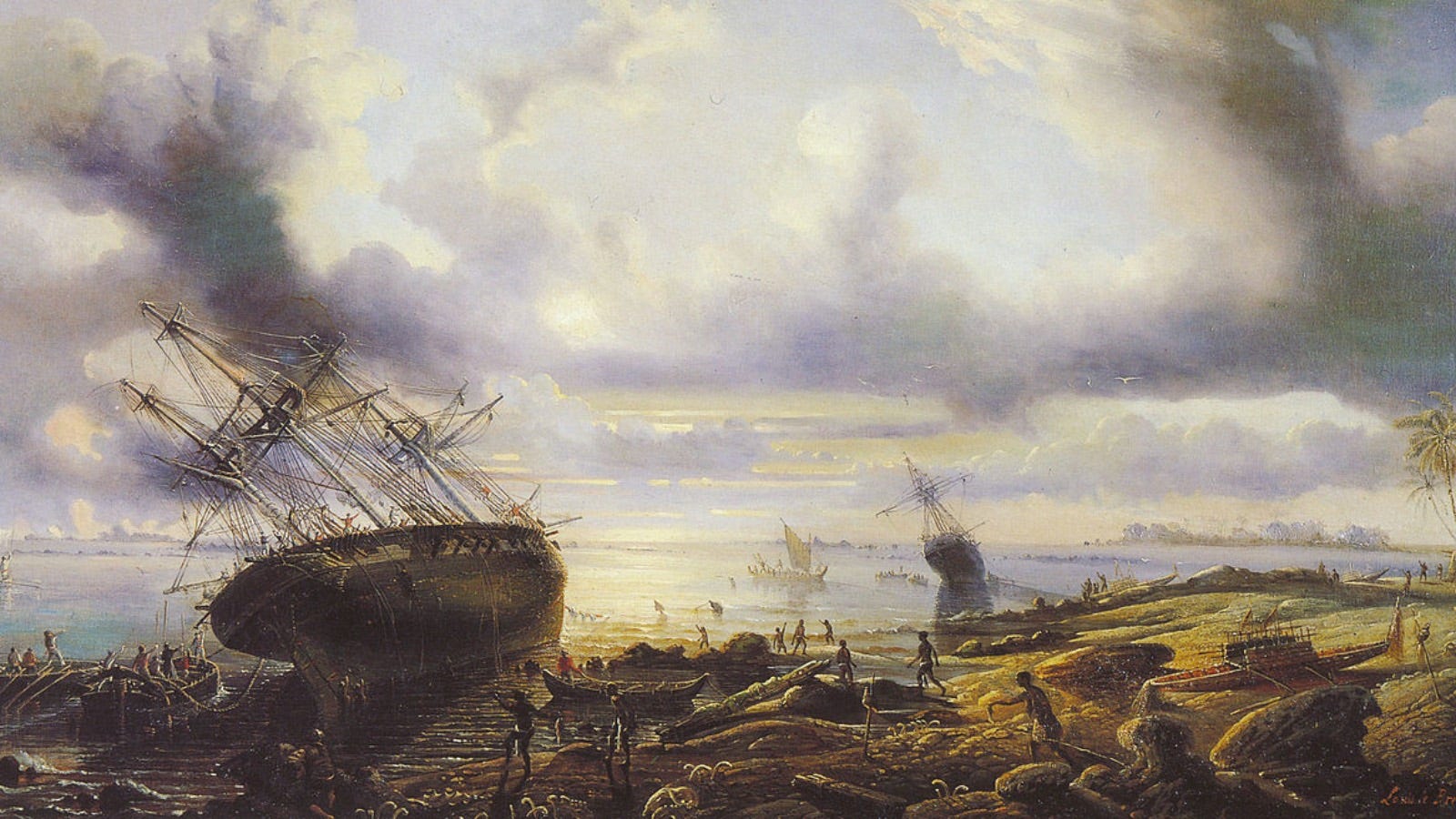
To patch the hull itself, he employed the most extraordinary technique: careening. It sounds like something that should end badly, and in lesser hands, it would have.
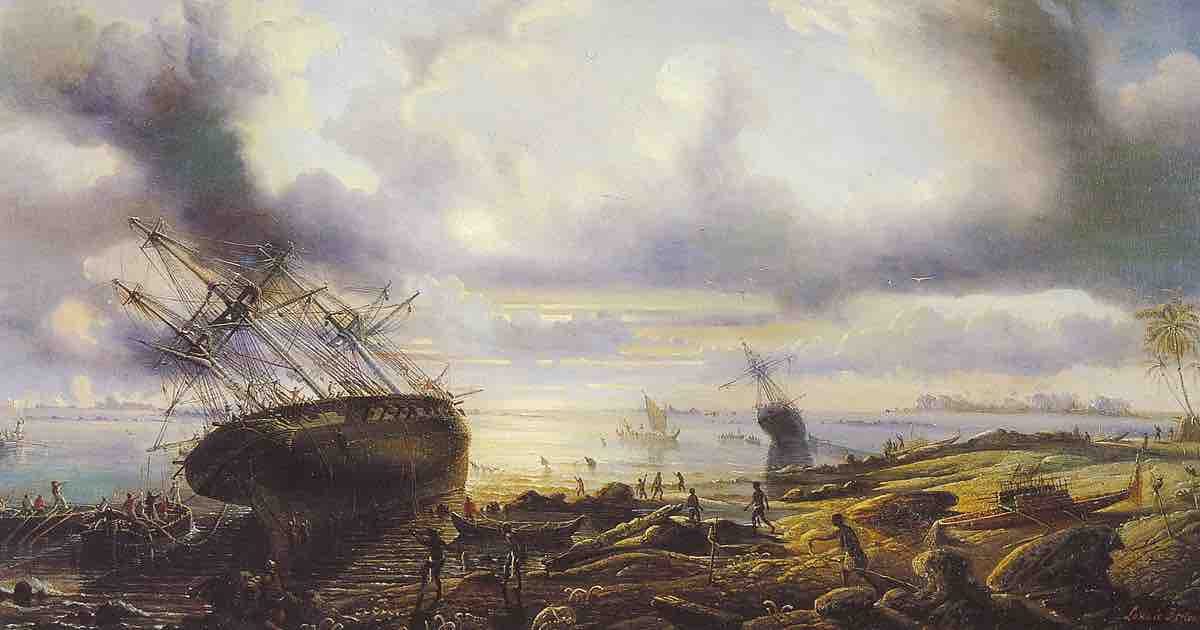
As the tide receded, the ship lay over to one side, like a tired dog rolling onto its side, allowing repairs to the newly exposed section of the hull. Once completed, the ship refloated on the next available tide.
Then, as the following low tide approached, the crew attached ropes from mastheads to fixed points onshore and coaxed the ship down onto its opposite side, exposing what remained of the damage.
It was, in essence, a 370-ton controlled collapse—repeated twice, in a remote river mouth, with hand tools and rope, by men who had been at sea for the better part of two years.
Out of Curiosity
Although Captain Cook’s careening manoeuvre was extraordinary under such difficult circumstances, careening itself was a well-practised art.
The word itself comes from the Latin ‘carina’, meaning ‘keel’. European sailors had been heeling ships over on beaches since the early 1400s, scraping, re-caulking and repairing the exposed hull as the tide dropped, then floating off on the next one.
By the seventeenth and eighteenth centuries, it had become routine maintenance for naval and merchant vessels alike. Pirates, too, were enthusiastic practitioners—they had little choice, given that pulling into an official royal dockyard tended to end badly for everyone on board.
Once completed, one more high tide and the Endeavour were back afloat. For Cook, it was all in a day’s work (well, six weeks).
