


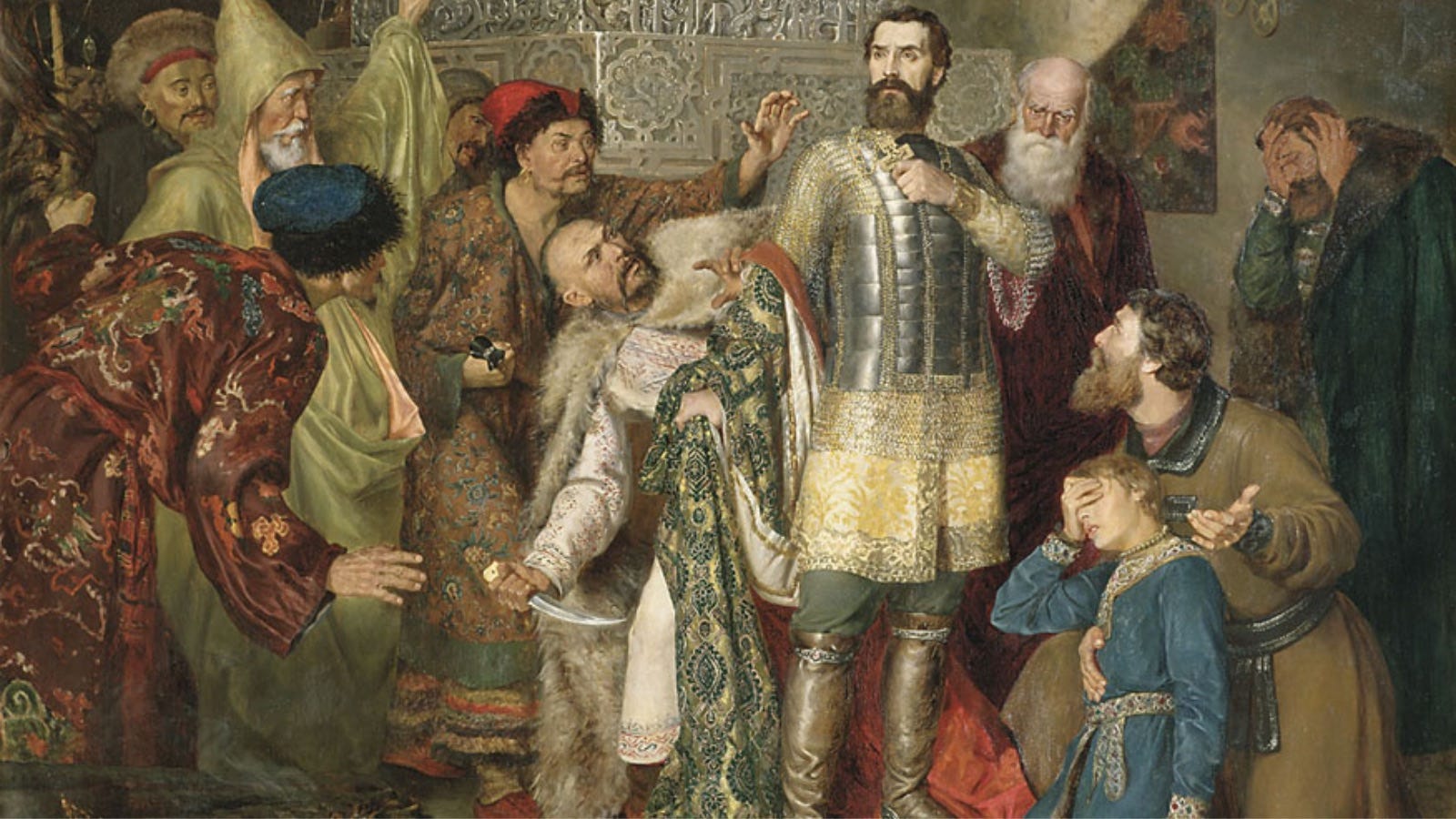

28th November 1240
(read time: 4 mins.)
On 28 November 1240, Batu Khan, grandson of the great Genghis Khan, surrounded Kyiv and the invasion began. For eight days, Kyivan Rus repelled wave after wave of Mongol attacks. Trebuchets and catapults hurled boulders at the city ramparts. On the eighth day, the city walls were breached and the Mongol hordes poured through.
Now in the fourth year of conflict, President Volodymyr Zelenskyy and the people of Ukraine continue to resist the Putin hordes against all odds.
But the Ukrainians’ steadfast resistance shouldn’t come as a surprise.
The city of Kyiv has faced at least 15 major sieges, battles or sustained military attacks in its 1,500-year history. This makes it one of the hottest contested cities in Europe.
In Tim Marshall’s book, ‘The Power of Geography’, he argues that—regardless of the ambition of any individual Russian dictator to reclaim the former states of the USSR—Ukraine will always be at the mercy of its own geography.
How so?
A prisoner of geography
Firstly, it is sandwiched between the largest country in the world, Russia, and the rest of Europe to the west.
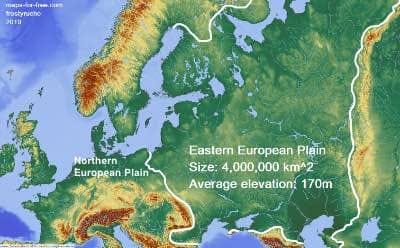
The Northern European Plain runs from the northern regions of France, Belgium, the Netherlands, Germany, Denmark and across much of Poland.
At this point, it gives way to the Eastern European Plain, which covers Ukraine, the Baltic states and Belarus. It then sweeps across Moscow, ending abruptly at the Ural Mountains, which—broadly speaking—mark a dividing line between Europe and Asia.
In other words, it’s low-lying land all the way.
With no continuous mountain ranges and limited natural defences, geographically speaking, Ukraine serves as a buffer zone between Russia and the West.
In addition, Russia has limited warm-water ports, vital for unrestricted sea trade. Sevastopol, on the southwest tip of the Crimean Peninsula and currently under occupation, is a military port and home to Putin’s Black Sea Fleet. By contrast, the Black Sea port of Odesa, hotly sought by Russia, has traditionally handled 65% of Ukraine’s sea-borne imports and exports.
Finally, Marshall highlights that Ukraine’s grain exports account for 10-15% of global corn supplies and 8-10% of global wheat supplies, not to mention its abundance of precious metals.
According to Marshall, Ukraine is a ‘prisoner of geography’.
Batu Khan
Perhaps the most significant of the 15 or more attacks on Kyiv was carried out by Batu Khan, grandson of the great Genghis Khan, founder of the mighty Mongol Empire in 1206.
By the time Batu had reached his twenties, the Mongol Empire had conquered most of Central Asia and Northern China. Genghis Khan’s real genius wasn’t just conquest, it was convincing Mongolia’s fractious nomadic tribes to act as one terrifying force.
The Mongol Empire also excelled at ‘practical imperialism’—allowing communities to follow their own traditions while subjugated to the Empire. It was a sort of Mongol co-operative.
Genghis Khan’s death in 1227 led to the division of the empire among his heirs. Batu’s share was substantial. He wanted more.
In 1236, Batu launched a western campaign that would reshape European history. His target was everything west of the Ural Mountains—a rather ambitious shopping list that encompassed modern-day Russia, Ukraine, Poland and Hungary.
By late 1240, his army had swept through Russia and now stood before Kyiv, still the principal city of Kyivan Rus, though its reputation as a major European commercial and cultural centre had started to fade.
Out of Curiosity
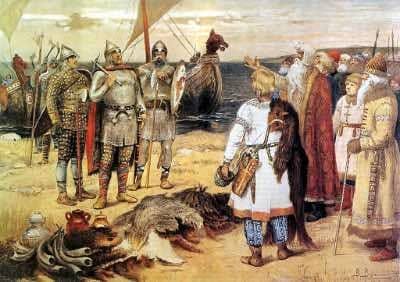
Kyivan Rus emerged in the late 9th century when Vikings traditionally associated with prince Rurik shifted from raiding Eastern Europe to settling among—and ruling over—the incumbent Slavic tribes.
Kyiv became the capital city and the Kyivan Rus held onto power for the next four centuries.
Then Batu Khan arrived.
Mongol invasion of Kyivan Rus
On 28 November 1240, Batu’s forces surrounded Kyiv and the invasion began.
For eight days, Kyiv repelled wave after wave of Mongol attacks. Trebuchets and catapults hurled boulders at the city ramparts. The offensive was relentless, day and night.
On the eighth day, the city walls were breached and the Mongol hordes poured through. The carnage that followed was brutal even by medieval standards. The death toll proved catastrophic, with some estimates suggesting that 96% of the 50,000 inhabitants were slaughtered.
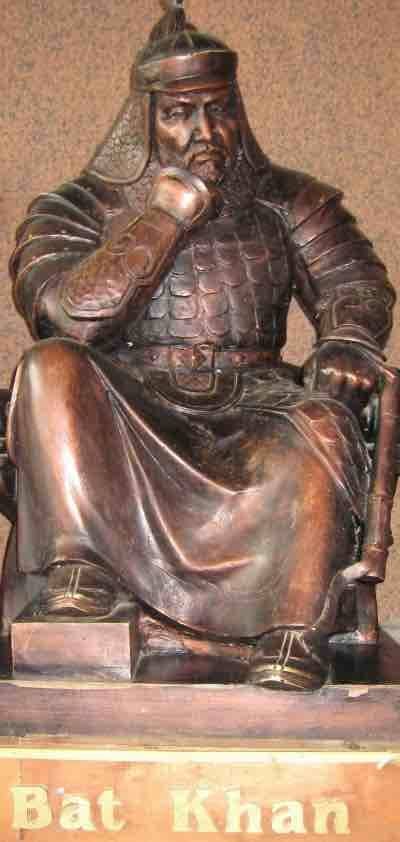
By the time Batu Khan had demolished Kyiv, he had redrawn the political map of Europe. The city would slide from major commercial and cultural centre to provincial backwater.
By contrast, Moscow—formerly a provincial backwater—would rise to become the epicentre of a new Russian state that would stretch from Poland to the edge of the Pacific.
Slavic power was shifting from Kyivan Rus to Moscow.
