

Australia's Amicable Independence from Britain
The longest divorce in history


2nd March 1986
(Read time: 11 mins.)
Australian independence from Britain: the story of the longest, and arguably most amicable, divorce in the history of the British Empire. No war of independence. No declaration of grievances. Not even raised voices.
Happy Sunday!
The United States’ Declaration of Independence in 1776 was, in essence, a succession of grievances against King George III — a catalogue of ‘repeated injuries and usurpations’ that, in effect, shows how he had quashed the rights of the colonists.
The Declaration was a resignation letter. It was also the founding charter of the most powerful nation on earth.
The thirteen American colonies’ break with the British Empire was, by any measure, a dramatic exit—a story of passion and principle played out in blood, leaving tens of thousands dead.
The 1783 Treaty of Paris made the separation formal, the last British troops went home, and that was that.
Within eight years, it was over.
We hold these truths to be self-evident,
that all men are created equal,
that they are endowed by their Creator with certain unalienable Rights,
that among these are Life, Liberty and the pursuit of Happiness.
PARAGRAPH TWO OF THE DECLARATION OF INDEPENDENCE 1776
But there was another British colony that would eventually leave the fold — and it did so by entirely different means. No war of independence. No declaration of grievances. Not even raised voices.
Australia’s journey from the arrival of Captain Cook to full legal independence took 216 years. Britain didn’t push and Australia didn’t pull. They simply drifted apart, politely.
This is the story of the longest, and arguably most amicable, divorce in the history of the British Empire.
1770 — Terra Australis Incognita
In August 1768, a 41-year-old naval lieutenant named James Cook sailed from Plymouth in HMS Endeavour, officially bound for the Pacific to observe the transit of Venus.
However, his second — hush hush — objective was to search for Terra Australis Incognita — the ‘Unknown Southern Land’ that many Europeans believed must have existed in the far south to ‘balance’ the globe.
On 29 April 1770, Endeavour dropped anchor in a broad, sheltered bay on the east coast of a vast landmass that Cook took to be part of that southern continent.
The ship’s naturalist, Joseph Banks, was astonished by the richness of the flora and soon had his party busily pressing and cataloguing specimens from the bay.
Cook named it Botany Bay.
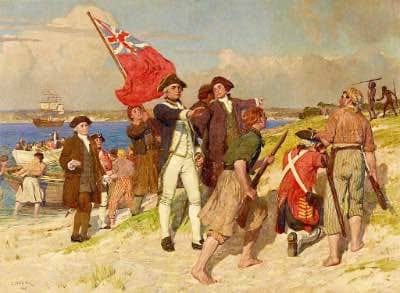
After a week collecting specimens and attempting to communicate with the indigenous Gweagal people — less than enthusiastic hosts, it has to be said — Cook sailed north.
Near the northern tip of the continent, Cook stepped ashore on what he named Possession Island, raised the British flag and formally claimed the entire eastern coastline for King George III.
Had the locals who’d been living on that coastline for fifty millennia understood what Cook was doing with his flag, they might have wondered what exactly had just been found.
Back in London, the claim was noted and shelved.
By 1783, with the American colonies gone, Britain’s jails were filling up fast. Somewhere new was needed for the burgeoning roster of convicts — a problem, as it happens, that the UK still has today.
Botany Bay, it was decided, would do. Cook’s claim from thirteen years earlier was picked off the shelf, dusted down, and put to use.
1787 — Arthur Phillip’s First Fleet
In May 1787, a fleet of eleven ships left Portsmouth carrying 620 marines, officers and crew, about 750 convicts and a handful of free settlers. Their task at the end of a 15,000-mile journey… to establish a penal colony at Botany Bay.
Having arrived in January 1788, Arthur Phillip, commander of the First Fleet, decided that Botany Bay was unsuitable. Poor soil, exposed anchorage, unreliable water.
He loaded a few officers into a small boat and rowed twenty miles up the coast to inspect a harbour Cook had charted but never actually entered. What he found stopped him in his tracks.
Phillip later wrote that it was, without exception, the finest harbour he had ever seen. He named the landing place Sydney Cove, after Lord Sydney, the Home Secretary who had organised the whole enterprise.
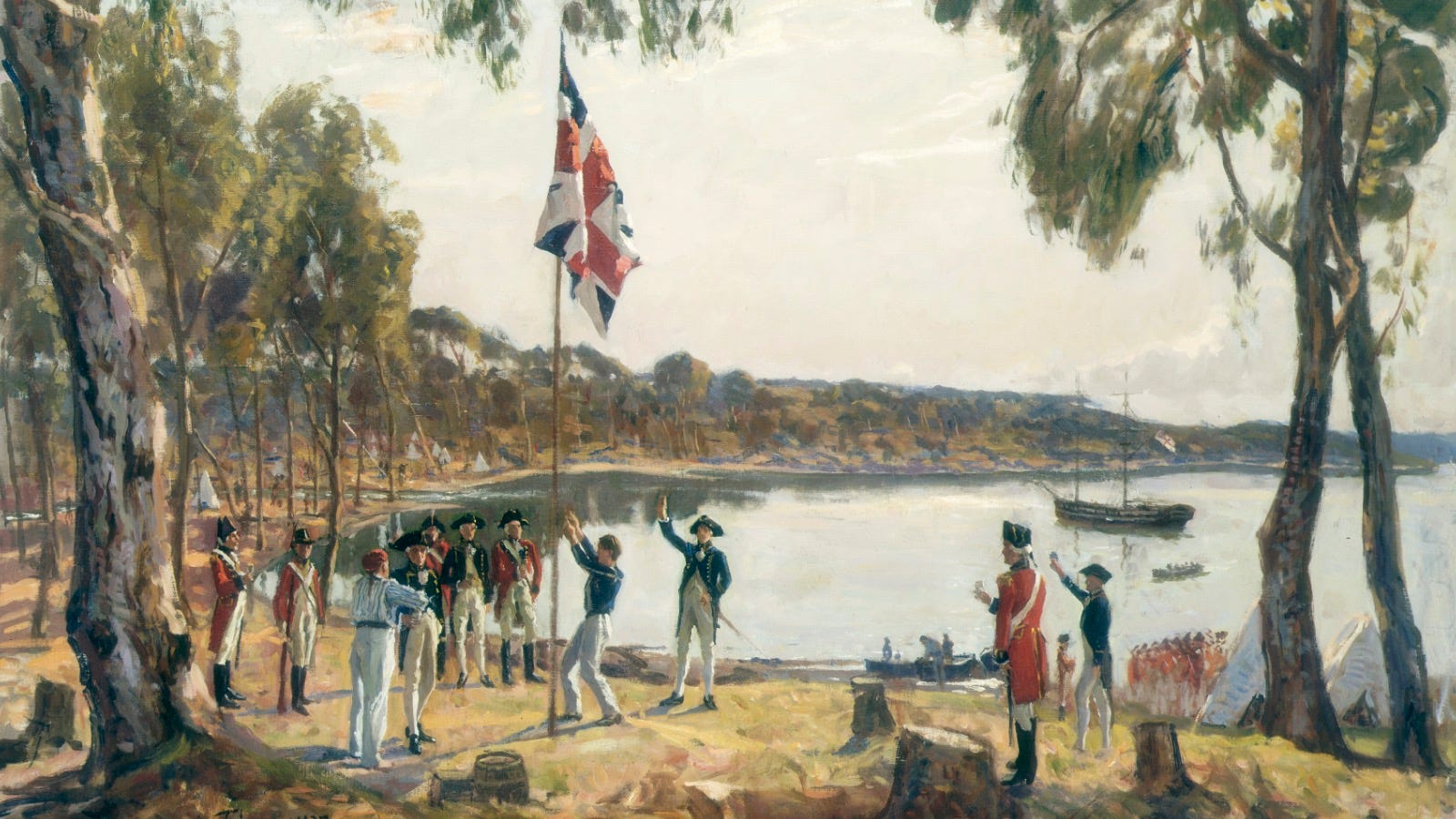
On 26 January 1788, Phillip raised the Union Jack.
Out of curiosity
Today, Sydney Cove is the waterfront between the Sydney Opera House and the Sydney Harbour Bridge, which gives you a sense of how well Phillip chose his spot.
The world’s largest natural harbour is actually called Port Jackson, the name given to it by Captain Cook. As the city of Sydney spread out in every direction, calling it anything other than Sydney Harbour was never an option.
The day Arthur Phillip raised the Union Jack at Sydney Cove—26th January 1788—would become one of the most contentious dates on the Australian calendar.
Australia Day.
For many non-Indigenous Australians, it is a day of celebration, marking the birth of the modern nation. For many Aboriginal and Torres Strait Islander people and their allies, it marks something else—the beginning of invasion, dispossession and the destruction of a way of life that had endured for thousands of years.
1824 — “Australia”
Matthew Flinders was a British navigator and cartographer who led the first circumnavigation of Australia, finally establishing that it was a single continent during his voyage on HMS Investigator between 1801 and 1803.
The Dutch had been coasting along its western and northern shores for over 200 years, but their priorities were seeking trading opportunities rather than claiming new territory. They had named the land New Holland.
In his work ‘A Voyage to Terra Australis’, published on the very day he died in 1814, Flinders urged that the continent be called Australia — a name he considered far more fitting and elegant than New Holland.
In December 1817, Governor Lachlan Macquarie of New South Wales wrote to officials in London recommending that the name ‘Australia’ be adopted. The imperial machinery, never in much of a hurry, finally agreed in 1824.
Australia it was.
The six colonies
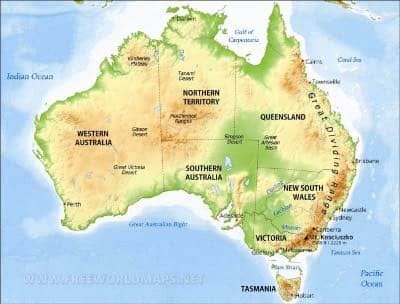
The naming of Australia in 1824 seemed to trigger a growth spurt. New South Wales had been around since Arthur Phillip arrived in 1788, but now the rest of the continent began to fill in.
Van Diemen’s Land, the grim island penal settlement to the south, became the separate colony of Tasmania in 1825. It would become two penal colonies for the price of one.
Western Australia followed in 1829, proudly planting itself on the opposite coast as the convict-free Swan River Colony, having the added advantage of discouraging the French from helping themselves to the west coast.
South Australia arrived in 1836 as something of a social experiment — proclaiming itself a province and founded without a convict in sight.
Victoria was carved from the southern end of New South Wales in 1851 and struck gold almost immediately, briefly making it the richest colony on the continent, a fact Victorians have never been shy about mentioning.
Finally, Queensland split from New South Wales in the north in 1859. With that, the colonial map was more or less complete.
Convict transportation continued until 1868, by which point around 160,000 people had been shipped from Britain.
By the late nineteenth century, each of the six colonies had been granted responsible self-government by the British Parliament.
Running their own affairs, but still British colonies and still under the Crown.
Out of Curiosity
The Australian gold rushes of the 1850s helped trigger a scramble to lay rails across the colonies. In 1848, British Colonial Secretary Earl Grey instructed the Australian colonies to adopt a single rail gauge. Everyone agreed.
Then New South Wales changed its mind. Then changed it back.
Victoria, which had already ordered its locomotives from England, pressed ahead with a broader gauge. South Australia followed.
Queensland, eyeing the bill, went narrower because it was cheaper. Western Australia and Tasmania arrived fashionably late to the party and did the same.
Six colonies, three railway gauges. By the early twentieth century, travelling from Brisbane to Perth meant changing trains six times.
The ‘glorious bungle’ was complete.
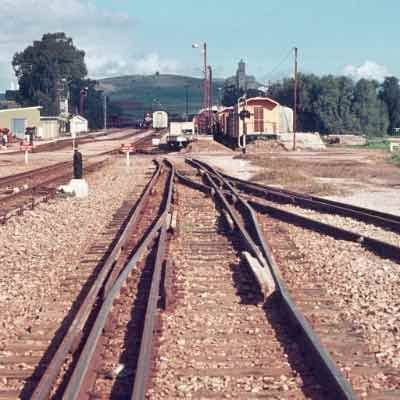
The final works that completed a continuous, standard-gauge rail spine from the south to the north coast were finished in 2004–175 years after Australia’s first tracks were laid.
Railway buffs claim that today’s national railway gauge traces back to Roman times. “It is the same width as a chariot—two horses stood side by side”.
It really shouldn’t have been so difficult after all.
By the late nineteenth century, a more pressing worry than railway gauges was taking shape. Germany was planting flags and trading posts across the South Pacific, while Japan was beginning to push its frontiers south.
The defence of the realm was at stake.
Six small colonial forces, each with its own laws, budgets and equipment, did not add up to a convincing deterrent. Something would have to change.
One Country.
1901 — Federal Commonwealth of Australia
After twenty years of debate, conventions and a series of colonial referendums, the Commonwealth of Australia was proclaimed on 1 January 1901, in front of 100,000 spectators in and around Centennial Park in Sydney.
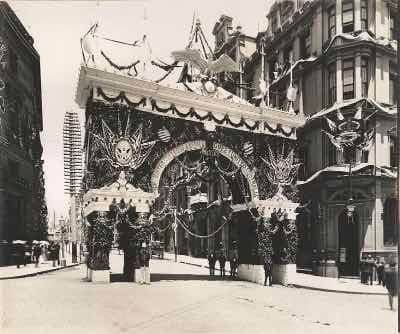
Six colonies became six states.
Edmund Barton was sworn in as the first Prime Minister. Lord Hopetoun became the first Governor-General, the Crown’s man on the ground. The Union Jack remained on the flag. The British monarch remained head of state.
It was independence of a sort; quiet, unhurried and largely in the mind. The paperwork still needed to catch up.
Two months later, 1 March 1901, the Commonwealth Military Forces (the land forces of the new Australian Commonwealth) were formally established.
In one movement, the colonial forces were folded into a single command. The individual units still wore slightly different uniforms and carried slightly different equipment. But they now answered to one government.
Australia now had the furniture of nationhood. A parliament. A constitution. An army. However, the constitution was technically a British Act of Parliament, with certain state laws requiring approval from the Crown.
No Australian citizenship though... Australians were still British subjects. The lawyers, it was clear, were not quite finished.
1916 — Gallipoli
The Australian nation was born in a federation ceremony in 1901, but it crystallised when it sent its young men to die on a beach in Turkey fourteen years later.
In the spring of 1915, during the First World War, Australian troops landed with their allies on the narrow Gallipoli peninsula in a failed attempt to punch a way through Ottoman-held Turkey and open the sea route beyond.
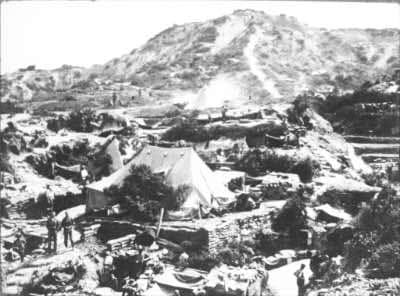
It should have been a Churchillian masterstroke that shortened the war. Instead, the Gallipoli campaign lasted eight months, went nowhere strategically, and cost more than 55,000 Allied lives—and over 85,000 Ottoman lives besides.
Among the dead were 8,700 Australians, men who’d barely heard of Gallipoli, let alone could have pointed to it on a map.
Yet amid the disaster, something extraordinary emerged. The ANZAC* soldiers demonstrated a unique, stubborn, improvised courage. Back home, Australians followed every dispatch and recognised something of themselves in what they read. Not British. Not colonial subjects doing their imperial duty. Something new.
Out of the tragedy of Gallipoli, the Australian nation had come of age.
1942 — Nearly there
The process continued, incrementally, for another eighty years. The Statute of Westminster in 1931 — formally adopted by Australia in 1942 — largely ended British legislative power over the Commonwealth of Australia. However, the constitution was still caught in a web of residual imperial law.
My father served in the Australian Army towards the end of World War II in Papua New Guinea. He came to England for the Queen’s coronation in 1953… and the rest is history. I still keep a stash of his renewed passports from over the years. Dad’s 1966 and 1971 passports refer to him as an Australian Citizen and a British Subject. By the time of his 1976 renewal, he was solely an Australian citizen.
But even then, the constitution remained interwoven with Britain’s. By the 1980s, Australia was a confident, prosperous nation of 16 million people. The ongoing constitutional pickle needed to be sorted once and for all.
1986 — Free at last
Queen Elizabeth II signed the Proclamation of the Australia Act at Government House in Canberra on 2 March 1986, and handed the original document to Prime Minister Bob Hawke.
The Act — or rather, seven separate Acts — came into force the following day and severed all remaining legal ties between the two countries.
No British law could apply in Australia. The High Court of Australia became the final word on Australian law. Australia was now a sovereign, independent and federal nation.
I was in Australia in 1986, travelling up the east coast from Melbourne into northern Queensland. There were no fireworks. No parades. No declarations read aloud in a public square. No gloating. In fact, no one even mentioned the cutting of the last legal tie to Britain.
The Queen had signed a document, handed it over, and—two hundred and sixteen years after James Cook first landed at Botany Bay—that was that.
