



30 November 1925
(read time: 4 mins.)
Out of the Nativity façade of Antoni Gaudí’s Sagrada Família rises the Tower of Saint Barnabas, capped with a ceramic-covered spire that watches over Barcelona like a lighthouse guarding the coast. The tower was completed on 30 November 1925. Poignantly, it would be the first and last bell tower of the Nativity façade that Gaudí would see finished in his lifetime.
About four weeks ago, I was introduced to a building I’d never seen or heard of. My son came back from Barcelona and shared some photos of an architectural wonder—one that quite literally took his breath away.
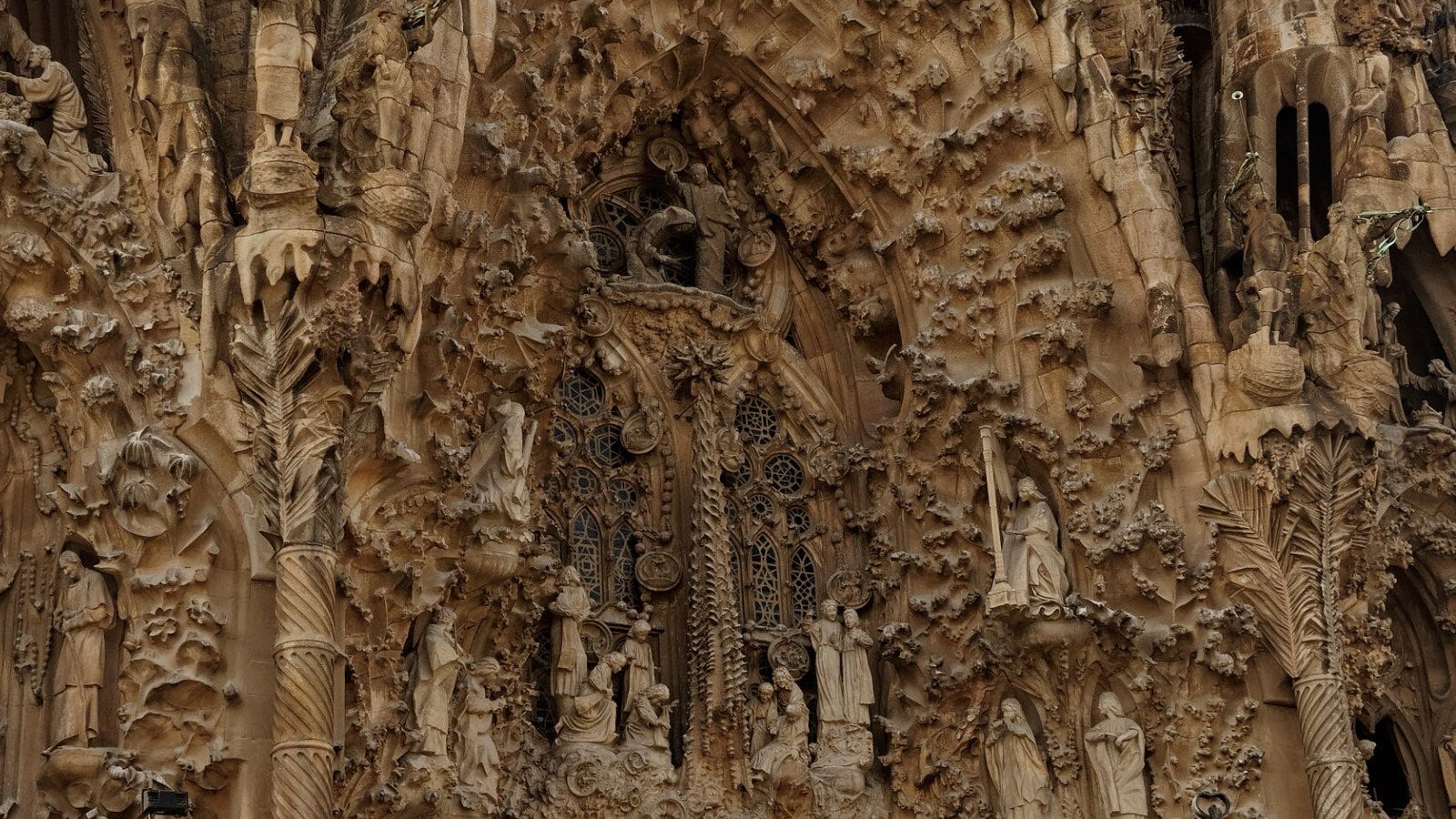
It had the look of an enormous cathedral-like candle that someone had left burning far too long. The Gothic spires and edges had begun their slow collapse, wax pooling and drooping in the Barcelona heat, but then everything stopped mid-melt and fixed itself in time.
Each of its towers (eighteen in all I think) looked as if they’d been assembled by an oversized sand artist in an altered state of consciousness, unable to stop finessing their extraordinary creation. Yet somehow the towers might have also grown organically from the earth, outrageously dense in detail, poised to bloom at any moment.
This was Antoni Gaudí’s Sagrada Família.
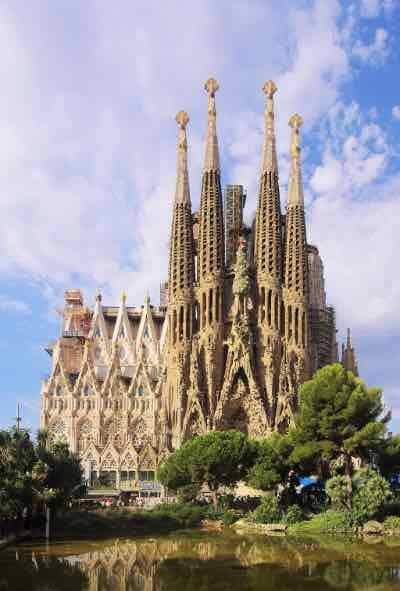
Antoni Gaudí i Cornet…
…was born in 1852 in Reus, Catalonia. His father, Francesc, was a coppersmith. Antoni spent much of his childhood watching Francesc transform flat sheets of copper into curved vessels using nothing more than heat and a hammer.
These vessels would become the cauldrons used by local distilleries. Gaudí was mesmerised by his father’s ability to convert flat metal into objects that expressed flow and movement—that possessed an almost living quality.
As a sickly child, Antoni spent much of his time away from school. He used those hours to immerse himself in nature—observing the geometric spirals of snail shells, the chaotic branching of trees and the way light forced itself through the gaps in the leaves.
Gaudí the architect
He spent the next ten years studying architecture at Barcelona’s Provincial School of Architecture (now part of Barcelona University). Antoni graduated with the underwhelming endorsement of the school’s director, who observed…
We have given this academic title either to a fool or a genius. Time will show.
Gaudí’s early commissions largely followed convention, but they revealed hints of the natural forms he’d studied as a child—the curves, the spirals, the organic growth.
Sagrada Família—a lifetime’s obsession
While building Casa Vicens, a richly decorated home for the stockbroker Manuel Vicens. Gaudí’s construction raised some eyebrows.
In 1883, at the age of 31, he was appointed architect for the Expiatory Temple of the Holy Family, better known as the Sagrada Família.
The project to build a Roman Catholic basilica would consume Antoni for the rest of his life.
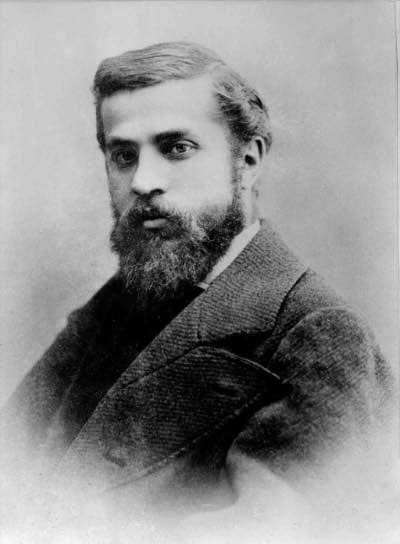
Construction of the Sagrada Família had been underway for a year when he took control. With little more than a neo-Gothic crypt in place, Gaudí was gifted a near-blank canvas. For the next 43 years, he transformed a conventional Gothic church into something unprecedented.
Year by year, the basilica grew from the earth as if seeds had been scattered across the site and something utterly magical was blooming.
Gaudí found time to complete other works, the most notable of which was Park Güell in 1914, a complex of parks, gardens and buildings. Moorish architecture meets the gingerbread man.
As Gaudí grew older, he moved onto the site. He wore the same threadbare clothes, lived on bread and milk, grew increasingly dishevelled—and didn’t care. He lived only for the Sagrada Família.
The Nativity façade
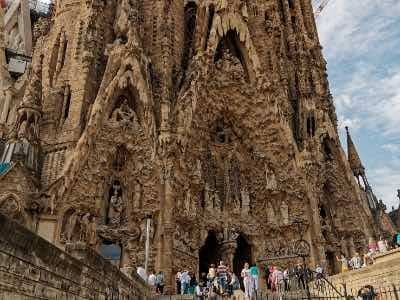
Every square inch of the structure drew breath from passers by. But one element in particular stopped them in their tracks—The Nativity façade.
The façade is divided into three porticos representing Hope, Faith and Charity. Every square inch is consumed by exploding life: exotic plants, fruit, ducks, geese, pheasants, turkeys, sparrows, nightingales, turtles and tortoises. In the centre of the façade are the baby Jesus, Mary and Joseph flanked by a bull and a mule.
The finish suggests something wild and overgrown rather than meticulously carved. It is extraordinary, and it sits high on my list of places to visit.
The Tower of Saint Barnabas
Out of the Nativity façade rises the Tower of Saint Barnabas, capped with a ceramic-covered spire that watches over Barcelona like a lighthouse guarding the coast.
The tower was completed on 30 November 1925. Poignantly, it would be the first and last bell tower of the Nativity façade that Gaudí would see finished in his lifetime.
Six months later, lost in thought, he was out walking and stepped into the path of an oncoming tram. Mistaken for an anonymous beggar in his shabby clothes, he was rushed to a pauper’s hospital in the city.