



24th March 1946
(Read time: 9 mins.)
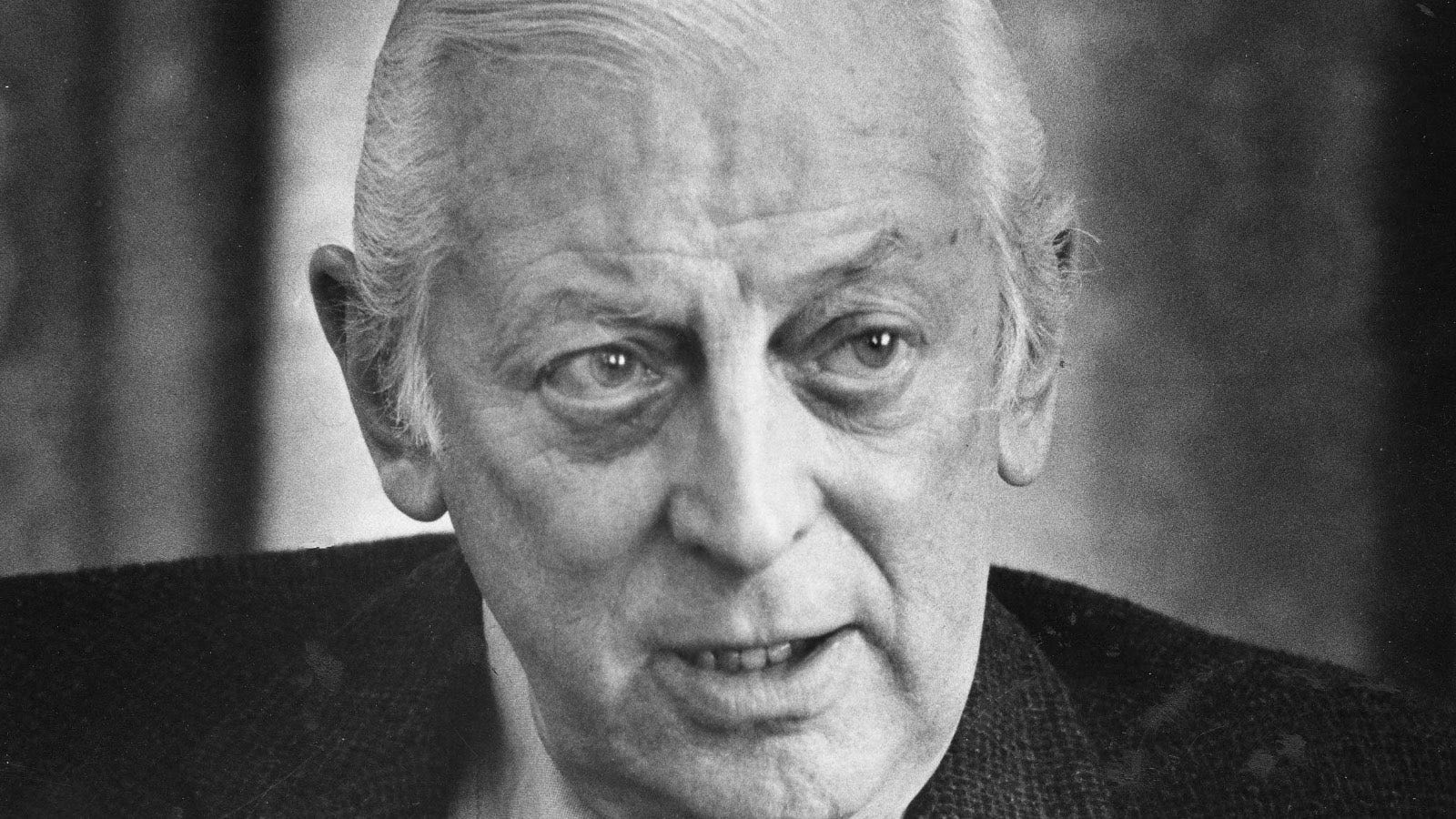
Alistair Cooke sat down in his Fifth Avenue, fifteenth-floor flat overlooking Central Park and just started typing what came to him in the moment. On 24 March 1946, he broadcast the first edition of American Letter.
I recently mentioned my childhood Saturday morning ritual of watching Casey Jones, whose repeats were still steamin’ and a-rollin’ across British television screens well into the 1970s.
As it happens, another American broadcast was a regular fixture in our house at around the same time—and for the thirty years that followed. This one, though, was strictly Sunday mornings.
Coming downstairs at around 9:15, I would find my father in his favourite chair, Sunday broadsheets spread around him like a small paper city, BBC Radio 4 purring from the radio in the corner.
Through the rustle of newsprint would drift the unhurried, mid-Atlantic tones of Alistair Cooke, delivering his weekly Letter from America.
Who’s Alfred?
Alfred (later Alistair) Cooke came into the world on 20 November 1908 in Salford, Lancashire—a gritty industrial city adjacent to Manchester and an area I know well from my three years at Manchester University.
His father, Samuel Cooke, was a metalsmith and Methodist lay preacher, his mother, Mary Elizabeth, an Irish Protestant.
Number 7 Isaac Street, Ordsall, Salford—where Cooke was born and grew up—was a two-storey red-brick terrace, one of a continuous run of houses lining either side of the street.
The house was a typical modest worker’s home—the kind that Salford produced by the thousand in the late nineteenth and early twentieth centuries.
It comprised a small front room and kitchen downstairs, with two bedrooms above. In the rear yard, a scullery was standard, as was the outside toilet that nobody wanted to visit in January. The windows were kept small, keeping the warmth in and the industrial pollution out.
Smoke from the mills, foundries and factories hung over Isaac Street as kids played in the road. In that part of Salford, greenery was a luxury, not a given.
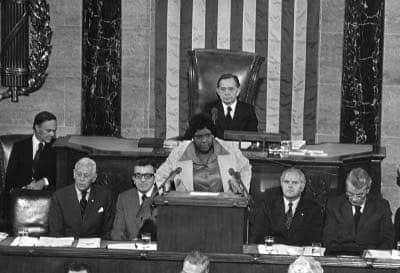
Nothing about Isaac Street suggested that the boy at Number 7 would one day address the United States Congress, be appointed an honorary Knight of the British Empire, or become the BBC’s defining voice in America for the best part of sixty years.
While still a child, Alfred moved with his family from the industrial haze of Salford to the windswept promenades of Blackpool—out of the frying pan and straight into a tray of soggy chips.
The buzz of England’s favourite working-class seaside resort would have been exciting for the young boy; in terms of weather, though, it was just a different arrangement of the same grey.
Alfred or Alistair
In 1927, Alfred won a scholarship to Jesus College, Cambridge—no small feat for a boy from working-class Salford. To graduate three years later with honours in English was remarkable.
On or around his 22nd birthday, while at Cambridge, Cooke had an epiphany. He killed off Alfred.
A swift deed poll later and the rather workaday Alfred was quietly retired in favour of the more distinguished Alistair. It was part of a considered effort to craft a persona befitting the literary and theatrical career he had every intention of pursuing.
Alfreds Tennyson, Nobel and Hitchcock may have raised a collective eyebrow at this initiative, but young Alfred Cooke had made up his mind.
Out of Curiosity
When Cooke founded and ran the Cambridge Mummers—the university’s theatre group open to both sexes—a young student approached him for an audition.
Cooke recorded the student as “painfully shy” and, in his opinion, “entirely without acting promise”. During the audition, he saw “no point in delaying the agony” and asked what subject the student was reading. “Architecture,” came the reply.
“Stick to it”, said Cooke.
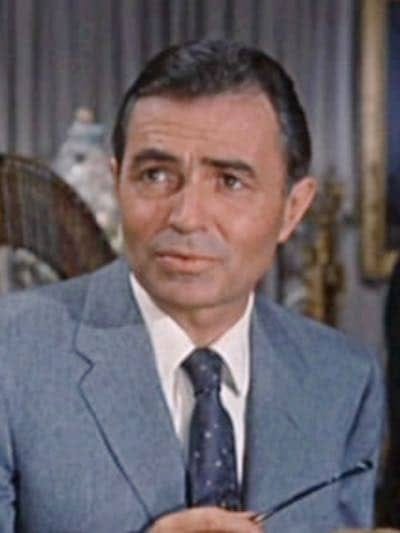
The rejected student was James Mason—who would become one of Britain’s most internationally celebrated film stars of the 1940s, 50s and 60s.
Cooke must have dined out on that story for decades.
Bound for America
In 1932, armed with a Commonwealth Fund Fellowship and a sense of adventure, upwardly mobile Alistair crossed the Atlantic to study drama at Yale, before moving on to Harvard the following year.
However, it became clear that Cooke was studying something else entirely—America itself. He travelled the country extensively, talking to strangers, walking unfamiliar cities and eating whatever was put in front of him.
Cooke was falling in love.
This was 1930s America, a nation of contradictions: Hollywood glamour contrasted with the misery of the Great Depression; Jazz clubs nestled alongside bread queues; skyscrapers soared while banks crashed to earth.
This was a nation reinventing itself; it was a young journalist’s dream.
Apart from a three-year spell as the BBC’s film critic between 1934 and 1937, America would be Cooke’s home for the rest of his life.
On 1 December 1941—with what I can only describe as impeccable timing—he swore the Oath of Allegiance and became an American citizen. Six days later, Japan bombed Pearl Harbour.
Out of Curiosity
During the early war years, Cooke criss-crossed America by car and train, absorbing and recording the mood and texture of ordinary American life—filing his dispatches for The Times of London and, later, the Manchester Guardian.
His relaxed, elegant exterior belied a considerable inner guile. To kick-start his relationship with Hollywood, he wrote to the Manchester Guardian, implying he had secured interviews with a number of major stars.
Simultaneously, he wrote to those very stars suggesting that he had the Guardian’s commission firmly in his pocket.
The bluff worked. Among many others, in 1934 he found himself in Hollywood, face to face with Charlie Chaplin.
Having subsequently struck up an unlikely—and lop-sided—friendship with Chaplin, the young Alistair Cooke asked him to be best man at his Pasadena wedding in 1934.
Chaplin agreed—but he never showed up.
How about a Letter from America?
In the 1930s, while working for NBC, Cooke had been broadcasting a radio show for American listeners called London Letter—describing everyday life in Britain.
In 1937, now settled in America, he suggested to the BBC that he could do the same in reverse: talk about American life for British audiences.
Lord Reith, the BBC’s formidable Director-General, raised his eyebrow at the suggestion. A fierce guardian of British cultural standards, he was wary of promoting an “American-style free-for-all”.
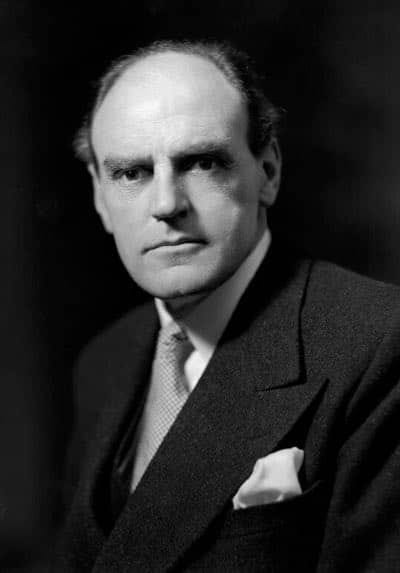
Nonetheless, Reith cautiously agreed to a trial series called ‘Mainly about Manhattan’ which ran between 1938 and 1939. The transatlantic experiment came to an abrupt halt, like so much else, by the outbreak of war.
After the war, with the BBC conscious of America’s pre-eminent place in the new post-war order, a regular broadcast explaining American life to British listeners now seemed not just natural… but necessary.
After Cooke’s one-off American Letter broadcast in November 1945, Controller of the BBC Home Service, Lindsay Wellington, commissioned a short series. He warned Cooke that only if the initial thirteen-week run did “wildly” well, might it be extended to twenty-six.
American Letter—soon to become Letter from America—would run for fifty-eight years.
The journey of a thousand miles starts with a single step.
LAO TZU, 6th-century Chinese philosopher
In preparation for the first series broadcast of American Letter—and in typically understated fashion—Alistair Cooke sat down in his Fifth Avenue, fifteenth-floor flat overlooking Central Park and just started typing what came to him in the moment.
On 24 March 1946, Cooke broadcast the first edition of American Letter.
The 58-year letter
Once he had drafted a letter, he would usually record the broadcast from the BBC studio in New York. Sometimes Cooke would record from “wherever his other duties took him”. In later years, that would include from his own bed, as his health failed him.
The weekly fifteen-minute radio programme—designed to give British listeners a window into life in the United States—would become the longest-running speech radio programme hosted by a single individual in the history of broadcasting.
For each week of the 2,869 broadcasts, Cooke sat in that Central Park flat, put a blank sheet into his typewriter and typed… about Eisenhower and Nixon. About Kennedy and Vietnam. About the space race and the Civil Rights Movement. About Watergate and the fall of the Berlin Wall.
But Cooke was as eager to discuss Senator Jacob Javits’ parking fine as he was to contemplate the murder of John Lennon. He would linger over a New England blizzard as intensely as over the day John F. Kennedy was assassinated.
With characteristic dry humour, Cooke recounted the story of Meyer L. Sugarman’s wedding night. Meyer had done everything right. He had found his girl, popped the question and booked a room at the Nevele Country Club Towers in Ellenville, New York, for their honeymoon.
What he had failed to account for was President Lyndon B. Johnson.
The White House, with the breezy indifference of the very powerful, cancelled Sugarman’s reservation to make way for the President and his entourage.
Meyer fired off an indignant telegram to Washington.
The White House blinked first. The room was returned and Mrs Sugarman’s nuptials, I assume, went ahead more or less as originally intended.
And who else could have explained to a Brit that strange game of baseball or the peculiar American relationship with the motorcar in such a way that we would listen?
Alistair Cooke could make anything sound fascinating because he was interested in everything.
Out of Curiosity
When CBS were looking for a host for their prestigious arts programme Omnibus in 1952, they auditioned Alistair Cooke and a certain Ronald Reagan. The producers reportedly thought Cooke was too British.
He got the job anyway.
As for the rejected Reagan, apparently he didn’t do too badly for himself in the end.
Perhaps Alistair Cooke’s most memorable broadcast came on 9 June 1968. Four days earlier, America was rocked by the news that Robert Kennedy had been shot in a pantry off the main kitchen of the Ambassador Hotel in Los Angeles, minutes after delivering a victory speech claiming success in the California Democratic presidential primary.
