Winston Churchill’s War Rooms and the sweet smell of democracy
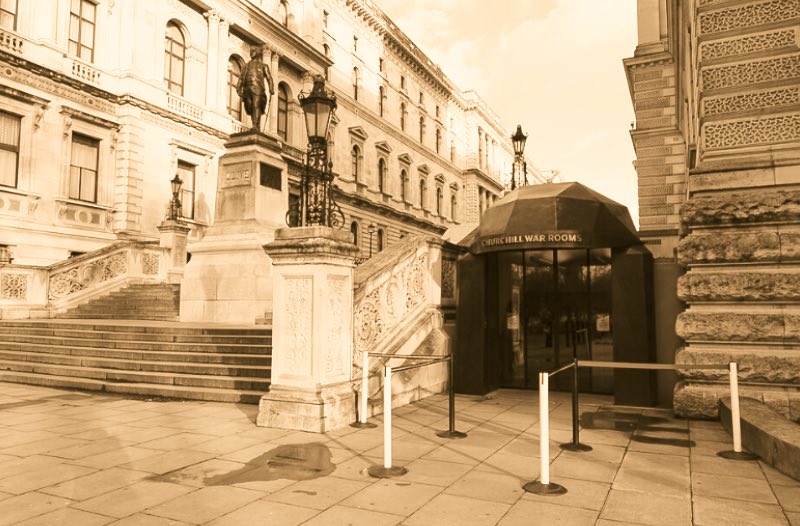

The limited ventilation and perpetual occupation in Winston Churchill’s War Rooms left a distinctive staleness in the air, compounded by the constant fog of cigarette and cigar smoke. This wasn’t Givenchy, but it was the authentic aroma of democracy under threat.
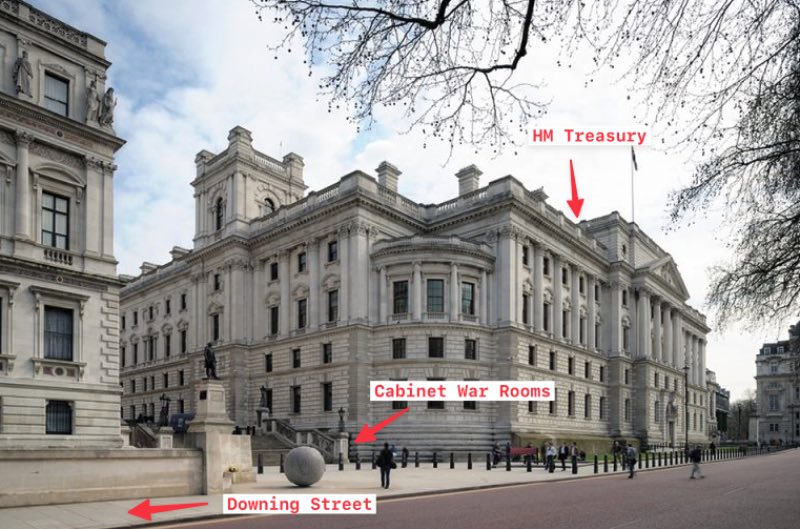
If you take a stroll along the eastern edge of St James's Park, London, you'll find yourself in the very heart of British power: Horseguards Parade where ceremonial troops still perform their precisely choreographed duties, the unassuming rear entrance to No. 10 Downing Street, and the Treasury building—that imposing structure where the nation's accountants wage their own particular brand of warfare.
But you might completely miss perhaps the most iconic historical site of them all, Churchill’s War Rooms, the heartbeat of the British Empire during World War II.
The decision to build Churchill’s War Rooms (originally known as the Cabinet War Rooms) wasn't born from paranoia, but from a rather sobering assessment of Britain's vulnerability.
By 1938, the Spanish Civil War had provided a chilling preview of what modern aerial bombardment could achieve. In April 1937, Hitler's Condor Legion had reduced the Basque town of Guernica to rubble in just three hours—a devastating dress rehearsal that demonstrated exactly what aerial bombardment could do to an undefended civilian population…
…and Hitler's Luftwaffe was growing stronger by the month. The British government faced an uncomfortable truth: if war came—and it seemed increasingly likely it would—London would be a prime target. The heart of British command needed protection, but not the ostentatious bunker-building that would signal panic.
Instead, they opted for something more discreet: converting the basement of the Treasury building, within 150 metres of the back door to No. 10 Downing Street, residence of the British Prime Minister.
The Cabinet War Rooms would be the central command centre of the British war effort for the entirety of the war.
Churchill’s War Rooms take shape
Construction in the basement of today’s HM Treasury building began in 1938. However, the original structure wasn’t designed as an underground fortress. It was only when The Blitz started raining incendiary bombs and parachute mines on London that the authorities realised the timber structure wasn’t fit for purpose.
In December 1940, a reinforced concrete slab up to three metres thick, supported by steel girders, was installed above the War Rooms. The work had to be carried out in total secrecy - no sense signalling to the enemy what lay beneath.
Anything larger than a 500-pound bomb would have still torn through the concrete and silenced the heartbeat of British intelligence, so secrecy remained the best defence.
Churchill’s War Rooms are buzzing
For 2,181 consecutive days and nights, electric light bulbs illuminated the dark, windowless rooms and corridors. Reminiscent of life in the Arctic Circle in winter, this was a virtual twilight world where darkness never fell.
Throughout those six years, the War Rooms hummed with activity around the clock. At any one time, 500 people created an ’untidy, clattering bustle’. Generals, admirals, typists, cooks, switchboard operators and cleaners scurried along the corridors like mice in a maze.
Limited ventilation and perpetually occupied rooms left a distinctive staleness in the air, compounded by the constant fog of cigarette and cigar smoke. This wasn’t Givenchy, but it was the authentic aroma of democracy under threat.
In the Dock
Below the War Rooms in the sub-basement was The Dock; the spartan living quarters where staff could sleep overnight rather than risk the journey home through the gauntlet of inevitable air raids.
In The Dock, ceilings were oppressively low, ventilation was even worse than the floor above and the perfume of chemical toilets permeated the confined space.
Winston Churchill had provisioned a bedroom in the War Rooms. Against advice, he seldom slept there, preferring the sanctuary of his own bedroom at Downing Street.
The Map Room
However, Churchill did spent many hours underground in the War Rooms, mainly in the Map Room. If the War Rooms as a whole represented the nervous system of British Intelligence, then the Map Room was its brain.
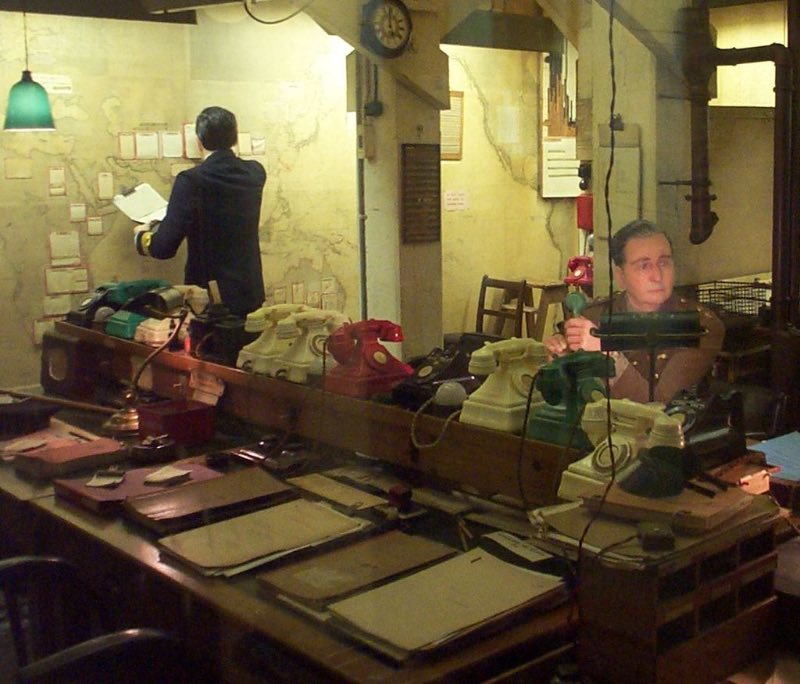
Maps covered every wall, studded with coloured pins marking ship convoys and the positions of Allied and enemy forces. Coloured string traced supply routes and ship movements across the oceans.
Staff worked in shifts to keep the pins and string up to date. As Churchill paced up and down the room - cigar firmly clenched between his teeth, wearing silk pyjamas, a dressing gown or his famously unstylish one-piece jumpsuit - the operators tracked the ebbs and flows of the greatest conflict in history.
The failed British Expeditionary Force in the Battle of France, the subsequent evacuation at Dunkirk, the Battle of Britain, the menace of the U-boats in the Atlantic, the Battle of Stalingrad and, of course, the bombings of Hiroshima and Nagasaki were all vicariously experienced through the diligent operators as they reshuffled the pins and string on the maps in response to updates from allied intelligence networks across the globe.
Out of Curiosity
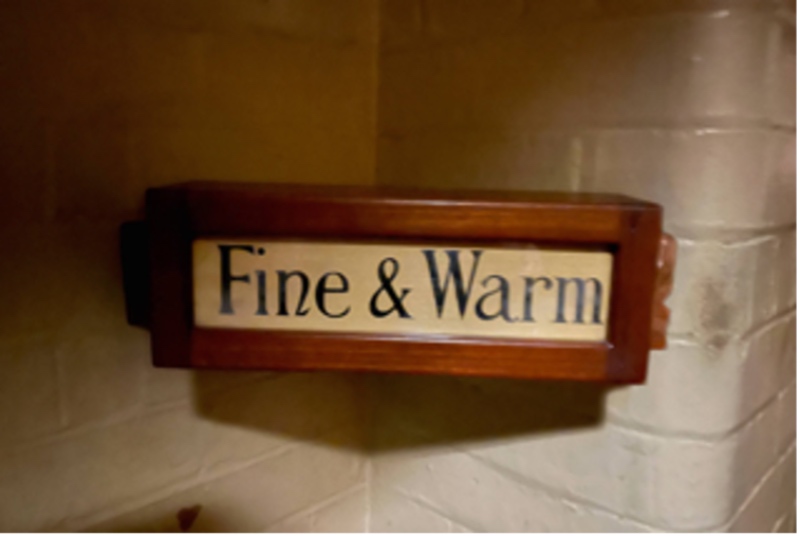
One of the more whimsical, thoroughly British touches in the War Rooms was the weather sign that kept staff informed about conditions above ground - essential intelligence for people who might not see daylight for days.
The common meteorological updates included ‘Fine & Warm’, ‘Rain’, ’Snow’ or ‘Frosty’.
During air raids, the sign was set to ‘Windy’.
Closing down
Almost as soon as the Japanese surrendered after the controversial bombings of Hiroshima and Nagasaki, Churchill's War Rooms staff were immediately stood down.
On 16 August 1945, the lights to the Cabinet War Rooms were switched off. Wing Commander John Seymour Heagerty, RAF, the last Camp Commandant, took one final walk through the building, pausing at each room to turn off each bank of lights.
There was no ceremony, no special witnesses. Nonetheless, this was a profound moment when, symbolically, the British war machine stopped thinking, the moment when peace descended on the world.
For the first time in six years, the Cabinet War Rooms were once again in darkness.
The Churchill War Rooms reborn
The British nerve centre throughout the war remained untouched for nearly four decades. In fact, even in the early 1980s, most people were unaware it even existed.
In 1982, the Imperial War Museum (I.W.R.) was appointed to take over the site from the Department of the Environment. Then, in 1984, I.W.R. opened Churchill’s War Rooms to the public; a time capsule unsealed, a snapshot of the day it was abandoned some forty years earlier. What a privilege that must have been for the museum staff!
Today Churchill’s War Rooms are still open for business. This is one of my favourite historical sites to visit in London.
Thankfully, the distinctive wartime aromas have long since dissipated, but the Map Room, cramped offices, spartan bedrooms and once-frantic corridors remain frozen in time—a perfectly preserved window into Britain’s darkest and finest hour.
Amusingly, Wing Commander Heagerty’s rationed sugar cubes were found in his desk drawer, presumably left behind in the hurried departure. These preserved, crystalline treasures are now on display in the Map Room.
I think the most striking experience of the visit comes in the first moment. Having descended into the basement, you immediately find yourself in the iconic War Cabinet Room, where Churchill once declared...
This is the room from which I will direct the war.
The tables are laid out in square formation with five seats at the far end; four for War Cabinet Ministers such as Clement Attlee and Anthony Eden, with Churchill’s seat taking pride of place in the centre.
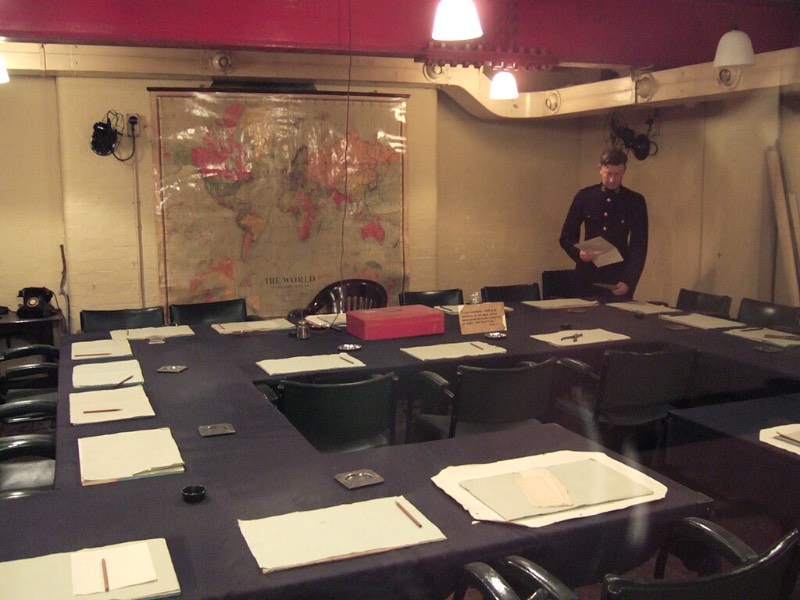
It is a breathtaking scene, a true historical moment in time. The clocks are poignantly set to 4:58, signifying two minutes before the first ever war meeting in the room on 15 October 1940.
Everything else is laid out exactly as it was left on 16 August 1945.
ATTRIBUTIONS:
Cabinet War Rooms: Frankemann, CC BY-SA 3.0, via Wikimedia Commons.
The Map Room: Kaihsu Taiderivative work: SilkTork, CC BY-SA 2.5, via Wikimedia Commons.
The Treasury Building: HM Treasury, Open Government Licence v3.0.
Churchill’s War Rooms (feature image): CrisNYCa, CC BY-SA 4.0, via Wikimedia Commons.