Churchill and the Anzacs
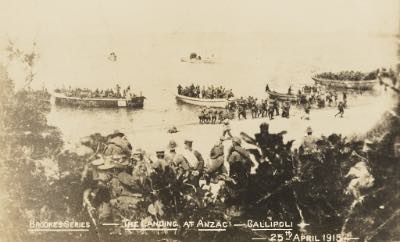

25 April 1915
(read time: 2 mins.)
The Australian and New Zealand Air Corps (ANZAC) landed at Gallipoli during the First World War on 25 April 1915. Their task was to take control of the Dardanelles (or ‘Strait of Gallipoli’), a strategically important waterway to the Black Sea from the Mediterranean.
Winston Churchill, as First Lord of the Admiralty, was largely responsible for instigating the Gallipoli campaign against the Turks. Approximately 60,000 Allied troops—including 11,500 ANZACs—and 60,000 Turks were killed, and the campaign ended in dismal failure for the Allies.
The bravery and loyalty shown by the ANZACs remain a symbol of Australian and New Zealand pride and national identity to this day.
Churchill's enthusiasm for the plan bordered on obsession. He believed a bold strike through the Dardanelles would knock Turkey out of the war, open a supply route to Russia, and possibly bring the entire conflict to a swifter end.
On paper, it looked brilliant. In practice, it became one of history's most brutal lessons.
Winston Churchill never quite shook the burden of Gallipoli. For years afterwards, political opponents used it as a stick to beat him with. He carried the weight of Allied deaths like a particularly heavy overcoat he couldn't remove. However, he defended the strategy until his dying day, arguing that the concept was sound but the execution was bungled by others.
Out of Curiosity
What's often forgotten is that Churchill tried to see Gallipoli for himself during the campaign, but his proposed visit was cancelled at the last moment by Prime Minister Herbert Asquith.
Having been forced out as First Lord of the Admiralty in 1915, Churchill resigned from the Cabinet later that year and went instead to the Western Front, serving in the mud of Flanders as a battalion commander—brooding over the Dardanelles disaster for which he was so widely blamed.
Those months did nothing to change the outcome at Gallipoli, but they did cement in Churchill’s mind both the horror of war and his unshakeable conviction that the grand design had been sound. It was timid leadership and cursed execution, he believed, that had betrayed it.
Churchill would write about Gallipoli in his memoirs with something approaching reverence for the Anzacs, particularly praising their 'audacity' and 'endurance'.
ANZAC Day, 25th April, is an annual day of remembrance across Australia and New Zealand for all those who “served and died in all wars, conflicts and peacekeeping operations.”
In the Batting the Breeze Original Stories podcast—Edmund, Churchill and Onassis—I spoke with Bill Murray, the son of Edmund Murray, Winston Churchill's last bodyguard who, in 1958, accompanied Sir Winston on Aristotle Onassis’s yacht through the Dardanelles and noted Churchill’s ‘very sombre silence’.
📚 Time for more history?
ATTRIBUTIONS:
ANZAC troops land at Gallipoli: Published by Brookes Unknown author, Public domain, via Wikimedia Commons.
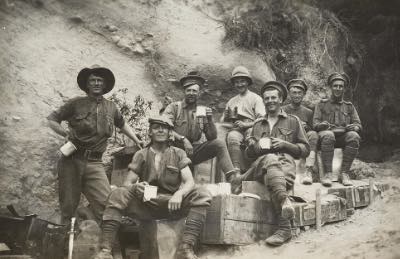
Anzacs: State Library of New South Wales collection, No restrictions, via Wikimedia Commons.
Check out the date button below to see if I have written any other articles for this date with history.

Chief Story Hunter
I am passionate about the world and the people in it—both living or otherwise. I talk to people with personal stories to share on the 'Batting the Breeze Original Stories' podcast. I write a weekly newsletter—The Breezer—which shares a wide range of historical snippets relevant to the week following each Sunday morning’s edition.
And, of course, I write this historical blog which I hope you enjoy reading. Oh, yes—I will also be releasing a 'Dates with History' podcast soon too! If you are curious about the world and its history, I think I can scratch that itch for you.
The Gregorian Calendar and Britain's Lost Eleven Days